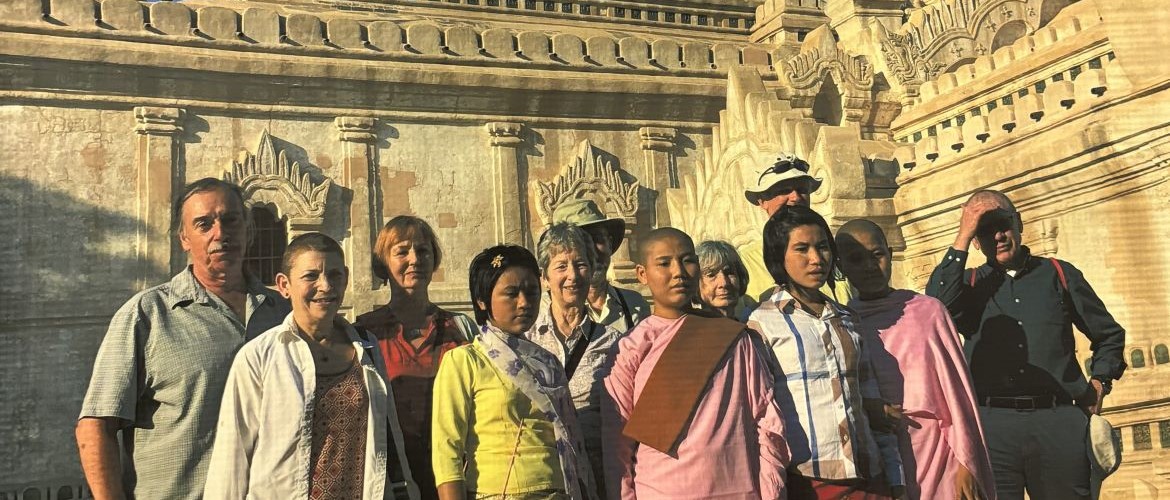
 Hot air ballooning over ancient ruins of Bagan
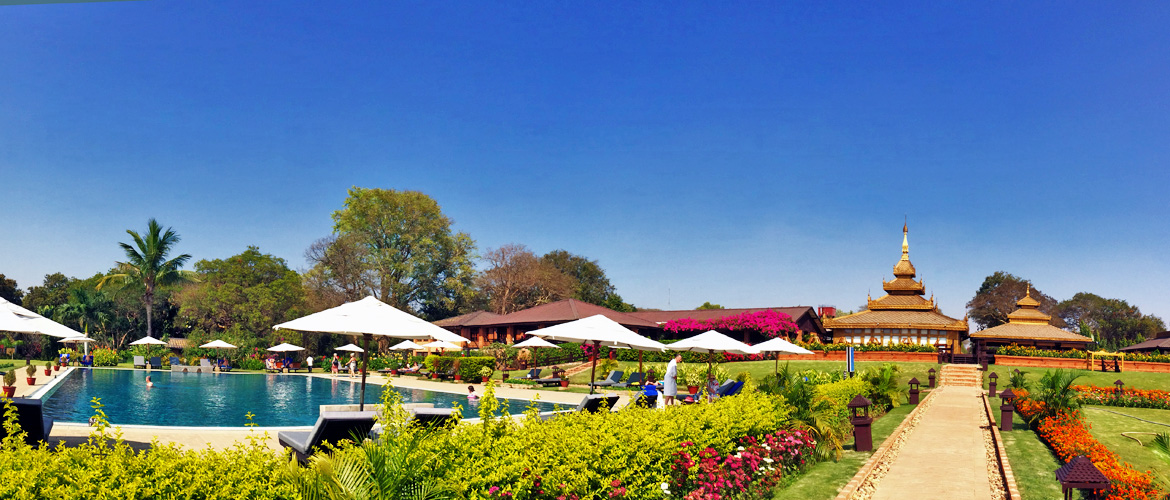

Yangon – Bagan – Inle Lake – Pyin Oo Lwin – Mandalay – Bangkok
Formerly known as Burma, Myanmar fascinates the visitor with glittering golden pagodas, enigmatic ruined temples, picturesque countryside and rich culture. On this luxury Myanmar tour, you’ll visit Yangon (Rangoon), Bagan (Pagan), Inle Lake area, Mandalay and Pyin Oo Lwin (Maymyo) before flying to Bangkok, Thailand to return home.
Important Features
- Small group size (20 max).
- Experienced tour leader.
- Expert local guides.
- No forced shopping stops.
- Authentic local cuisine.
- Unlimited supply of bottled water.
- Free Wi-Fi in all hotels.
- Village and school visits.
Meal Code: B = breakfast / L = lunch / D = dinner
Best of Myanmar Tour Itinerary
Day 1/Wed: Departing Home City
The Myanmar tour begins with your transpacific flight departing from a city of your choice. You’ll lose a day upon crossing the International Date Line.
Day 2/Thu: Arrival in Yangon
Welcome to Yangon. Meet your guide on arrival and transfer to the hotel. The balance of the day is at leisure.
Day 3/Fri: Yangon (B/L/D)
Yangon, formerly known as Rangoon, developed from the ancient settlement of Dagon. In 1755, King Alaungpaya captured Dagon, renamed it Yangon and expanded the settlement. The British captured Yangon in 1852, and the city subsequently became the administrative and commercial centre of British Burma.
Our walking tour of the historical downtown core this morning takes in Sule Pagoda (entry not planned), Independence Park, the City Hall, photo gallery by Yangon Heritage Trust, Musmeah Yeshua Synagogue (the only synagogue in Myanmar), the Secretariat complex and famous buildings constructed during the British colonial era, especially those on Strand Road.
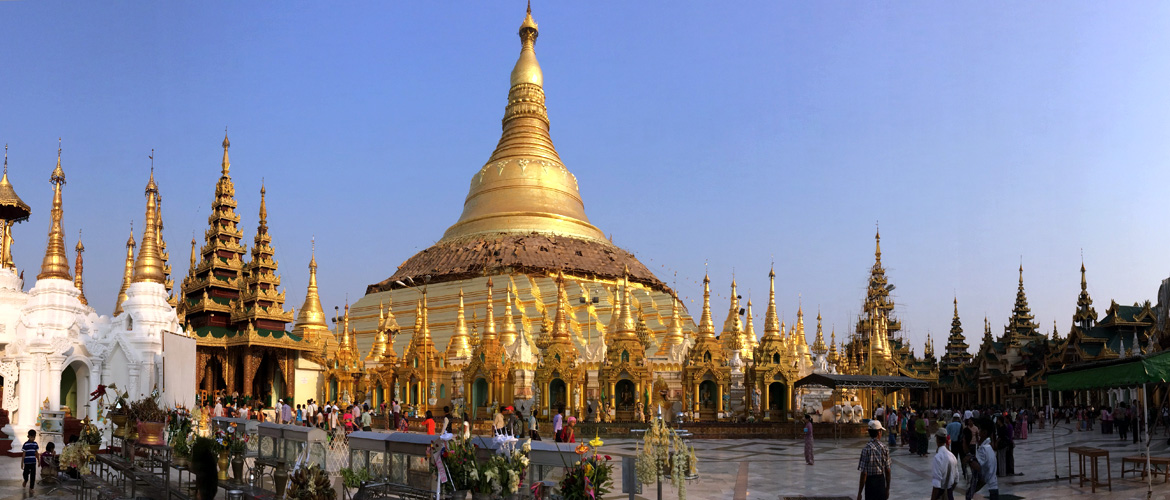
We retreat to the hotel after lunch to avoid intense heat in early afternoon. Later today, just before sunset, we arrive at the magnificent Shwedagon Pagoda. Situated on a hilltop, Shwedagon Pagoda, Myanmar’s most sacred Buddhist shrine, is traditionally believed to be more than 2,500 years old. Its gilded stupa dominates the Yangon skyline and attracts pilgrims from throughout the country.
Day 4/Sat: Yangon (B)
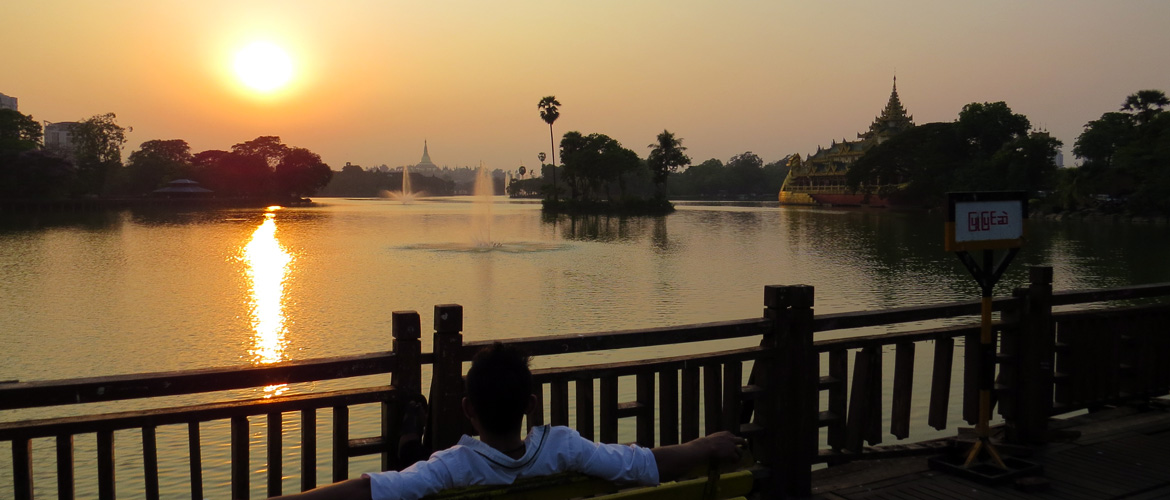
After a stroll along lovely Kandawgyi Lake and a visit to the National Museum of Myanmar, we spend the rest of the day exploring Yangon on our own. We recommend the famous Scott Market which is very popular among jewellry and handicraft shoppers.
Day 5/Sun: Yangon – Bagan (B/L)
The early morning flight to Bagan takes 1 hour 20 minutes.
Bagan is an ancient city located in the Mandalay Region. During its golden age between the 11th and 13th centuries, Bagan became one of Southeast Asia’s great centres of Buddhist learning and religious architecture. More than 10,000 temples, pagodas and monasteries were constructed across the plain, of which over 2,000 survive today.
The most prominent monuments we will visit in Bagan include Shwesandaw Pagoda and Ananda Temple. We will also learn about the local lacquerware during our visit to a traditional workshop. From a designated viewing point, we enjoy a sweeping panorama of Bagan’s ancient temples and pagodas rising above the surrounding plain.
Day 6/Mon: Bagan (B/D)
We start the day with a stroll through a local market. We then proceed to Shwezigon Pagoda. One of Bagan’s most important Buddhist shrines, Shwezigon Pagoda was begun in the 11th century under King Anawrahta and completed during the reign of his successor, King Kyansittha. Its gilded bell-shaped stupa became an architectural model for many later Burmese pagodas..
This is followed by a stop at Khay Min Ga Temple for a panoramic view of the pagodas and temples in the area. We return to the hotel after lunch. Later we drive to Bupaya Pagoda or Mingala Zedi Stupa to watch sunset over the Irrawaddy River. This evening, we enjoy a traditional dinner accompanied by a cultural performance.
Day 7/Tue: Bagan – Inle Lake (B/L/D)
After a relaxing morning, we fly to Heho, gateway to the tranquil Inle Lake. The freshwater lake sitting at 880 metres above sea level is the second largest of its kind in Myanmar with an estimated surface area of 116 square kilometres (44.9 square miles). The average depth of the lake ranges from 2.1 metres in dry season to 3.6 metres in raining season.
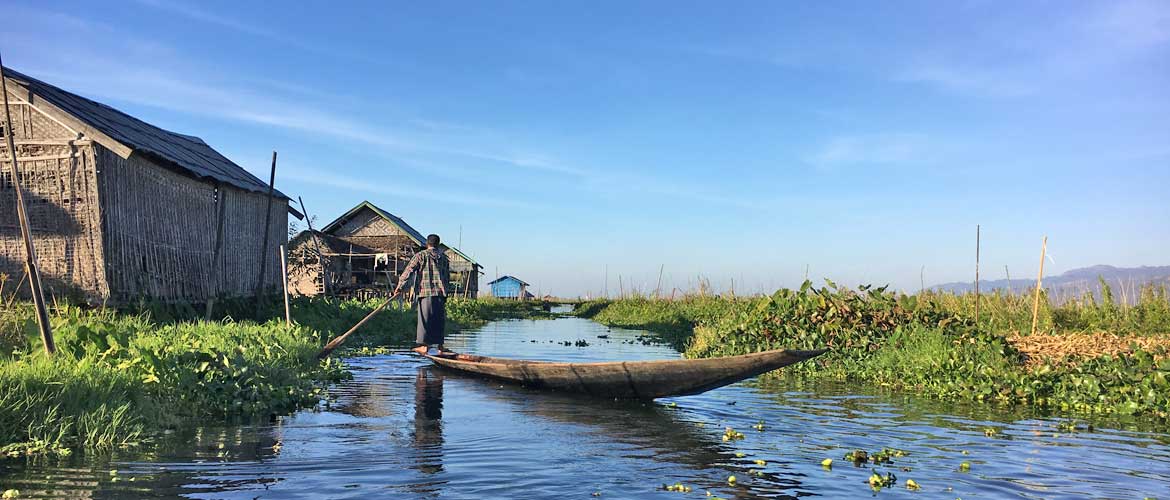
The lake is lined with simple villages on stilts and dotted with unique floating gardens tended by farmers in their boats. The state of Shan, where the lake is situated, is known for its traditional papermaking and we can witness this craft during a workshop visit.
Day 8/Wed: Inle Lake (B/L/D)
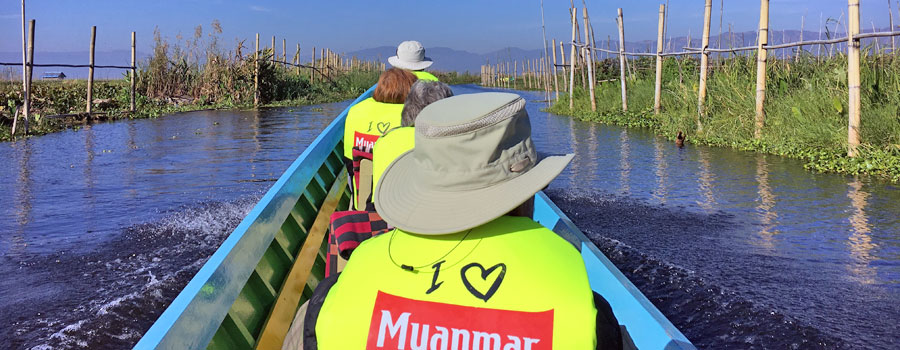
This morning we explore the Indein Stupa Complex, a stunning forest of 1,000 ancient towering spires. We then get in a small boat to visit one of the lake’s villages perched on stilts. After lunch, we visit a charming silk-weaving village and stop by at one of the village’s floating gardens.
Buffet dinner at resort.
Day 9/Thu: Inle Lake – Mandalay (B/L/D)
Free morning to relax. Fly to Mandalay in late afternoon.
Located 716 km north of Yangon and on the east bank of the Irrawaddy River, Mandalay is Myanmar’s second-largest city and the country’s principal cultural and commercial centre in the north. Founded by King Mindon in 1857, it served as the last royal capital of Burma before the British conquest of 1885. Mandalay suffered extensive destruction during the Second World War. Japanese air raids in April 1942 devastated large sections of the city, and further damage occurred during the fighting that led to its recapture by Allied forces in March 1945.
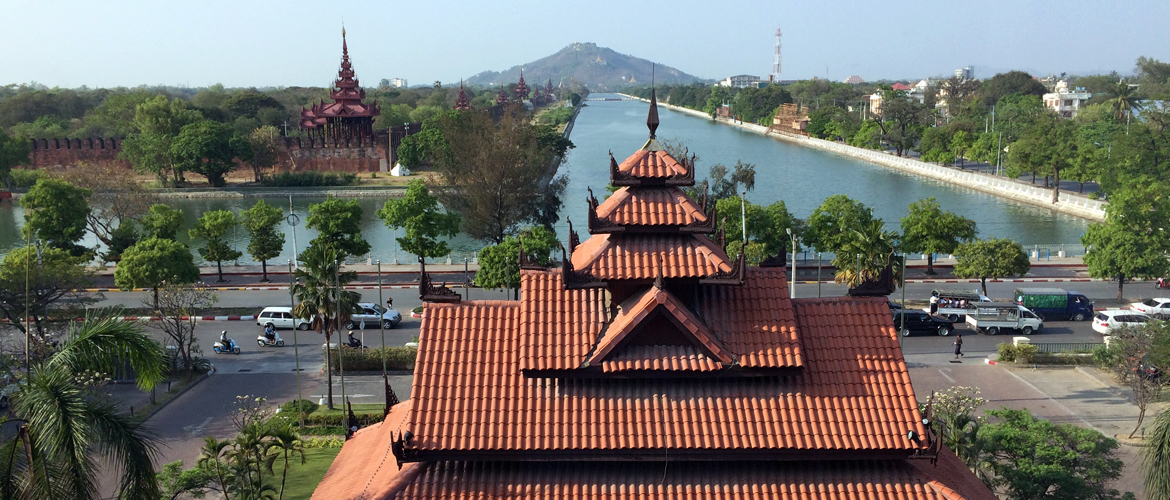
After hotel check-in we drive to the top of Mandalay Hill for a panoramic view of the city at sunset.
Day 10/Fri: Mandalay – Pyin Oo Lwin – Mandalay (B/L)
After breakfast, we embark on a 67-km drive to Pyin Oo Lwin. The scenic hill town was once known as Maymyo, named after Colonel James May (later Major General) of the 5th Bengal Infantry stationed there in 1886. The town located at 1,070 metres above sea level was developed during the colonial era and used by the British to escape Rangoon’s summer heat and humidity. Many of the locals in Pyin Oo Lwin still prefer to call their town Maymyo. Although the British have been long gone, the bungalows, villas and public buildings built by them still remain.
We will drive past numerous British buildings and visit one or two of them along the way, but the main reason we come here is the well-maintained Kandawgyi Botanic Gardens.
Established in 1915 during British colonial rule, the National Kandawgyi Gardens in Pyin Oo Lwin are among Myanmar’s best-known botanical gardens. Originally developed as a recreational retreat for British officials, the gardens feature landscaped lawns, ornamental lakes, mature trees and an extensive collection of plants. The town’s cooler climate makes it particularly suitable for horticulture.
Day 11/Sat: Mandalay (B/L)
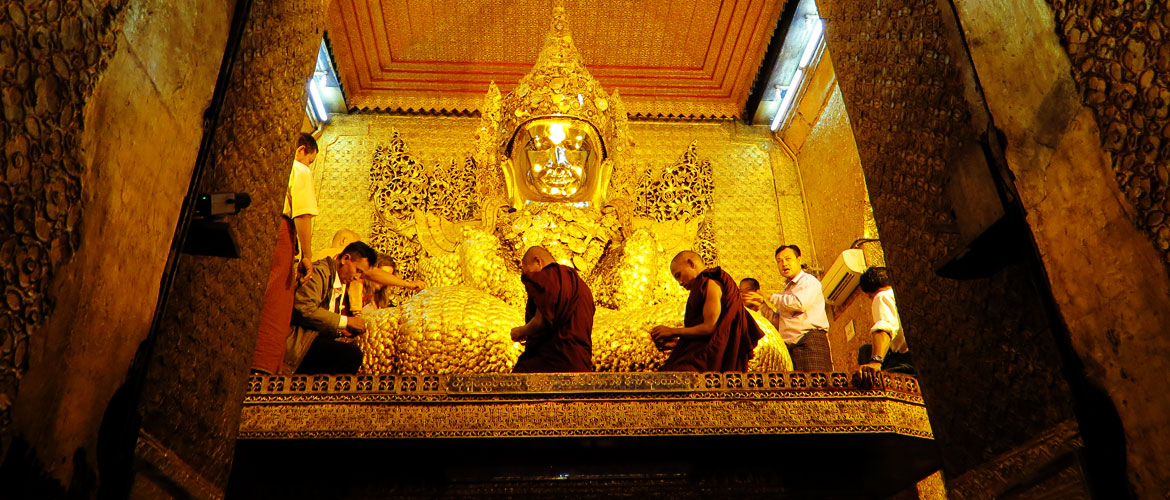
Our full-day sightseeing in Mandalay includes Mahamuni Pagoda, Kuthodaw Pagoda complex, a boat cruise on Irrawaddy River that takes us to Mingun Pahtodawgyi ruins, and U Bein Bridge.
Construction of the enormous Mingun Pagoda began in 1790 under King Bodawpaya, who intended it to be one of the world’s largest stupas. The project was never completed. According to local tradition, astrologers warned that the king would die if construction were finished. The unfinished monument remains an imposing sight on the western bank of the Ayeyarwady River.
U Bein Bridge, near Amarapura, stretches approximately 1.2 kilometres across Taungthaman Lake and is considered one of the world’s oldest and longest teakwood bridges. Built in the mid-19th century, it incorporates timber salvaged from the former royal capital at Inwa. The bridge remains an important crossing for local residents and is particularly picturesque in the late afternoon.
Day 12/Sun: Mandalay – Bangkok (B)
Free morning to explore on your own. Transfer to the airport for our afternoon flight to Bangkok, where we stay at Hyatt Regency Bangkok Suvarnabhumi Airport, conveniently connected to the airport terminal by an underground walkway. The balance of the day is at leisure.
The balance of the day is at leisure. Those departing Bangkok late the next day and wishing to explore Bangkok may ride the airport express train to downtown, which takes only 20 minutes.
Day 13/Mon: Bangkok – Home City (B)
Walk back to the airport terminal to check in for return flight arriving home the same day.
Hotel List
| City | Night | Hotel | Category |
| Yangon | 3 | Sule Shangri-la, Yangon | luxury |
| Bagan | 2 | Bagan Thiripyitsaya Sanctuary Resort | luxury |
| Inle Lake | 2 | Novotel Inle Lake Myat Min | luxury |
| Mandalay | 3 | To be confirmed | luxury |
| Bangkok | 1 | Hyatt Regency Bangkok Suvarnabhumi Airport | luxury |
Important Travel Advisory This tour is currently suspended due to Myanmar’s political and security situation. The itinerary remains available for reference and may be offered again when conditions improve sufficiently to permit safe and reliable travel. We are monitoring developments and will update this page when circumstances change. |
Myanmar Tour – Q&A
Is Myanmar safe for tourists?
Myanmar has experienced serious political instability and armed conflict since 2021. Both the Canadian and U.S. governments currently advise against all travel to Myanmar. Laurus Travel has therefore suspended its Myanmar tours until conditions improve sufficiently for safe and reliable travel.
What is the best time to visit Myanmar?
November through February generally offers the most pleasant weather, with relatively cool temperatures and little rainfall. March and April can be extremely hot, particularly in Bagan and Mandalay. The rainy season typically runs from May through October.
Do Canadians and Americans need a visa to visit Myanmar?
Yes. Canadian and U.S. passport holders generally require a visa to enter Myanmar. Tourist e-visas may be available, subject to current government restrictions and approved entry points. Your passport should have at least six months of validity remaining. Entry requirements must be reconfirmed before travel.
What are the highlights of a Myanmar tour?
Myanmar is home to some of Southeast Asia’s most impressive Buddhist monuments and cultural treasures. Highlights include Yangon’s magnificent Shwedagon Pagoda, the thousands of ancient temples scattered across the Bagan plain, the floating communities of Inle Lake, and the royal heritage of Mandalay. The country’s traditional villages and markets offer further insight into local life.
Is Myanmar suitable for senior travellers?
Myanmar can be rewarding for older travellers who are reasonably fit and comfortable walking on uneven surfaces, climbing steps and removing their shoes at religious sites. Some temples have steep staircases, and accessibility standards vary considerably. Travellers with significant mobility limitations should discuss their needs with us before booking any future departure.
What should I wear when visiting temples?
Dress modestly, covering your shoulders and knees. Shoes and socks must generally be removed before entering Buddhist temples and pagodas. Lightweight, breathable clothing is recommended, along with comfortable walking shoes that are easy to remove.
Why travel to Myanmar with Laurus Travel?
Founded in 1998, Laurus Travel specializes in carefully planned tours of Asia, with experienced local guides, quality accommodation and thoughtfully paced sightseeing. Our tours emphasize cultural understanding, attentive service and authentic local experiences, without forced shopping stops. Our Myanmar programme will resume only when conditions permit responsible tour operations.