If you are looking for Tibet tours from Vancouver, you can’t go wrong by choosing Laurus Travel.
Established in 1998, Laurus Travel specializes in premium small-group travel to Asia and we consider Tibet one of our key destinations. Our fully guided tours hold special appeal to discerning travellers seeking in-depth experiences that are culturally enriching, intellectually stimulating and physically active.
Tibet Tours from Vancouver – Recommended Itinerary
14-day Tibet Adventure
Beijing – Lhasa – Gyantse – Shigatse – Lhasa – Chongqing – Shanghai
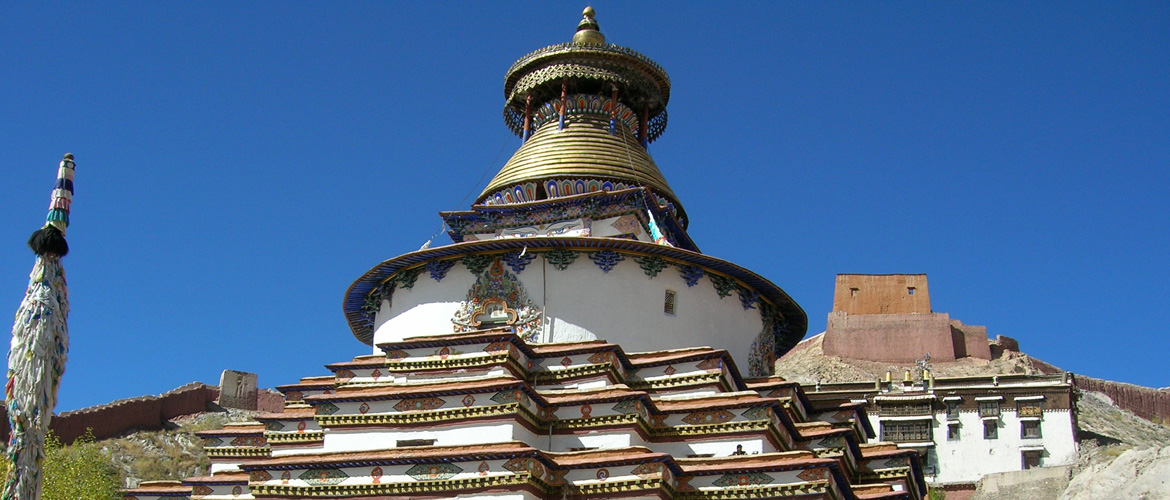
This meticulously crafted Tibet adventure tour redefines your travel experience. The well-paced luxury tour is a perfect choice for the time-pressed looking for a well-rounded introduction to China with a focus on Tibet. Trip highlights include Potala Palace, Yamdrok Yumtso (lake), Gyantse Fortress, and visit to a Tibetan family.
This tour reaches points as high as 5,020 metres above sea level. Participants prone to altitude sickness must take precaution.
Important Features
-
- Small group size
- Experienced professional guides
- No shopping stops
- Quality Chinese & Western cuisines
- Visit to a local family in Tibet
- Great Wall excursion including cable rides
TOUR ITINERARY
B = Breakfast L = Lunch D = dinner
Day 1/Mon: Departing for Beijing
The trip starts with your transpacific flight departing from a city of your choice. You’ll lose a day upon crossing the International Date Line.
Day 2/Tue: Arrival in Beijing
Meet the driver on arrival for transfer to the hotel. You’ll have the remainder of the day at leisure. The guide will get in touch with you tonight.
Day 3/Wed: Beijing (B/L/D)
The capital of China, Beijing is a world-class cultural and educational centre with a population of 21.9 million (2020), ranking it China’s second largest city behind Shanghai. Beijing is renowned for its opulent palaces, temples, and huge stone walls and gates – treasures that make it the most popular tourist city in China by the number of visitors it receives every year.
We begin our sightseeing today at the Forbidden City. Officially known as the Palace Museum, the Forbidden City was the place where the emperors of the Ming (1368-1644) and Qing (1644-1912) dynasties lived and carried out their administration. Construction of the Forbidden City took 14 years (1406-1420) to complete. The complex consists of 980 buildings and covers 72 hectares or 180 acres. It exemplifies traditional Chinese palatial architecture and has influenced cultural and architectural developments in East Asia and elsewhere.
Tian’anmen Square comes next. Located in the heart of Beijing, the square measures 880 metres from north to south and 500 meters from east to west. Said to be the largest public plaza in the world, Tian’anmen Square has the capacity to hold one million people. The imposing Tian’anmen Tower sits at the north end of the square while the Monument to the People’s Heroes dominates the centre. The square is flanked by The Great Hall of the People (west) and the National Museum (east). Chairman Mao’s Mausoleum and Qianmen (Front Gate) are located in the south of the square.
Afternoon sightseeing takes place at the Temple of Heaven. Situated in southeastern Beijing, the Temple of Heaven is China’s largest extant sacrificial temple where, during the Ming and Qing Dynasties, the emperors conducted the elaborate and most exalted sacrifices addressed to “the Supreme Ruler of the Universe”. Construction of the temple started in 1406, during the reign of the Ming Emperor Yongle, and took 14 years to complete. The temple was expanded under the Qing emperors Qianlong (1736-1796) and Jiaqing (1796-1820). Occupying 2.73 square kilometres (roughly 1,700 by 1,600 metres), the area of the Temple of Heaven is more than twice that of the Forbidden City.
The famous Hongqiao Pearl Market, the largest pearl market in the world, is right across the street from the Temple of Heaven. Recommended by numerous guidebooks for freshwater pearls, Hongqiao teems with domestic and international shoppers. If you are interested, please ask the guide to drop you off there. However, you’ll need to get back to the hotel by taxi, which costs about 8 US dollars.
Today we enjoy a delicious dinner at a popular Peking Roast Duck restaurant. Peking Roast Duck is a famous Beijing dish prized for the thin and crispy skin with authentic versions serving mostly the skin and little meat, sliced in front of the diners. The meat is wrapped in a thin layer of pancake (Chinese tortilla) together with shredded scallion, cucumber, and a sweet and salty sauce made of wheat flour. Condiments may also include pickled garlic and white sugar.
Day 4/Thu: Beijing (B/L)
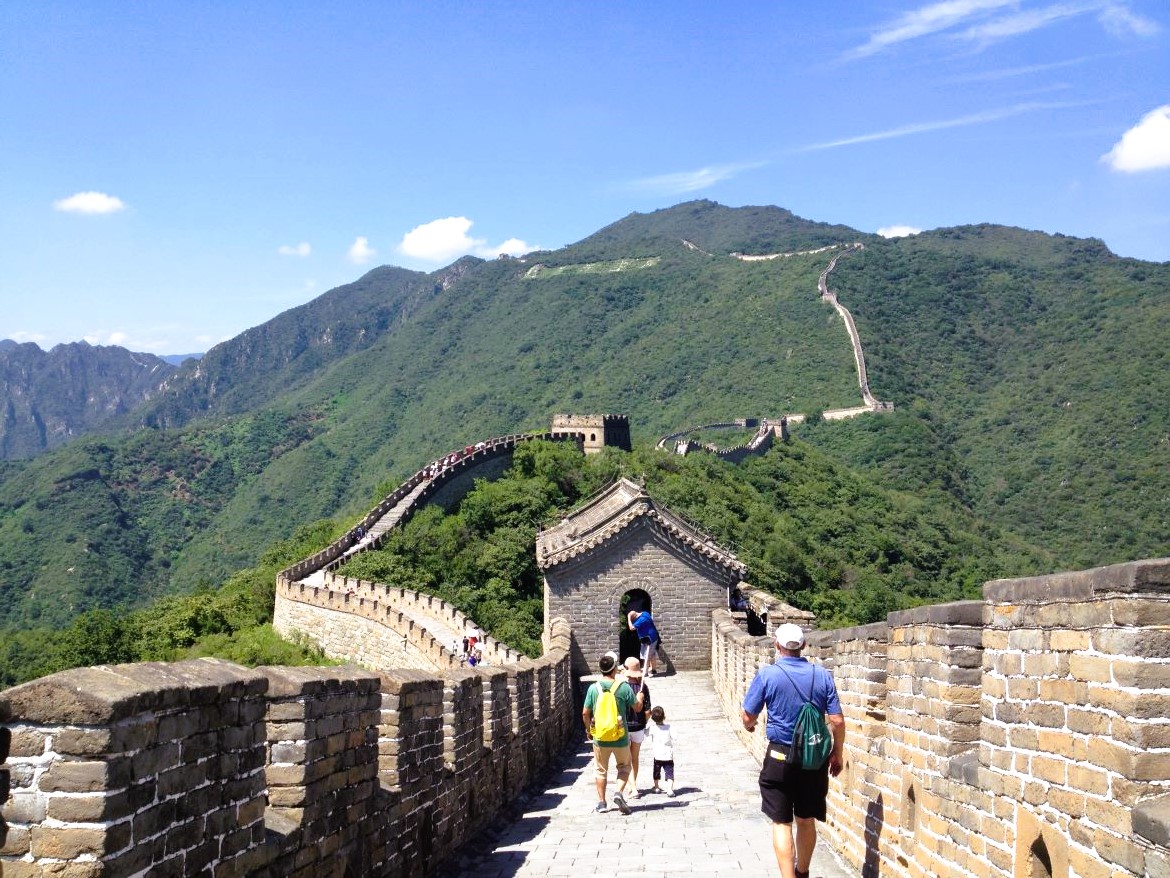
After an early breakfast we embark on a full-day excursion to the legendary Great Wall at Mutianyu, 75 km northeast of the city.
Zigzagging over 6,000 kilometres from east to west along the undulating mountains, the Great Wall was built to hold off tribal invaders from the north. As history shows, the Wall failed the Chinese rulers miserably, especially in the case of Kublai Khan whose men swept across China from the Mongolian steppe, thus marking the beginning of the Yuan Dynasty (1279-1368).
Construction of the earliest sections of the Wall started in the 7th century BCE. A major renovation started with the founding of the Ming Dynasty in 1368 and took 200 years to complete. The wall we see today in Beijing is almost exactly the result of this effort.
Day 5/Fri: Beijing – Lhasa (B/D)
We board an early morning or mid-day flight (4 hours 30 minutes) for Lhasa. Spend the remainder of the day relaxing to get acclimated to the high altitudes.
Situated in a wide, mountain-fringed valley on the north bank of the Kyichu River, Lhasa (elevation 3,650 m) is a rapidly expanding city with a population around 870,000 as of late 2022. An important settlement for well over one thousand years, Lhasa was originally called Rasa, but was renamed by King Songtsen Gampo in the 7th century when he moved his capital here from the Yarlung Valley. Following the collapse of the Yarlung dynasty two centuries later, power dispersed among local chieftains and the city lost its pre-eminence. It was not until the 17th century, with the installation of the Fifth Dalai Lama as ruler by Gushri Khan, a Mongolian prince and later leader of the Khoshut Khanate, that Lhasa once again became the seat of government.
Day 6/Sat: Lhasa (B/L)
Morning visit to Norbulingka, literally meaning jeweled park. First built in 1755, Norbulingka covers an area of 89 acres and served as the traditional summer residence of the successive Dalai Lamas. A short distance to the southwest of the Potala Palace, Norbulingka forms part of a UNESCO World Heritage Site collectively known as the Historic Ensemble of the Potala Palace.
This afternoon we tour the grand Sera Monastery, where lively debates held every day except Sunday between resident monks often draw a large audience. Sera Monastery is recognized as one of the “great three” Gelug university monasteries of Tibet together with Ganden Monastery and Drepung Monastery.
| From the moment we met Jacob, we knew that we were in excellent hands. Every one of our local guides exceeded our expectations. Their ability to communicate with us was flawless. We learned more about the specific city/area that we were in than we expected. Each one of the guides demonstrated their experience in being through their in depth explanations about culture, the people in the area, the history. When I asked them a question about the subject, they quickly answered and usually extended the conversation with additional information. Every evening, we were asked if meeting in the AM would work with us, very courteous and kind. Every morning we were greeted with a smiling guide and “Good Morning”.
When we had to cancel our trip in 2020, we were very depressed. I have been wanting to go to China for about 30+ years. So, when this trip came up, we jumped on it. Seeing the Great Wall of China was bucket list item for me. The weather was perfect, kind of misty, clouds hanging low. It was perfect for picture taking. The Terracotta warriors and the explanations that Paul afforded us were incredible. Explaining to us why they archeologists are not uncovering more of the warriors was very understandable and appreciated. Tibet was my personal bucket list place. Walking up Potala palace was the highlight for me. The drive to Shigatsi was beautiful. Being given the ability to stop and take pictures with explanations of what we were seeing, was appreciated. The highlight for my husband was the Li River cruise. He had been quietly doing research on the Li River, and was very impressed with the cruise and of course the scenery. Our stop at the Tea Plantation was a bonus. We learned more about tea, how to pick it and the importance of tea in the Chinese culture. Len & Beckie M |