Shanghai – Hangzhou – Suzhou – Qufu – Beijing – Xi’an – Guilin – Hong Kong
This China tour combines the country’s best-known historical and cultural attractions with destinations rarely included in conventional itineraries. From Shanghai’s modern skyline and the classical gardens of Hangzhou and Suzhou to Confucius’s hometown of Qufu, the journey offers a fascinating look at China’s history and cultural heritage.
Continue to Beijing to explore the Forbidden City and Great Wall, then visit Xi’an to see the Terracotta Army. From there, the journey takes you south to Guilin for a cruise along the Li River, where limestone peaks rise dramatically above the water. The tour concludes in Hong Kong, a city whose distinctive character reflects its Chinese heritage and international history.
Important Features
- Small group size – average 15, maximum 20
- Expert guides handpicked by company owners
- No annoying forced shopping stops
- Quality meals at non-tourist restaurants
- Unlimited supply of bottled water during group activities
- Complimentary Wi-Fi in all hotels
- Great Wall visit at Mutianyu including cable car rides
OPTIONS AVAILABLE
- Enduring Memories of Hangzhou open-air night show
- Peking Opera performance in Beijing subject to availability
- Tang Dynasty Music and Dance show in Xi’an
China Experience Tour Itinerary
Meal Code: B = breakfast / L = lunch / D = dinner
Day 1/Thu: Departing for Shanghai
Depart from a city of your choice, losing a day upon crossing the International Date Line.
Day 2/Fri: Arrival in Shanghai
Meet our driver on arrival for your transfer to the hotel. You’ll have the remainder of the day at leisure. The guide will contact you in the evening.
Day 3/Sat: Shanghai (B/L/D)
With a population of nearly 25 million, Shanghai is China’s largest city and a major centre of international trade and commerce. Its modern skyline contrasts with historical landmarks that reflect the city’s colourful past.
We begin our day with a visit to Jade Buddha Temple in an old neighbourhood. We then walk along the famous Bund, a waterfront promenade with a fascinating history.
After lunch, we stroll through People’s Park and adjacent People’s Square in the heart of the city. Both occupy the site of the former Shanghai Racecourse, which opened in 1862.
We wrap up the day’s sightseeing with a tour of the exquisite Yu Garden in the old town centre.
Day 4/Sun: Shanghai (B)
Today is a free day.
If you are interested in Chinese art and history, Shanghai Museum East in Pudong would be an excellent place to spend half a day. The museum houses outstanding collections of ancient bronzes, ceramics, jade, paintings and calligraphy. The original Shanghai Museum at People’s Square now focuses mainly on special exhibitions.
The Shanghai Jewish Refugees Museum and Nanwaitan Fabric Market, known for its numerous tailor shops, are also recommended.
Day 5/Mon: Shanghai – Hangzhou (B/L)
The rail journey to Hangzhou this morning takes less than an hour (G221, 09:00/09:45).
Hangzhou is one of China’s great historic cities, renowned for its scenic West Lake, classical gardens, ancient temples and rich cultural heritage.
We begin our sightseeing with a short cruise on West Lake, a UNESCO World Heritage Site that has inspired poets, artists and emperors for centuries. The lake is surrounded by temples, pagodas, gardens and willow-lined paths. Among its best-known landmarks are the Broken Bridge, Su Causeway and Leifeng Pagoda.
We then proceed to Guo’s Villa (Guo Zhuang), one of Hangzhou’s finest private gardens. Located near West Lake, the garden features classical pavilions, rockeries and ponds arranged in the traditional Chinese style.
Our first stop after lunch is Lingyin Temple, also known as the Temple of the Soul’s Retreat. Founded in 328 CE by the Indian monk Huili, it is one of China’s most important Buddhist temples. The temple stands among forested hills and rocky cliffs near Feilai Peak (Flying Peak).
We conclude the day’s sightseeing at the China National Silk Museum on the southern shore of West Lake. The world’s largest museum dedicated to silk, it houses textiles dating from the Neolithic period to modern times, including rare silk fragments, imperial robes and archaeological finds from Silk Road sites. The museum is also a leading centre for textile conservation and research.
Optional: Enduring Memories of Hangzhou
This is an outdoor evening performance staged on West Lake. Directed by renowned filmmaker Zhang Yimou, the production combines music, dance, lighting and special effects on a submerged stage, creating the illusion of performers moving across the water. Drawing on local legends, including the story of the White Snake, the show presents traditional Chinese themes through modern theatrical techniques.
The performance is not included in the tour price but may be arranged subject to availability.
Day 6/Tue: Hangzhou – Suzhou (B/L/D)
After breakfast, we drive 30 minutes to Longjing Village, where the famous Longjing green tea is produced. We’ll explore the rolling tea plantations and learn about the history and production of Chinese tea.
Afterwards, we return to the city for a tour of Hangzhou Botanical Garden, a large garden featuring a wide variety of plants and seasonal flower displays. It is also a popular place for locals to enjoy leisurely walks.
The late afternoon train ride to Suzhou takes less than an hour.
Day 7/Wed: Suzhou – Qufu (B/L)
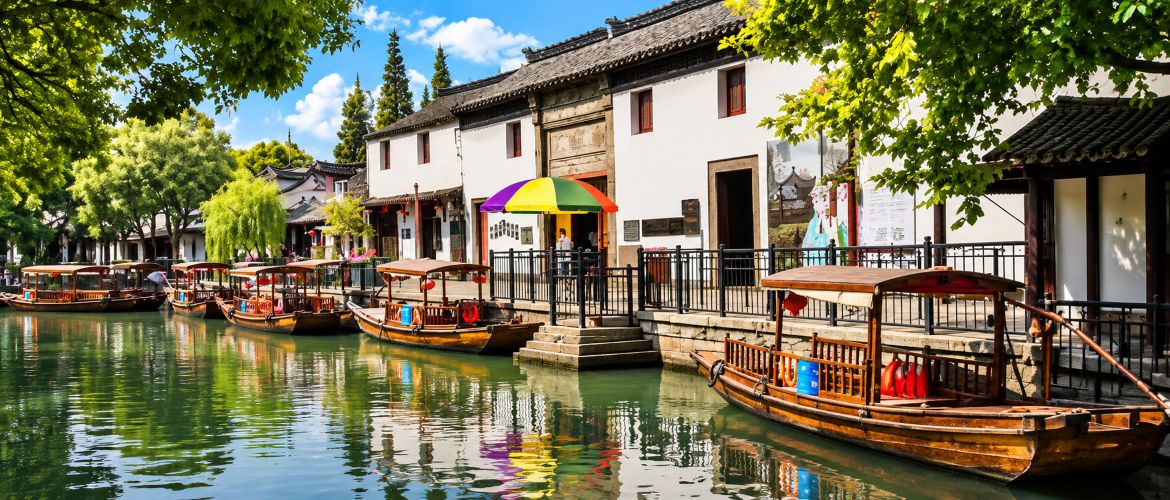
Ancient Suzhou is best known for its classical gardens, canals and silk industry. The Venetian traveller Marco Polo visited Suzhou in the late 13th century and wrote admiringly of its prosperity and silk production. With its network of canals and waterways, Suzhou is often referred to as the “Venice of the East.”
Our sightseeing in Suzhou includes historic Tiger Hill, Humble Administrator’s Garden and a short canal cruise.
The late afternoon train to Qufu takes approximately three and a half hours.
Day 8/Thu: Qufu (B/L/D)
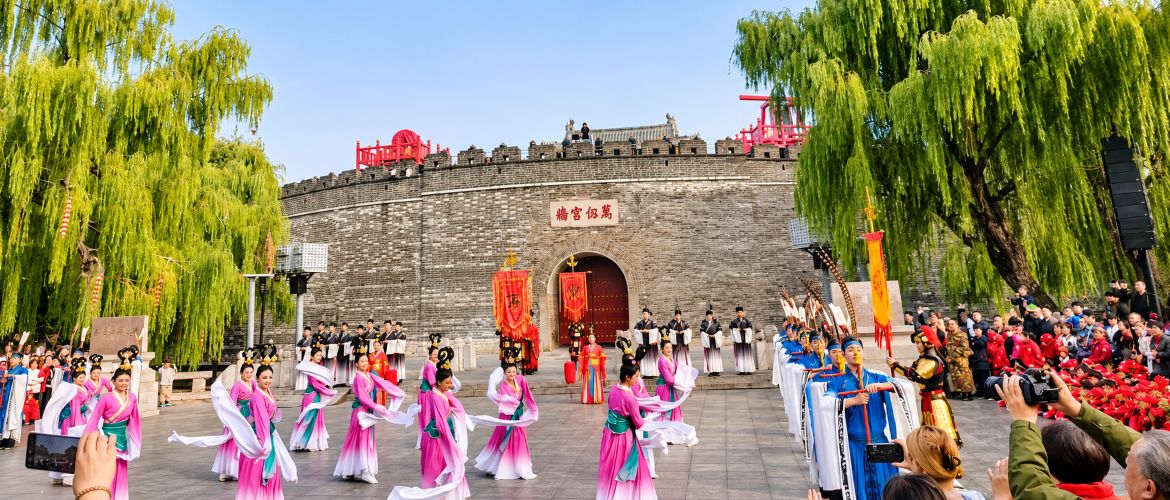
Qufu is the birthplace of Confucius (551–479 BCE), whose teachings profoundly influenced Chinese civilization and much of East Asia. The city’s three principal Confucian sites, the Temple of Confucius, the Kong Family Mansion and the Cemetery of Confucius, together form a UNESCO World Heritage Site.
We begin our sightseeing at the Kong Family Mansion, which served as the residence of Confucius’s descendants for centuries.
We then proceed to the Cemetery of Confucius, also known as Confucius Forest, where Confucius and generations of his descendants are buried. The extensive grounds are dotted with ancient trees, tombstones and monuments. If time permits, we will visit a nearby village.
Afterwards, we tour the impressive Temple of Confucius, one of China’s largest and most important temple complexes. Its courtyards contain grand halls, elaborate gateways, ancient cypresses and stone steles recording centuries of history.
Day 9/Fri: Qufu – Beijing (B/L)
Enjoy some free time before riding the bullet train to Beijing (2 hours 20 minutes). Transfer to the hotel on arrival. The balance of the day is at leisure.
The capital of China, Beijing is a major cultural, educational and political centre with a population exceeding 20 million. One of China’s great historic cities, it served as the imperial capital for much of the past eight centuries. Beijing is renowned for its magnificent palaces, temples, ancient city gates and other historical landmarks, many of which date back to the Ming (1368–1644) and Qing (1644–1912) dynasties.
Day 10/Sat: Beijing (B/L/D)
We begin today with a visit to the Forbidden City, officially known as the Palace Museum. This vast imperial complex served as the residence and administrative centre of the emperors of the Ming (1368–1644) and Qing (1644–1912) dynasties. Built between 1406 and 1420, it comprises approximately 980 buildings spread over 72 hectares (180 acres). Its traditional Chinese palatial architecture influenced palace design throughout East Asia. Although the Qing Dynasty fell in 1912, the last emperor, Puyi, was allowed to remain in the Forbidden City until his expulsion in 1924. The Palace Museum opened the following year. Designated a UNESCO World Heritage Site in 1987, the Forbidden City is one of the world’s largest and best-preserved complexes of ancient wooden buildings.
Next is Tian’anmen Square, measuring approximately 880 metres from north to south and 500 metres from east to west. Tian’anmen Gate stands at its northern end, with the Monument to the People’s Heroes near the centre. The Great Hall of the People and the National Museum of China flank the square to the west and east, respectively, while Chairman Mao’s Mausoleum and Qianmen (Front Gate) lie to the south. Since the May Fourth Movement of 1919, Tian’anmen Square and its surroundings have been associated with major political events and demonstrations, including the pro-democracy protests of 1989.
Our afternoon sightseeing takes us to the Temple of Heaven, another UNESCO World Heritage Site. Located in southeastern Beijing, this vast complex was where Ming and Qing emperors performed elaborate ceremonies and offered sacrifices to Heaven, praying for good harvests and the well-being of the empire. Construction began in 1406 under the Yongle Emperor and was completed in 1420. The complex was subsequently expanded and renovated during the Qing Dynasty. Covering 273 hectares (674 acres), the Temple of Heaven is nearly four times the size of the Forbidden City.
The Hongqiao Pearl Market is located across the street from the Temple of Heaven. Known for its freshwater pearls, jewellery and other merchandise, it attracts both local and international shoppers. If interested, you may ask the guide to drop you off there after sightseeing, but you will need to return to the hotel independently by taxi.
Dinner tonight features Peking roast duck, one of Beijing’s best-known dishes. Traditionally roasted until the skin is crisp, the duck is carved tableside and served with thin pancakes, scallions, cucumber and a savoury sauce.
Day 11/Sun: Beijing (B/L)
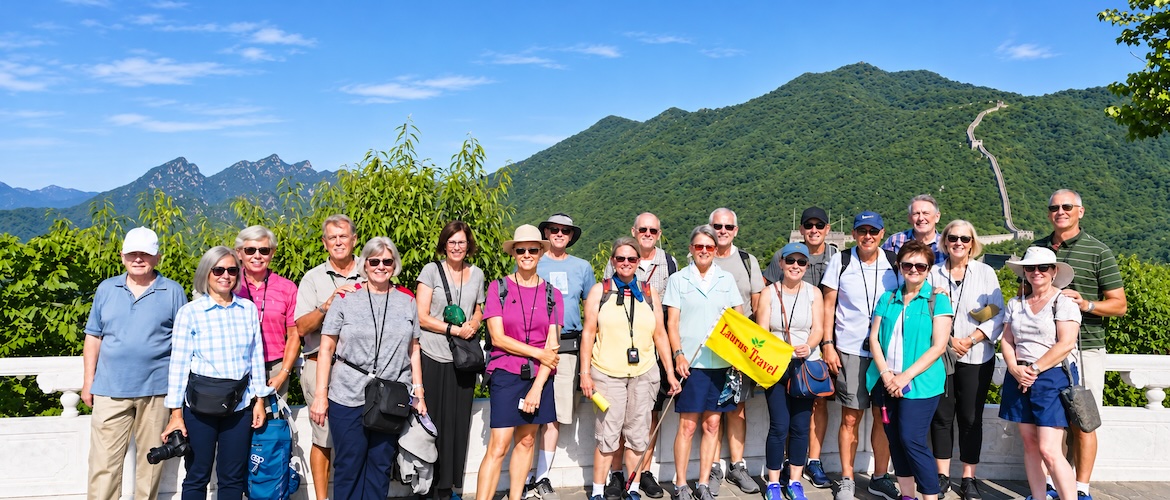
After an early breakfast, we set out on a full-day excursion to the Great Wall at Mutianyu, approximately 75 kilometres northeast of central Beijing.
The Great Wall is one of China’s most impressive engineering achievements. Its earliest sections date back to the 7th century BCE, when individual states built defensive walls against rival states and nomadic groups. Following China’s unification in 221 BCE, the First Emperor, Qin Shi Huang, ordered existing fortifications to be connected and extended. Successive dynasties continued to build and maintain defensive walls, but the most extensive reconstruction took place during the Ming Dynasty (1368–1644), when much of the brick-and-stone Wall familiar to visitors today was built.
Stretching across northern China, the Great Wall was intended to defend against incursions from the north, regulate border crossings and facilitate military communications. Despite its formidable appearance, it was never an impenetrable barrier, as demonstrated by the Mongol conquest of China in the 13th century under Genghis Khan and his successors, including Kublai Khan.
The Mutianyu section, originally established in the 6th century and substantially rebuilt during the Ming Dynasty, is known for its well-preserved watchtowers and mountain scenery. Cable car rides are included, allowing visitors to spend more time exploring the Wall itself.
Day 12/Mon: Beijing – Xi’an (B/L)
We begin our sightseeing with a visit to a traditional hutong neighbourhood. Hutongs are narrow alleyways lined with siheyuan, traditional courtyard houses typically enclosed by buildings on four sides. The term hutong dates back to the Yuan Dynasty (1271–1368) and is believed to derive from a Mongolian word meaning “water well,” reflecting the importance of wells as gathering places in early settlements.
Next is the Summer Palace, a UNESCO World Heritage Site and one of China’s finest imperial gardens. Originally known as the Garden of Clear Ripples, much of the complex was destroyed by British and French forces in 1860 during the Second Opium War. Reconstruction began in 1886, and the garden was renamed Yiheyuan (Garden of Nurtured Harmony). Covering approximately 290 hectares, the Summer Palace is dominated by Longevity Hill and Kunming Lake, with more than 3,000 bays of traditional buildings spread throughout the grounds.
After lunch, we board a high-speed train to Xi’an (approximately 4 hours 20 minutes). The journey takes us through the North China Plain, passing farmland, villages and rapidly developing cities. China’s extensive high-speed rail network, built largely over the past two decades, has transformed intercity travel, making long-distance journeys faster and more convenient.
Day 13/Tue: Xi’an (B/L)
With a history spanning more than 3,000 years, Xi’an served as the capital of several Chinese dynasties, including the Han (206 BCE–220 CE) and Tang (618–907). It was also the eastern terminus of the ancient Silk Road, a network of trade routes connecting China with Central Asia and regions as far west as the Mediterranean.
We spend the morning visiting the Terracotta Army, located approximately 30 kilometres east of Xi’an. Discovered by local farmers in 1974, this extraordinary collection of life-sized terracotta warriors and horses was created to guard the tomb of Qin Shi Huang, China’s first emperor (221–210 BCE), in the afterlife. The site is one of the greatest archaeological discoveries of the 20th century and has been designated a UNESCO World Heritage Site.
After lunch, we return to the city for a stroll along the ancient city wall. Originally built in 1370 during the Ming Dynasty, it is one of China’s best-preserved city walls. The wall runs approximately 13.7 kilometres around the old city, enclosing an area of 14 square kilometres. Standing 12 metres high, it measures between 15 and 18 metres thick at its base.
Day 14/Wed: Xi’an – Guilin (B/L)
Morning sightseeing begins at Xi’an Museum. One of the city’s leading cultural institutions, Xi’an Museum houses more than 110,000 historical artefacts, including ancient bronzes, ceramics, Buddhist sculptures and works of art spanning several thousand years of Chinese history. The museum complex also encompasses the Small Wild Goose Pagoda, built during the Tang dynasty (618–907), and the historic Jianfu Temple grounds. Together, these attractions offer a fascinating introduction to Xi’an’s rich cultural heritage and its importance as one of China’s great ancient capitals.
We then visit the Great Mosque in the old town centre and the adjacent Muslim Quarter. The mosque was established in the 8th century, although most of the surviving complex dates from the Ming dynasty (1368–1644), with further additions during the Qing dynasty (1644–1912). Unlike many mosques in the Middle East, the Great Mosque is predominantly Chinese in architectural style, with traditional courtyards, pavilions and tiled roofs rather than the domes and minarets commonly associated with Islamic architecture elsewhere.
The afternoon flight to Guilin takes about 2 hours.
Day 15/Thu: Guilin (B/L)
A relatively small city by Chinese standards, Guilin has long been celebrated for its extraordinary landscape of limestone hills, winding rivers and lush greenery. Its name literally means “forest of sweet osmanthus,” a reference to the fragrant osmanthus trees that grow abundantly throughout the city.
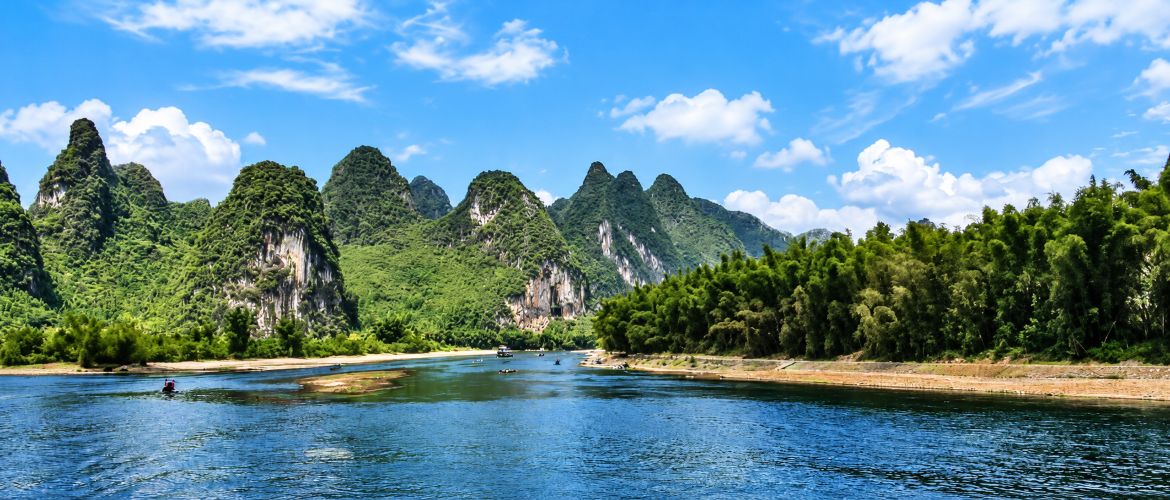
We begin the day with a cruise down the Li River, one of China’s most celebrated scenic waterways. The 83-kilometre stretch between Guilin and Yangshuo winds through a spectacular landscape of limestone peaks, bamboo groves and picturesque villages that has inspired Chinese poets and painters for centuries.
After approximately five hours on the river, we disembark in Yangshuo following lunch on board and return to Guilin by road.
We conclude our sightseeing with a visit to Fubo Hill, a limestone peak rising approximately 63 metres above its surroundings. Located beside the Li River, the hill offers fine views of the city and surrounding landscape. Those interested can walk back to the hotel along the river, enjoying Guilin’s beautiful scenery at a more leisurely pace.
Day 16/Fri: Guilin – Hong Kong (B)
Enjoy a free morning to explore Guilin on your own. In the afternoon, we travel to Hong Kong by high-speed train (approximately three hours).
Hong Kong, meaning “fragrant harbour,” is one of China’s two special administrative regions, the other being Macau. Located on the southern coast of China, it is one of the world’s leading financial and commercial centres, renowned for its spectacular skyline, bustling harbour and distinctive blend of Chinese and Western influences.
Hong Kong was under British rule from 1842 until its return to China in 1997. Under the principle of “one country, two systems,” it maintains its own currency, legal system, immigration and customs arrangements. Its history as an international trading port has helped shape one of Asia’s most cosmopolitan cities.
Day 17/Sat: Hong Kong (B/L)
Our morning sightseeing begins with a ride aboard the famous Star Ferry across Victoria Harbour from Tsim Sha Tsui to Central. Operating since 1888, the ferry offers splendid views of Hong Kong’s celebrated skyline.
We then explore Central, Hong Kong’s principal business and financial district, home to major international banks, corporate headquarters and government institutions.
Next, we ascend Victoria Peak, the highest point on Hong Kong Island at 552 metres above sea level. From the popular viewing areas near the summit, we enjoy sweeping views of Victoria Harbour, the densely built city below and the surrounding islands.
We make a brief stop at Repulse Bay, one of Hong Kong’s most prestigious residential neighbourhoods, before enjoying a farewell lunch at a local restaurant.
The afternoon is free for independent exploration. Your local guide will be happy to offer suggestions on places to visit and things to do.
Day 18/Sun: Departure from Hong Kong (B)
Transfer to Hong Kong International Airport independently for your return flight. For convenience, we recommend taking a taxi directly from the hotel.
Hotel List
| City | Nights | Hotel | Category |
| Shanghai | 3 | Amara Signature Shanghai | luxury |
| Hangzhou | 1 | Shangri-La Hotel | luxury |
| Suzhou | 1 | Pan Pacific Suzhou | luxury |
| Qufu | 2 | Shangri-La Hotel | luxury |
| Beijing | 3 | New Otani Chang Fu Gong | luxury |
| Xi’an | 2 | Sheraton Xian North City | Luxury |
| Guilin | 2 | Sheraton Guilin | Luxury |
| Hong Kong | 2 | Harbour Grand Kowloon | Luxury |
Dates & Prices
Prices are per person based on double occupancy. International airfare is not included.
| Depart (Thu) | Return (Sun) | Land Only* CA$/US$ | Single Supplement CA$/US$ |
| 2027 | |||
| 04-Mar | 21-Mar | $7,100/$5,150 | $2,415/$1,750 |
| 11-Mar | 28-Mar | $7,100/$5,150 | $2,415/$1,750 |
| 18-Mar | 04-Apr | $7,160/$5,190 | $2,415/$1,750 |
| 01-Apr | 18-Apr | $7,245/$5,250 | $2,415/$1,750 |
| 08-Apr | 25-Apr | $7,245/$5,250 | $2,415/$1,750 |
| 15-Apr | 02-May | $7,245/$5,250 | $2,415/$1,750 |
| 06-May | 23-May | $7,245/$5,250 | $2,415/$1,750 |
| 13-May | 30-May | $7,245/$5,250 | $2,415/$1,750 |
| 20-May | 06-Jun | $7,180/$5,200 | $2,415/$1,750 |
| 27-May | 13-Jun | $7,040/$5,100 | $2,415/$1,750 |
| 26-Aug | 12-Sep | $7,040/$5,100 | $2,415/$1,750 |
| 02-Sep | 19-Sep | $7,180/$5,200 | $2,415/$1,750 |
| 09-Sep | 26-Sep | $7,245/$5,250 | $2,415/$1,750 |
| 16-Sep | 03-Oct | $7,245/$5,250 | $2,415/$1,750 |
| 07-Oct | 24-Oct | $7,440/$5,390 | $2,415/$1,750 |
| 14-Oct | 31-Oct | $7,440/$5,390 | $2,415/$1,750 |
| 21-Oct | 07-Nov | $7,310/$5,300 | $2,415/$1,750 |
| 28-Oct | 14-Nov | $7,180/$5,200 | $2,415/$1,750 |
| 04-Nov | 21-Nov | $7,040/$5,100 | $2,415/$1,750 |
| 11-Nov | 28-Nov | $7,040/$5,100 | $2,415/$1,750 |
* Land Only price excludes international airfare. Please contact us for a fare quote.
What the tour price includes:
| What the tour price excludes:
See Terms & Conditions for more information. |