
Beijing – Xi’an – Luoyang – Dengfeng (Shaolin Temple) – Zhengzhou – Kaifeng – Nanjing – Hangzhou – Shanghai
Venture back in time and immerse yourself in the rich history and culture of China’s ancient capitals. From the awe-inspiring Forbidden City in Beijing to the historic heart of Xi’an, this journey offers a rare opportunity to explore the country’s most iconic landmarks. Walk the paths of emperors, marvel at ancient architecture, and experience the stories that have shaped China’s past and present. Immersive activities include cooking and calligraphy lessons. Ready to unlock the secrets of this timeless civilization? Your adventure awaits.
Important Features
- Small group size – average 15, maximum 20.
- Outstanding professional guides handpicked by company owners.
- Inter-city travel by high-speed train.
- No annoying forced shopping of any kind.
- Quality meals at non-tourist restaurants.
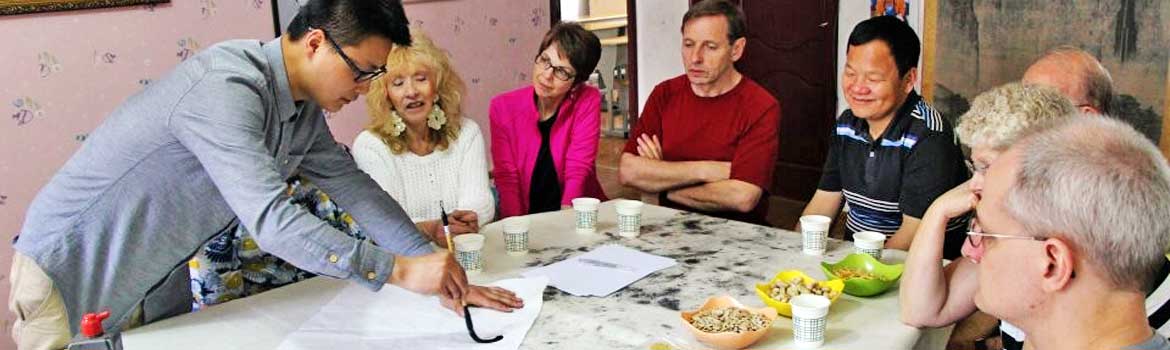
- Chinese cooking & calligraphy lessons.
- Unlimited supply of bottled water during group activities.
- Free Wi-Fi in all hotels.
- Great Wall visit at Mutianyu with cable car rides.
- and so much more…
Meal Code: B = breakfast / L = lunch / D = dinner
Day 1/Thu: Departing for Beijing
The trip starts with your transpacific flight departing from a city of your choice. You’ll lose a day upon crossing the International Date Line.
Day 2/Fri: Arrival in Beijing
Meet the driver on arrival for transfer to the hotel. You’ll have the remainder of the day at leisure. The guide will get in touch with you tonight.
Day 3/Sat: Beijing (B/L/D)
We begin our sightseeing today at the Forbidden City. Officially known as the Palace Museum, the Forbidden City was the place where the emperors of the Ming (1368-1644) and Qing (1644-1912) dynasties lived and carried out their administration. The complex consists of 980 buildings and covers 72 hectares or 180 acres. It exemplifies traditional Chinese palatial architecture and has influenced cultural and architectural developments in East Asia and elsewhere.
Afternoon sightseeing takes place at the Temple of Heaven. Situated in southeastern Beijing, the Temple of Heaven is China’s largest extant sacrificial temple where, during the Ming and Qing Dynasties, the emperors conducted the elaborate and most exalted sacrifices addressed to “the Supreme Ruler of the Universe”. Occupying 2.73 square kilometres (roughly 1,700 by 1,600 metres), the area of the Temple of Heaven is more than twice that of the Forbidden City.
The famous Hongqiao Pearl Market, the largest pearl market in the world, is right across the street from the Temple of Heaven. Recommended by numerous guidebooks for freshwater pearls, Hongqiao teems with domestic and international shoppers. If you are interested, please ask the guide to drop you off there. However, you’ll need to get back to the hotel by taxi, which costs less than 10 US dollars.
Today we enjoy a delicious dinner at a popular Peking Roast Duck restaurant. Peking Roast Duck is a famous Beijing dish prized for the thin and crispy skin with authentic versions serving mostly the skin and little meat, sliced in front of the diners. The meat is wrapped in a thin layer of pancake (Chinese tortilla) together with shredded scallion, cucumber, and a sweet and salty sauce made of wheat flour. Condiments may also include pickled garlic and white sugar.
Day 4/Sun: Beijing (B/L)
After an early breakfast we embark on a full-day excursion to the legendary Great Wall at Mutianyu, 75 km northeast of the city.
Zigzagging over 6,000 kilometres from east to west along the undulating mountains, the Great Wall was built to hold off tribal invaders from the north. As history shows, the Wall failed the Chinese rulers miserably, especially in the case of Kublai Khan whose men swept across China from the Mongolian steppe, thus marking the beginning of the Yuan Dynasty (1279-1368).
Construction of the earliest sections of the Wall started in the 7th century BCE. A major renovation started with the founding of the Ming Dynasty in 1368 and took 200 years to complete. The wall we see today in Beijing is almost exactly the result of this effort.
Day 5/Mon: Beijing – Xi’an (B/L/D)
Begin your day with a visit to one of Beijing’s historic hutong neighborhoods characterized by traditional courtyard houses. Hutong refers to an ancient alleyway with siheyuan or ”4-sided courtyard house” on both sides.
Next, we explore the Summer Palace, a UNESCO site built as an imperial retreat. In the afternoon, we board a high-speed train to Xi’an. The 4-hour-23-minute rail journey through fertile farmland dotted with villages provides the visitor with an excellent way to enjoy the beautiful countryside.
Day 6/Tue: Xi’an (B/L)
With a history going back over 3,000 years, Xi’an served as China’s capital of several ruling dynasties including the Han (206 BCE – 220 CE) and the Tang (618 – 907). It is home to the famous Terracotta Army and the eastern terminus of the ancient Silk Road – a network of trade routes connecting China proper with regions as far as the Mediterranean beginning in the Second Century BCE.
We spend the morning visiting the Terracotta Army. Built on the excavation site, the museum is located 30 km east of the city. Designed to follow the first emperor of the Qin Dynasty (221-206 BCE) into eternity, the Terracotta Army represents one of the greatest archeological discoveries of the 20th century.
After lunch we return to the city for a stroll on the ancient city wall. Declared a national treasure by the State Council in 1961, the wall (first built in 1370) encircles an area of 14 square kilometres. It runs 13.7 kilometres long and measures 12 metres in height with a thickness at the base between 15 to 18 metres.
Day 7/Wed: Xi’an – Luoyang (B/L/D)
Morning sightseeing begins at Shaanxi Provincial Museum. The modern, well-organized museum was completed in 1992 and traces the history of Xi’an from prehistory to the Qing dynasty (1644-1912). The extensive galleries and exhibitions offer the visitor an excellent introduction to the area that greatly improves understanding of the numerous historical sites in and around the city.
We then visit the grand mosque in the old town centre and the adjacent Muslim bazaar. The mosque was established in the 8th century but the majority of the complex was constructed in the Ming Dynasty (1368-1644). It was further expanded in the Qing Dynasty. Unlike most mosques in Middle Eastern or Arab countries, this mosque is completely Chinese in style. It has neither domes nor traditional minarets.
This afternoon we ride the bullet train to Luoyang (1h 20m) in Henan Province. Luoyang is one of China’s oldest and most historically significant cities, often considered one of the cradles of Chinese civilization. Located in the central part of the country, in Henan Province, it has a history that spans over 4,000 years. The medium-sized city is also home to world-famous White Horse Temple and Longmen Grottoes.
Day 8/Thu: Luoyang (B/L)
Morning sightseeing begins at the magnificent Longmen Grottoes – a UNESCO World Heritage Site. Located 12 km south of the city centre, the historical site contains as many as 100,000 Buddhist statues ranging from 1 inch to 57 feet in height. Dating back as far as 493 A.D, these ancient sculptures carved out of cliffs on both sides of the Yi River are some of the finest examples of Chinese Buddhist art.
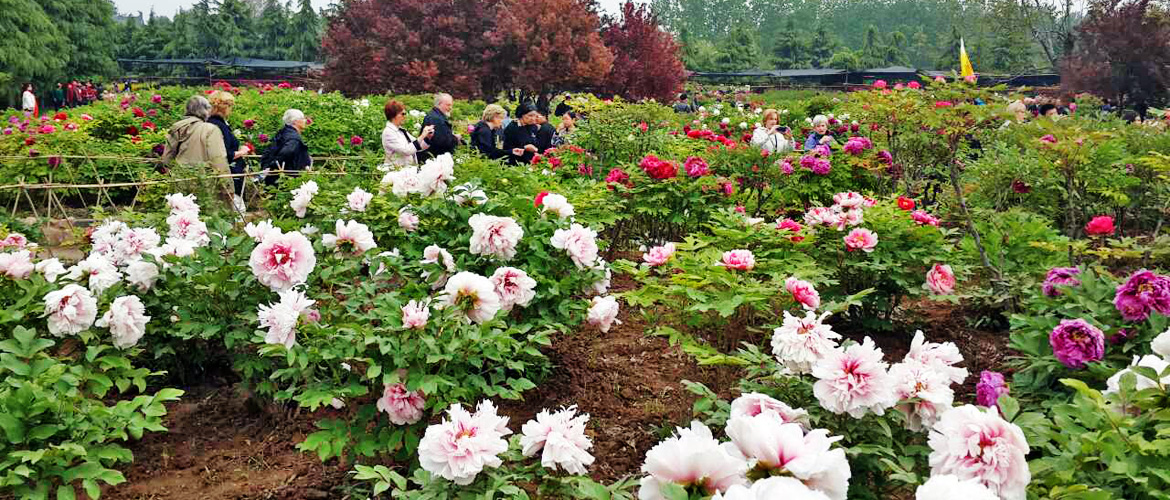
After lunch, we visit the White Horse Temple, one of the oldest Buddhist temples in China. This is followed by a tour of the Peony Garden or Luoyang Folklore Museum.
Day 9/Fri: Luoyang – Shaolin Temple – Zhengzhou (B/L)
After breakfast we drive 60 km to the legendary Shaolin Temple located in Dengfeng county. In 2010, UNESCO added several of the most renowned sites across Dengfeng to its World Heritage List. Shaolin Monastery and its Pagoda Forest are included under the title “Historic Monuments of Dengfeng in ‘The Centre of Heaven and Earth’”.
Shaolin is a Chan Buddhist monastery at the foothills of Songshan. It was built by Emperor Xiao Wen in 477 AD and first headed by an abbot from India who came over in 464 AD. Long famous for its association with Chinese martial arts, it is perhaps China’s best known Mahayana Buddhist monastery to the Western world.
Later this afternoon we continue on to Zhengzhou (80 km), the capital city of Henan Province and one of China’s oldest cities. Set on the banks of the Yellow River, Zhengzhou also offers scenic natural beauty and is a major hub on China’s high-speed rail network.
Day 10/Sat: Zhengzhou – Kaifeng – Zhengzhou (B/L)
Today we take a day trip to Kaifeng by high-speed train. The journey takes 20 minutes each way.
Kaifeng served as capital of eight dynasties but is best known for being the capital of the Northern Song dynasty (960-1126). Before the 19th century, Kaifeng was one of the greatest cities in the world and a meeting place of different peoples and faiths. Besides Buddhist and Taoist temples, there were Christian churches, Muslim mosques and Jewish Synagogues. In fact, Kaifeng has the oldest extant Jewish community in China: the Kaifeng Jews, who came from Persia and perhaps Yemen during the Song Dynasty to trade. At their prime time in the Ming Dynasty, there were over 3,000 Jewish residents in Kaifeng. Over time, the Kaifeng Jews intermarried with local Chinese and became indistinguishable in appearance from their Chinese neighbours.
Sightseeing in Kaifeng includes the Iron Pagoda (built in 1049), Daxiangguo Temple (Temple of the Chief Minister), Shanshangan Guild Hall for its exquisite carvings out of stone, and the Imperial Street of the Song dynasty.
Day 11/Sun: Zhengzhou – Nanjing (B/L/D)
Our sightseeing in Zhengzhou includes Henan Museum and the Shang Dynasty Ruins.
Zhengzhou’s most notable cultural institution is the Henan Museum, one of China’s most important museums. The huge quantity of impressive exhibits ranges from prehistory, including dinosaur bones, up through the Qing Dynasty.
The Shang Dynasty Ruins are what remain of a section of a Shang Dynasty wall that stood 3,000 years ago. Now in a city park, it is essentially a long mound of dirt that people can walk on and sit on top of underneath the trees.
In the afternoon we take the high-speed train G1828 (14:15/17:34) to Nanjing.
Day 12/Mon: Nanjing (B/L)
Nanjing (formerly romanized as Nanking) is the capital city of Jiangsu Province and has a population of 8.27 million. Situated in the affluent Yangtze River Delta region, Nanjing has a prominent place in Chinese history and culture, having served as the capital of various Chinese dynasties, kingdoms and modern governments. The city also served as the seat of government of the rebel Taiping Heavenly Kingdom (1853-64) and the Japanese puppet regime (1940-45) during the Second Sino-Japanese War.
This morning we visit the Ming Xiaoling Mausoleum dedicated to Emperor Hongwu, the founder of the Ming Dynasty.
After lunch we visit the Presidential Palace of the Kuomintang government prior to its flee to Taiwan in 1949.
Day 13/Tue: Nanjing (B/L)
Today on our schedule is Nanjing Museum, one of the largest in China, with over 400,000 items in collection. Especially notable is its impressive collection of Ming and Qing imperial porcelain, which is among the largest in the world.
The afternoon is set aside for you to relax or explore on your own.
Day 14/Wed: Nanjing – Hangzhou (B/L/D)
After a leisurely breakfast, we ride the high-speed train to Hangzhou (47 minutes).
Hangzhou (formerly romanized as Hangchow) is the capital of Zhejiang Province and sits at the southern terminus of the Grand Canal. Listed as one of the Seven Ancient Capitals of China, Hangzhou was first the capital of Wuyue Kingdom from 907 to 978 during the Five Dynasties and Ten Kingdom period. It was chosen as the new capital of the Southern Song Dynasty in 1132 when the imperial family retreated from its original capital in Kaifeng during the Jin-Song wars. Once the prospect of retaking northern China had diminished, Hangzhou was built into a new major commercial and cultural centre. Numerous philosophers, politicians, and men of literature, including some of the most celebrated poets in Chinese history, came here to live and die. The renowned Su Causeway across West Lake was built by Su Shi (Su Dongpo) when he was the governor of Hangzhou. Su Dongpo is widely regarded as one of the most accomplished figures in classical Chinese literature, calligraphy and gastronomy. Dongpo Pork, a famous dish in Hangzhou, is named in his honour.
Our sightseeing today includes Lingyin Temple, Six Harmony Pagoda and a short cruise on West Lake.
Day 15/Thur: Hangzhou (B/L)
Hangzhou is famous for its Longjing green tea. This morning, we will visit a tea plantation for an in-depth lesson on Chinese tea culture and observe how Longjing tea is produced.
Next we visit China National Silk Museum, the first state-level silk museum as well as the biggest of its kind in the world. It showcases the history and culture of Chinese silk. Visitors have the opportunity of participating in some hands-on weaving activities.
Optional evening entertainment is Impression West Lake – a live show staged on West Lake involving hundreds of performers.
Day 16/Fri: Hangzhou – Shanghai (B)
Free morning to explore on your own. Our recommendations include biking along West Lake and exploring Qing He Fang Street on foot.
We board the afternoon high-speed train to Shanghai (1 hr).
With a population close to 25 million, Shanghai is China’s largest city and a dynamic hub of global trade and cultural exchange. The city delights visitors from around the world with its futuristic skyline and historical landmarks.
Day 17/Sat: Shanghai (B/L/D)
We begin our day with a visit to Jade Buddha Temple located in an old neighbourhood. We then walk the famous Bund – a waterfront promenade with a riveting history.
After lunch, we stroll the historical People’s Park and adjacent People’s Square in the heart of the city. Originally part of the Shanghai Race Club first established in 1850, the park and the square are surrounded by world-class museums and shops, which attract millions of visitors each year.
We wrap up the day’s sightseeing with a tour of the exquisite Yu Garden in the old town centre.
Day 18/Sun: Shanghai (B)
Free day to explore on your own.
If you are interested in art and history, Shanghai Museum would be a great place to spend half a day. This museum houses a huge collection of precious national treasures. Shanghai Jewish Refugees Museum and Nanwaitan Fabric Market (high-end tailor shops) are also recommended.
Optional Suzhou Day Tour
After breakfast we ride the high-speed train (30-40 minutes) to Suzhou, an ancient city most famous for its gardens, ancient canals and silk industry. In the late 13th century a Venetian named Marco Polo visited Suzhou and was very impressed by what he saw. He vividly described the prosperous silk industry and dubbed Suzhou “Venice of the East” due to the small waterways crisscrossing the city.
Our full-day schedule takes in the historic Tiger Hill, Humble Administrator’s Garden, North Pagoda, a short canal cruise. We return to Shanghai by train in the afternoon.
The all-inclusive price with lunch starts from US$250 per person and requires a minimum of 2 participants to operate.
Day 19/Mon: Shanghai – Home City (B)
The incredible China tour ends this morning. Transfer to the airport any time for return flight. Guests flying back to North America will regain a day upon re-crossing the International Date Line, thus arriving home the same day as departing from Shanghai.
| City | Nights | Hotel | Category |
| Beijing | 3 | New Otani Chang Fu Gong | Luxury/5 stars |
| Xi’an | 2 | Sheraton Xi’an North City | Luxury/5 stars |
| Luoyang | 2 | Luoyang Marriott Hotel | Luxury/5 stars |
| Zhengzhou | 2 | Hilton Zhengzhou | Luxury/5 stars |
| Nanjing | 3 | Jinling Hotel Nanjing | Luxury/5 stars |
| Hangzhou | 2 | Sofitel Hangzhou Westlake | Luxury/5 stars |
| Shanghai | 3 | Amara Signature Shanghai | Luxury/5 stars |
Dates & Prices
| Depart (Thu) | Return (Mon) | Land Only* CA$/US$ | Single Supplement CA$/US$ |
| 2026 | |||
| 18-Jun | 06-Jul | $7190/$5250 | $2240/$1635 |
| 02-Jul | 20-Jul | $7190/$5250 | $2240/$1635 |
| 06-Aug | 24-Aug | $7190/$5250 | $2240/$1635 |
| 03-Sep | 21-Sep | $7330/$5350 | $2370/$1730 |
| 10-Sep | 28-Sep | $7330/$5350 | $2370/$1730 |
| 08-Oct | 26-Oct | $7330/$5350 | $2370/$1730 |
| 15-Oct | 02-Nov | $7330/$5350 | $2370/$1730 |
| 22-Oct | 09-Nov | $7190/$5250 | $2240/$1635 |
| 29-Oct | 16-Nov | $7190/$5250 | $2240/$1635 |
| 05-Nov | 23-Nov | $7190/$5250 | $2240/$1635 |
| 2027 | |||
| 25-Mar | 12-Apr | $7190/$5250 | $2240/$1635 |
| 01-Apr | 19-Apr | $7330/$5350 | $2370/$1730 |
| 08-Apr | 26-Apr | $7330/$5350 | $2370/$1730 |
| 06-May | 24-May | $7330/$5350 | $2370/$1730 |
| 13-May | 31-May | $7330/$5350 | $2370/$1730 |
| 20-May | 07-Jun | $7330/$5350 | $2370/$1730 |
| 27-May | 14-Jun | $7190/$5250 | $2240/$1635 |
| 03-Jun | 21-Jun | $7190/$5250 | $2240/$1635 |
| 10-Jun | 28-Jun | $7190/$5250 | $2240/$1635 |
| 26-Aug | 13-Sep | $7330/$5350 | $2370/$1730 |
| 02-Sep | 20-Sep | $7330/$5350 | $2370/$1730 |
| 09-Sep | 27-Sep | $7330/$5350 | $2370/$1730 |
| 07-Oct | 25-Oct | $7480/$5460 | $2370/$1730 |
| 14-Oct | 01-Nov | $7480/$5460 | $2370/$1730 |
| 21-Oct | 08-Nov | $7330/$5350 | $2370/$1730 |
| 28-Oct | 15-Nov | $7330/$5350 | $2240/$1635 |
| 04-Nov | 22-Nov | $7190/$5250 | $2240/$1635 |
* Land Only price does NOT international airfare. Please contact us for a fare quote.
What the tour price includes:
| What the tour price excludes:
See Terms & Conditions for more information. |