
Shanghai – Hangzhou – Changsha – Zhangjiajie – Chengdu – Xi’an – Beijing
This expertly-crafted 15-day journey reveals China’s soul — from Shanghai’s dazzling skyline and Hangzhou’s poetic West Lake, to the Avatar-inspired peaks of Zhangjiajie, Chengdu’s beloved pandas, and Xi’an’s timeless Terracotta Army. Immerse yourself in vibrant cultures, savour authentic flavours, and create memories as enduring as the Great Wall itself. Let every high-speed train ride and unexpected discovery awaken your sense of wonder: China’s greatest treasures are calling you to explore beyond the ordinary.
Important Features
- Small group size.
- Expert local guides handpicked by company owners.
- Inter-city travel exclusively by high-speed train.
- North American standard luxury hotels.
- No annoying forced shopping of any kind.
- Quality meals at non-tourist restaurants.
- Unlimited supply of bottled water during group activities.
- Great Wall visit at Mutianyu with cable car rides.
Options Available
- Impression West Lake live performance in Hangzhou.
- Face Changing performance in Chengdu.
- Tang Dynasty cultural show in Xi’an.
- Peking Opera show in Beijing.
Meal Code: B = Breakfast | L = Lunch | D = Dinner
TOUR ITINERARY
Day 1/Thu: Departing for Shanghai
The trip starts with your transpacific flight departing from a city of your choice. International airfare is not included but can be offered on request. You’ll lose a day upon crossing the International Date Line.
Day 2/Fri: Arrival in Shanghai
Meet the driver on arrival for your private transfer to the hotel. You’ll have the remainder of the day at leisure. The guide will get in touch with you tonight.
Day 3/Sat: Shanghai (B/L/D)
With a population close to 25 million, Shanghai is China’s largest city and a dynamic hub of global trade and cultural exchange. The city delights visitors from around the world with its futuristic skyline and historical landmarks.
We begin our day with a visit to Jade Buddha Temple located in an old neighbourhood. We then walk the famous Bund – a waterfront promenade with a riveting history.
After lunch, we stroll the historical People’s Park and adjacent People’s Square in the heart of the city. Originally part of the Shanghai Race Club first established in 1850, the park and the square are surrounded by world-class museums and shops, which attract millions of visitors each year.
We wrap up the day’s sightseeing with a tour of the exquisite Yu Garden in the old town centre.
Day 4/Sun: Shanghai – Hangzhou (B/L)
The rail journey to Hangzhou this morning takes less than an hour (G221, 09:00/09:45).
Hangzhou, one of China’s oldest cities, boasts a rich history. The city blends ancient charm with scenic beauty and captivates visitors with its scenic West Lake, traditional gardens, ancient temples, and rich cultural heritage.
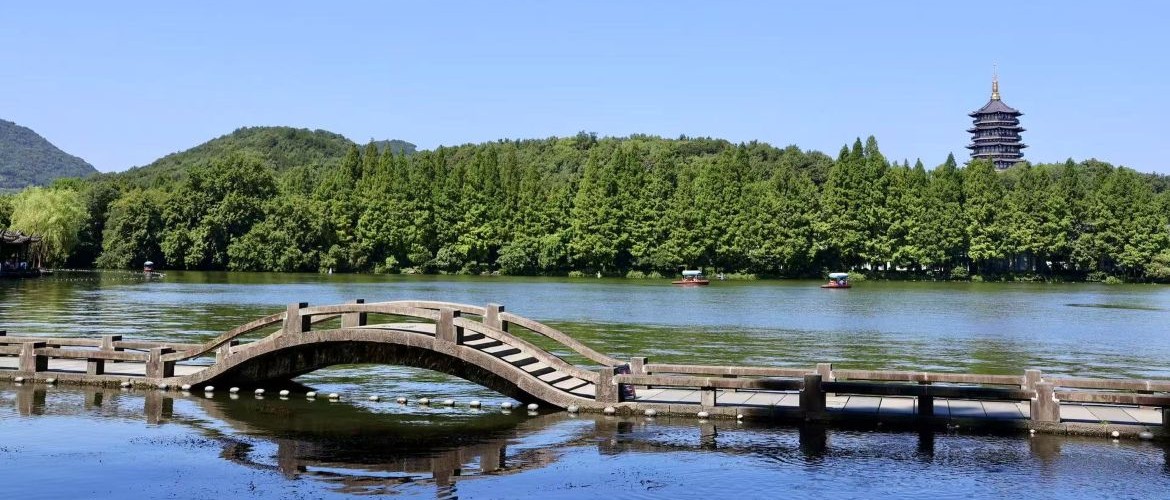
We begin our day with a short cruise on West Lake in the heart of Hangzhou. A UNESCO World Heritage Site, the lake is celebrated for its serene beauty and cultural significance. Surrounded by temples, pagodas, gardens, and willow-lined paths, the lake has inspired poets, artists, and emperors for centuries. Iconic sights include the Broken Bridge, Su Causeway, and Leifeng Pagoda.
We then proceed to Guo’s Villa (Guo Zhuang), one of the most elegant private gardens in Hangzhou. Located near West Lake and known for its refined layout and poetic atmosphere, the villa features classical pavilions, rockeries, and peaceful water scenes.
Our first stop after lunch is Lingyin Temple. Also known as the Temple of the Soul’s Retreat, Lingyin is one of the most famous and significant Buddhist temples in China. Founded in 328 AD by the Indian monk Huili, the Chan (Zen) Buddhism temple is nestled in a picturesque setting among forested hills and rocky cliffs of the Feilai Peak (Flying Peak).
We wrap up the day with a visit to the China National Silk Museum located on the southern shore of West Lake. This is the world’s largest dedicated silk museum and a premier national‑level institution in China. What makes it so special, in addition to its scale, is the quality of its collections and research. The museum is home to textiles dating from the Neolithic period to modern times, including rare silk fragments, imperial dragon robes, and archaeological finds from Silk Road sites. The museum also houses the Chinese Center for Textile Identification and Conservation (CCTIC) and a national textile heritage research center.
Impression West Lake Show
Impression West Lake is a breathtaking outdoor night show staged on Hangzhou’s iconic West Lake. Directed by renowned filmmaker Zhang Yimou, the performance blends music, lighting, dance, and stunning natural scenery to create a dreamlike experience. Using a submerged stage, performers appear to glide across the water, enhanced by atmospheric effects and haunting melodies. Inspired by local legends, including the tale of the White Snake, the show captures the romance, history, and cultural spirit of Hangzhou. It’s a must-see for visitors, offering an unforgettable fusion of traditional Chinese aesthetics and modern stagecraft in a truly magical lakeside setting.
This is not included in your itinerary but will be offered as an option subject to availability.
Day 5/Mon: Hangzhou – Changsha (B/L/D)
After breakfast, we drive 30 minutes to Longjing Village, where the world-famous Longjing green tea is produced. We’ll explore the scenic rolling tea plantations and learn about the history and production of Chinese tea.
Afterwards, we return to the city for a tour of Hangzhou Botanical Garden, a large, scenic garden showcasing a vast variety of plant species and seasonal flower displays. This is a great place for walking, picnicking, and learning about native flora.
We ride the late afternoon train to Changsha (G223, 15:48/19:02).
Day 6/Tue: Changsha – Zhangjiajie (B/L/D)
Located in the heart of China’s Hunan Province, Changsha is a vibrant city that beautifully blends history, culture, and modernity. Known for its rich heritage, delicious local cuisine (especially the spicy Hunan dishes), and scenic spots, Changsha offers something for every traveler.
Our visit in Changsha focuses on Hunan Museum, a cultural landmark where the precious relics unearthed from the ancient Mawangdui Han Tombs are particularly distinctive. If time allows, enjoy a leisurely stroll on the Orange Isle, a famous scenic spot known for its beautiful riverside park and seasonal blooms — especially during spring and autumn.
Later in the day, we continue on to Zhangjiajie by high-speed train, which takes approximately 2 hours.
Day 7/Wed: Zhangjiajie (B/L)
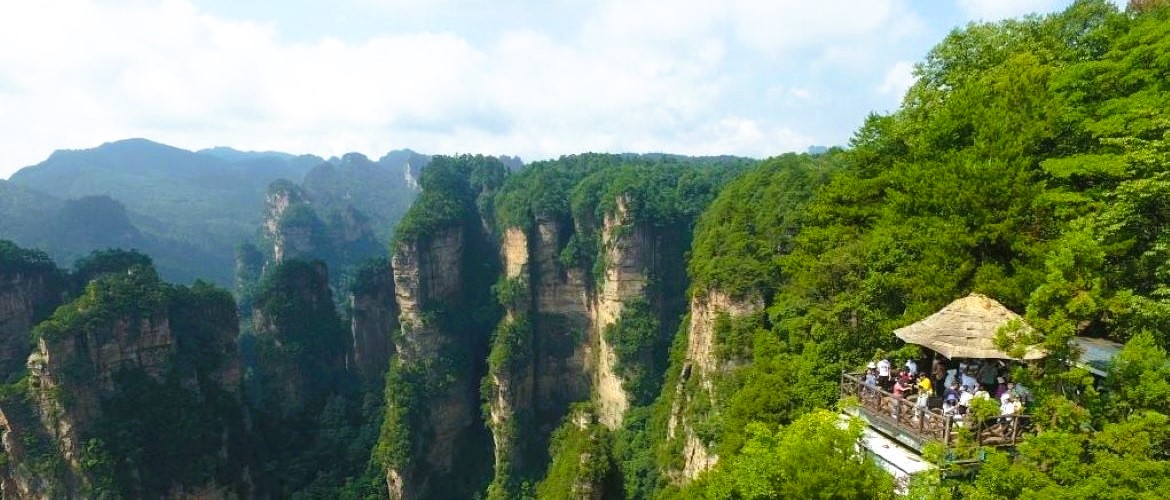
Nestled in the northwest of Hunan Province, Zhangjiajie is a breathtaking destination renowned for its stunning natural beauty — a paradise for nature lovers.
Enjoy a full-day tour through Zhangjiajie National Forest Park, a UNESCO World Heritage Site famed for its surreal sandstone pillars and mist-shrouded peaks which served as inspiration for the movie Avatar.
Our sightseeing begins with a visit to Yuanjiajie, home to the legendary “Avatar Hallelujah Mountain”. Ascend the mountain via the Bailong Elevator, the world’s tallest outdoor lift, and marvel at panoramic views of floating mountains and dizzying cliffs.
Continue to the Tianzi Mountain area, often referred to as the “Monarch of the Peak Forest” for its sweeping vistas, sea of clouds, and uniquely-named rock formations. From its lofty platforms, you’ll witness the grandeur of Zhangjiajie’s landscape from above.
Afterward, descend to the valley floor and wander along the tranquil Jinbian Creek, a scenic trail flanked by sheer cliffs and lush forest. The gentle stream, clear pools, and occasional monkey sighting make for a peaceful contrast to the soaring peaks above.
This immersive day blends jaw-dropping natural beauty, light hiking, and iconic viewpoints — perfect for photographers and nature enthusiasts alike.
Day 8/Thu: Zhangjiajie – Chengdu (B/D)
Today we venture to Tianmen Mountain, where we embark the world’s longest cable car ride to reach the summit (about 7.5 kilometers) to view the famous Tianmen Cave, a natural arch in the mountain often referred to as Heaven’s Gate. Formed after a cliff collapsed in 263 AD, the cave sits at an elevation of 1,518 meters (4,980 feet) and measures approximately 131 meters high, 57 meters wide, and 60 meters deep — making it one of the highest natural karst arches in the world.
Enjoy the stunning skywalk along the cliffs. They are solid-floored cliffside walkways built directly into the vertical cliff face of Tianmen Mountain. Suspended at over 1,400 meters (4,600 feet), they offer unobstructed views of Zhangjiajie’s dreamlike landscape, with peaks rising like stone sentinels from the misty valley below.
We ride the later afternoon train (G2322, 13:26/18:25) to Chengdu. Due to time constraint, a proper lunch cannot be served; please buy some snacks to eat on the train.
Day 9/Fri: Chengdu – Xi’an (B/L)
Morning sightseeing takes place at Chengdu Research Base of Giant Panda Breeding. The giant panda, unrelated to the red or lesser panda, is a bear native to south central China, living in mountainous regions. It is easily recognized by the large, distinctive black patches around its eyes, over the ears, and across its round body. Though it belongs to the order Carnivora, the panda’s diet is over 99% bamboo. The giant panda has an insatiable appetite for bamboo. A typical animal eats half the day – a full 12 out of every 24 hours – and relieves itself dozens of times a day. Giant pandas are solitary creatures. They have a highly developed sense of smell that males use to avoid each other and to find females for mating in the spring. After a five-month pregnancy, females give birth to a cub or two, though they cannot care for both twins. The blind infants, born fully white, weigh only 5 ounces (142 grams) at birth and cannot crawl until they reach three months of age.
The giant panda is a conservation-reliant species. Although no longer considered by the International Union for Conservation of Nature (IUCN) to be Endangered, the species is still classified as Vulnerable. Recent statistics show 637 pandas living in captivity with most of them inside China. The most authoritative estimate as of late 2022 puts the number of giant pandas living in the wilderness at 1864.
We spend most of the afternoon at Jinsha Museum. In February 2001, construction workers chanced upon a significant archaeological discovery in modern China. The discovery led to the naming of Jinsha culture (1200 – 650 BCE) and a museum was erected at the excavation site. Jinsha culture flourished around 1000 BCE and shares similarities in burial objects with the Sanxingdui site located 50 km from Chengdu. Objects made of ivory, jade, bronze, gold and stone were unearthed at the site. Unlike the site at Sanxingdui, Jinsha did not have a city wall. Jinsha culture is believed to be a final phase of Sanxingdui civilization and represents a relocation of the political center in the ancient Shu Kingdom.
Before boarding the high-speed train to Xi’an (G2240, 18:48/22:43), please buy some snacks for supper in case the food on the train is not to your liking.
Day 10/Sat: Xi’an (B/L)
With a history dating back over 3,000 years, Xi’an served as China’s capital of several dynasties including the Han (206 BCE – 220 CE) and the Tang (618 – 907). It is home to the famous Terracotta Army as well as the eastern terminus of the fabled Silk Road – a network of trade routes connecting China proper with regions as far as the Mediterranean beginning in the Second Century BCE.
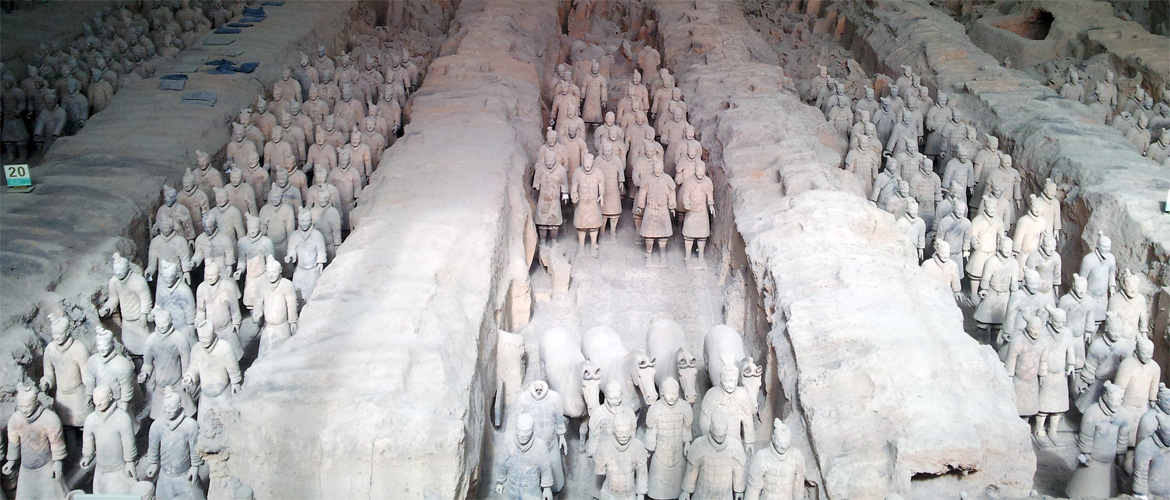
We spend the morning visiting the Terracotta Army. Built on the excavation site, the museum is located 30 km east of the city. Designed to follow the first emperor of the Qin Dynasty (221-206 BCE) into eternity, the Terracotta Army represents one of the greatest archaeological discoveries of the 20th century.
After lunch we return to the city for a stroll on the ancient city wall. Declared a national treasure by the State Council in 1961, the wall (first built in 1370) encircles an area of 14 square kilometres. It runs 13.7 kilometres long and measures 12 metres in height with a thickness at the base between 15 to 18 metres.
Day 11/Sun: Xi’an (B/L)
We spend the morning exploring the ancient Muslim quarter of Xi’an in the old town centre. The grand mosque and the adjacent Muslim bazaar are the highlights of the Muslim quarter.
The mosque was established in the 8th century and the majority of the complex was constructed in the Ming Dynasty (1368-1644). It was further expanded in the Qing Dynasty. Unlike mosques in Middle Eastern or Arab countries, this mosque is completely Chinese in style. It has neither domes nor traditional minarets.
Free afternoon to explore on your own. Please ask your guide for recommendations.
Day 12/Mon: Xi’an – Beijing (B/D)
Our travel to Beijing is again by high-speed train (#G56, 10:04/13:30). Since lunch is not provided, please buy some snacks before boarding the train. If you don’t want the hassle, you can buy hot food and all kinds of beverages on the train.
The capital of China, Beijing is a world-class cultural and educational centre with a population of 21.9 million (2020), ranking it China’s second largest city behind Shanghai. Beijing is renowned for its opulent palaces, temples, and huge stone walls and gates – treasures that make it the most popular tourist city in China by the number of visitors it receives every year.
Afternoon sightseeing features the Summer Palace, a well-preserved UNESCO World Cultural Heritage Site. The imperial resort was first named Garden of Clear Ripples, which was burnt down by the allied forces of Great Britain and France in 1860 at the end of the Second Opium War (referred to as Arrow War by the British). Reconstruction started 25 years later and was completed in 1895 when the name was changed to Yi He Yuan (Garden of Good Health and Harmony). The design gives prominence to Longevity Hill, as well as Kunming Lake south of the hill. The sprawling complex covers an area of 290 hectares and the buildings inside consist of over 3,000 bays.
Day 13/Tue: Beijing (B/L)
We begin today with a visit to the Forbidden City. Officially known as the Palace Museum, the Forbidden City was the place where the emperors of the Ming (1368-1644) and Qing (1644-1912) dynasties lived and carried out their administration. Construction of the Forbidden City took 14 years (1406-1420) to complete. The complex consists of 980 buildings and covers 72 hectares or 180 acres. It exemplifies traditional Chinese palatial architecture and has influenced cultural and architectural developments in East Asia and elsewhere. Though the Qing Dynasty was overthrown in 1912, the royal family was allowed to continue to live in the Forbidden City till 1924, when the last emperor, Pu Yi, was driven out of the imperial palace. One year later the Forbidden City was turned into a museum. Declared a World Heritage Site by UNESCO in 1987, this is the largest collection of preserved ancient wooden structures in the world.
Next up is Tian’anmen Square. Located in the heart of Beijing, the square measures 880 metres from north to south and 500 meters from east to west. Said to be the largest public plaza in the world, Tian’anmen Square has the capacity to hold one million people. The imposing Tian’anmen Tower sits at the north end of the square while the Monument to the People’s Heroes dominates the centre. The square is flanked by The Great Hall of the People (west) and the National Museum (east). Chairman Mao’s Mausoleum and Qianmen (Front Gate) are located in the south of the square. One of the top 16 tourist attractions in Beijing, Tian’anmen Square is also the witness of the Chinese people’s great struggles for democracy and personal freedom since 1919.
Afternoon sightseeing takes place at the Temple of Heaven, another UNESCO World Heritage Site. Situated in southeastern Beijing, the Temple of Heaven is China’s largest extant sacrificial temple where, during the Ming and Qing Dynasties, the emperors conducted the elaborate and most exalted sacrifices addressed to “the Supreme Ruler of the Universe”. Construction of the temple started in 1406, during the reign of the Ming Emperor Yongle, and took 14 years to complete. The temple was expanded under the Qing emperors Qianlong (1736-1796) and Jiaqing (1796-1820). Occupying 2.73 square kilometres (roughly 1,700 by 1,600 metres), the area of the Temple of Heaven is more than twice that of the Forbidden City.
The famous Hongqiao Pearl Market, the largest pearl market in the world, is right across the street from the Temple of Heaven. Recommended by numerous guidebooks for freshwater pearls, Hongqiao teems with domestic and international shoppers. If you are interested, please ask the guide to drop you off there. However, you’ll need to get back to the hotel by taxi, which costs about 8 US dollars.
Dinner is not included for today. There are many restaurants around the hotel. Ask your guide for recommendations.
Day 14/Wed: Beijing (B/L/D)
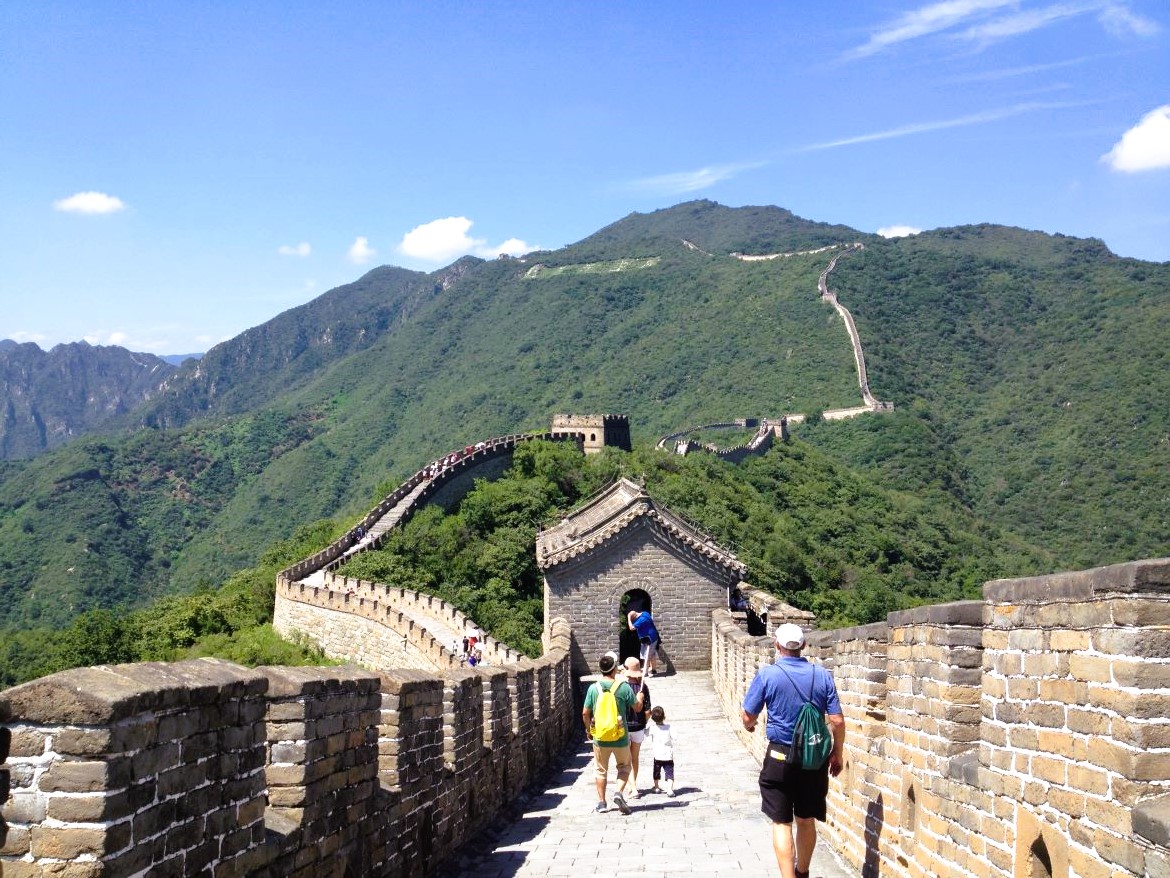
After an early breakfast we embark on a full-day excursion to the legendary Great Wall at Mutianyu, 75 km northeast of the city.
Zigzagging over 6,000 kilometres from east to west along the undulating mountains, the Great Wall was built to hold off tribal invaders from the north. As history shows, the Wall failed the Chinese rulers miserably, especially in the case of Kublai Khan whose men swept across China from the Mongolian steppe, thus the beginning of the Yuan Dynasty (1279-1368).
Construction of the earliest sections of the Wall started in the 7th century BCE. A major renovation started with the founding of the Ming Dynasty in 1368 and took 200 years to complete. The wall we see today in Beijing is almost exactly the result of this effort.
Today we enjoy a delicious dinner at a popular Peking Roast Duck restaurant. Peking Roast Duck is a famous Beijing dish prized for the thin and crispy skin with authentic versions serving mostly the skin and little meat, sliced in front of the diners.
Day 15/Thu: Returning Home (B)
Your memorable China tour ends this morning. Private transfer to the airport is included. Guests flying back to North America will regain a day upon crossing the International Date Line, thus arriving home the same day as departing from Beijing.
| City | Nights | Hotel | Category |
| Shanghai | 2 | Amara Signature Shanghai | luxury/5 stars |
| Hangzhou | 1 | Midtown Shangri-La | luxury/5 stars |
| Changsha | 1 | Hilton Changsha Riverside | luxury/5 stars |
| Zhangjiajie | 2 | Pullman Zhangjiajie | luxury/5 stars |
| Chengdu | 1 | Shangri-La Hotel, Chengdu | luxury/5 stars |
| Xi’an | 3 | Sheraton Xi’an North City | luxury/5 stars |
| Beijing | 3 | New Otani Chang Fu Gong | luxury/5 stars |
Dates & Prices
Prices are per person based on double occupancy.
| Depart (Thu) | Return (Thu) | Land Only* CA$/US$ |
Single Supplement CA$/US$ |
| 2026 | |||
| 19-Mar | 02-Apr | $6230/$4550 | $1575/$1150 |
| 26-Mar | 09-Apr | $6370/$4650 | $1575/$1150 |
| 02-Apr | 16-Apr | $6560/$4790 | $1770/$1295 |
| 09-Apr | 23-Apr | $6560/$4790 | $1770/$1295 |
| 16-Apr | 30-Apr | $6560/$4790 | $1770/$1295 |
| 07-May | 21-May | $6560/$4790 | $1770/$1295 |
| 14-May | 28-May | $6560/$4790 | $1770/$1295 |
| 21-May | 04-Jun | $6440/$4700 | $1770/$1295 |
| 28-May | 11-Jun | $6230/$4550 | $1575/$1150 |
| 04-Jun | 18-Jun | $6230/$4550 | $1575/$1150 |
| 11-Jun | 25-Jun | $6230/$4550 | $1575/$1150 |
| 18-Jun | 02-Jul | $6230/$4550 | $1575/$1150 |
| 25-Jun | 09-Jul | $6230/$4550 | $1575/$1150 |
| 02-Jul | 16-Jul | $6230/$4550 | $1575/$1150 |
| 09-Jul | 23-Jul | $6230/$4550 | $1575/$1150 |
| 16-Jul | 30-Jul | $6230/$4550 | $1575/$1150 |
| 23-Jul | 06-Aug | $6230/$4550 | $1575/$1150 |
| 30-Jul | 13-Aug | $6230/$4550 | $1575/$1150 |
| 06-Aug | 20-Aug | $6230/$4550 | $1575/$1150 |
| 13-Aug | 27-Aug | $6230/$4550 | $1575/$1150 |
| 20-Aug | 03-Sep | $6230/$4550 | $1575/$1150 |
| 27-Aug | 10-Sep | $6290/$4590 | $1640/$1195 |
| 03-Sep | 17-Sep | $6440/$4700 | $1770/$1295 |
| 10-Sep | 24-Sep | $6440/$4700 | $1770/$1295 |
| 17-Sep | 01-Oct | $6440/$4700 | $1770/$1295 |
| 08-Oct | 22-Oct | $6690/$4885 | $1770/$1295 |
| 15-Oct | 29-Oct | $6690/$4885 | $1770/$1295 |
| 22-Oct | 05-Nov | $6690/$4885 | $1770/$1295 |
| 29-Oct | 12-Nov | $6500/$4750 | $1640/$1195 |
| Depart (Thu) | Return (Thu) | Land Only* CA$/US$ |
Single Supplement CA$/US$ |
| 2027 | |||
| 18-Mar | 01-Apr | $6230/$4550 | $1575/$1150 |
| 25-Mar | 08-Apr | $6370/$4650 | $1575/$1150 |
| 01-Apr | 15-Apr | $6560/$4790 | $1770/$1295 |
| 08-Apr | 22-Apr | $6560/$4790 | $1770/$1295 |
| 15-Apr | 29-Apr | $6560/$4790 | $1770/$1295 |
| 06-May | 20-May | $6560/$4790 | $1770/$1295 |
| 13-May | 27-May | $6560/$4790 | $1770/$1295 |
| 20-May | 03-Jun | $6440/$4700 | $1770/$1295 |
| 27-May | 10-Jun | $6230/$4550 | $1575/$1150 |
| 03-Jun | 17-Jun | $6230/$4550 | $1575/$1150 |
| 10-Jun | 24-Jun | $6230/$4550 | $1575/$1150 |
| 17-Jun | 01-Jul | $6230/$4550 | $1575/$1150 |
| 24-Jun | 08-Jul | $6230/$4550 | $1575/$1150 |
| 01-Jul | 15-Jul | $6230/$4550 | $1575/$1150 |
| 08-Jul | 22-Jul | $6230/$4550 | $1575/$1150 |
| 15-Jul | 29-Jul | $6230/$4550 | $1575/$1150 |
| 22-Jul | 05-Aug | $6230/$4550 | $1575/$1150 |
| 29-Jul | 12-Aug | $6230/$4550 | $1575/$1150 |
| 05-Aug | 19-Aug | $6230/$4550 | $1575/$1150 |
| 12-Aug | 26-Aug | $6230/$4550 | $1575/$1150 |
| 19-Aug | 02-Sep | $6230/$4550 | $1575/$1150 |
| 26-Aug | 09-Sep | $6290/$4590 | $1640/$1195 |
| 02-Sep | 16-Sep | $6440/$4700 | $1770/$1295 |
| 09-Sep | 23-Sep | $6440/$4700 | $1770/$1295 |
| 16-Sep | 30-Sep | $6440/$4700 | $1770/$1295 |
| 07-Oct | 21-Oct | $6690/$4885 | $1770/$1295 |
| 14-Oct | 28-Oct | $6690/$4885 | $1770/$1295 |
| 21-Oct | 04-Nov | $6690/$4885 | $1770/$1295 |
| 28-Oct | 11-Nov | $6500/$4750 | $1640/$1195 |
* Land Only price excludes international airfare. Please contact us for a fare quote.
|
What the tour price includes:
|
What the tour price excludes:
See Terms & Conditions for more information. |