Kyoto – Nara – Osaka – Hiroshima – Miyajima – Nagasaki – Fukuoka – Tokyo
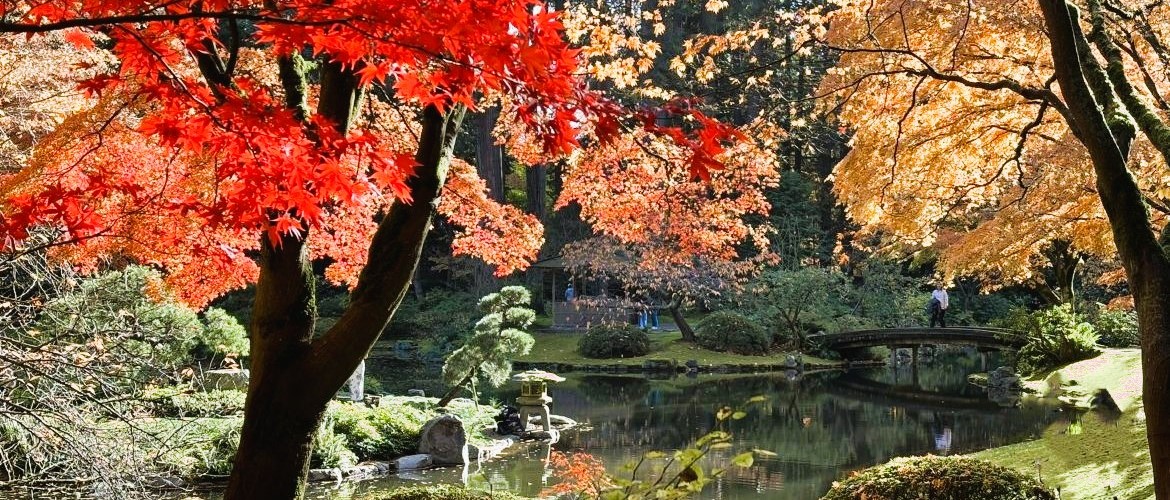
Experience the heart of Japan on a refined small-group tour that blends ancient tradition with modern charm. Stroll through exquisite gardens, savor regional gourmet cuisine, and witness the elegance of geisha culture. From historic temples to vibrant cities, each stop offers a deeper connection to Japan’s rich heritage and beauty.
Important Features
- Small group size (average 15, maximum 20)
- Professional guides carefully selected by company owners
- No annoying shopping stops
- Immersive cultural activities
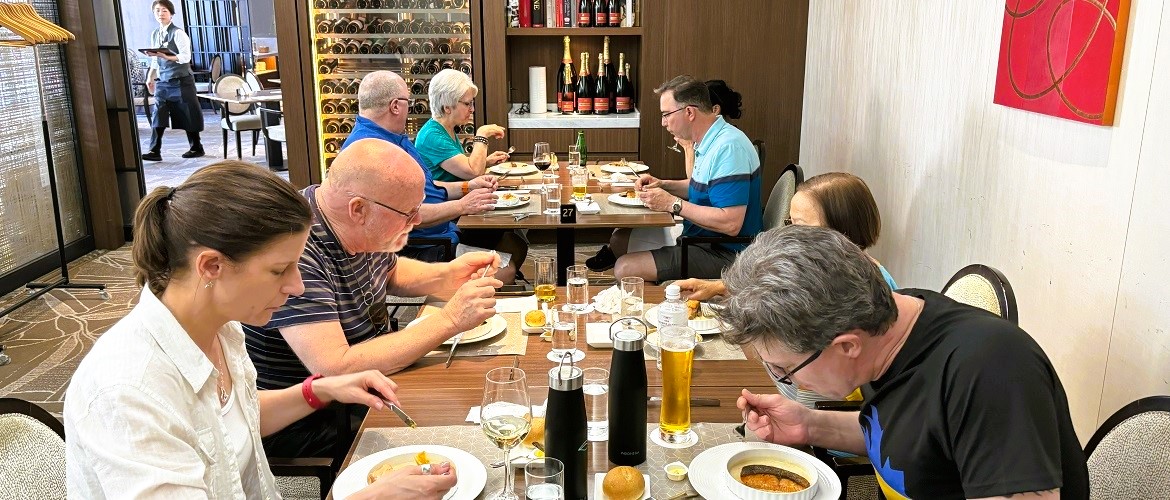
- Quality Japanese and Western cuisines
- Special dinners featuring maiko performance & premium wagyu beef
TOUR ITINERARY
Meal Code: B = breakfast / L = lunch / D = dinner
Day 1/Sat: Departing for Japan
The journey begins with your transpacific flight departing from a city of your choice. You’ll lose a day upon crossing the International Date Line.
Day 2/Sun: Arrival in Kyoto
Welcome to Kyoto!
Please make your way to the hotel on your own. Detailed information on how to get to the hotel will be provided in the pre-trip update two weeks before departure.
Day 3/Mon: Kyoto (B/L/D)
Nicknamed “City of Ten Thousand Shrines”, Kyoto (literal translation: capital city) served as Japan’s capital for more than one thousand years before the imperial court moved to Tokyo in 1868 with the onset of the Meiji Restoration (1868 to 1912, a historical period associated with the emergence of Japan as a modernized nation). Kyoto is a scaled replica of the Chinese Tang Dynasty’s capital Chang’an, present-day Xi’an. The Tang Dynasty (618 – 907) was a golden era in Chinese history and a time when Japanese adoption of Chinese culture reached its peak. Kyoto today, with a population of 1.5 million, forms a major part of the Kyoto-Osaka-Kobe metropolitan area.
Free morning to recover from jet lag or explore on your own.
Our first stop after lunch is Kinkaku-ji (Temple of Golden Pavilion). This is a Zen Buddhist temple and one of 17 locations comprising the Historic Monuments of Ancient Kyoto World Heritage Site.
We then proceed to the Arashiyama (Storm Mountain) area where our sightseeing takes in Tenryu-ji Temple and the Bamboo Forest. Located on the western outskirts of Kyoto, Arashiyama is famous for its immense natural beauty as well as its historical and cultural prominence due to the large number of well-preserved ancient Buddhist temples.
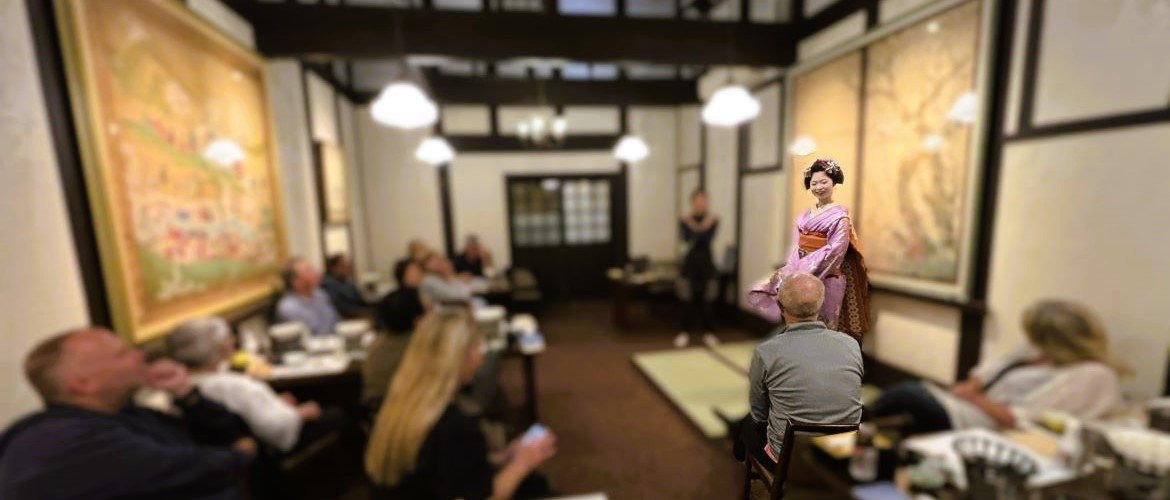
Afterwards, we return to the hotel to freshen up before heading out for a traditional kaiseki dinner accompanied by the private performance of a dancing geisha known as maiko in Japanese.
Day 4/Tue: Kyoto (B)
This morning’s walking tour begins at the magnificent Nijo Castle (3 subway stops from our hotel). Construction of the castle began in 1601 under the order of Tokugawa Ieyasu, founder of the Tokugawa shogunate, but was not completed until 1626 during the reign of Iemitsu, the third Tokugawa shogun and grandson of Ieyasu. The Tokugawa shogunate was headquartered in Edo, present-day Tokyo, and Nijo Castle was the shogun’s residence in Kyoto where the imperial court was located. Nijo Castle is also the site that witnessed the ending of the Tokugawa shogunate. In late 1867, the last shogun, Yoshinobu, announced in the castle his decision to return his power back to the emperor. This was a watershed moment that helped usher in the Meiji Restoration, which, in turn, led to Japan’s industrialization and fundamentally transformed the Japanese society.
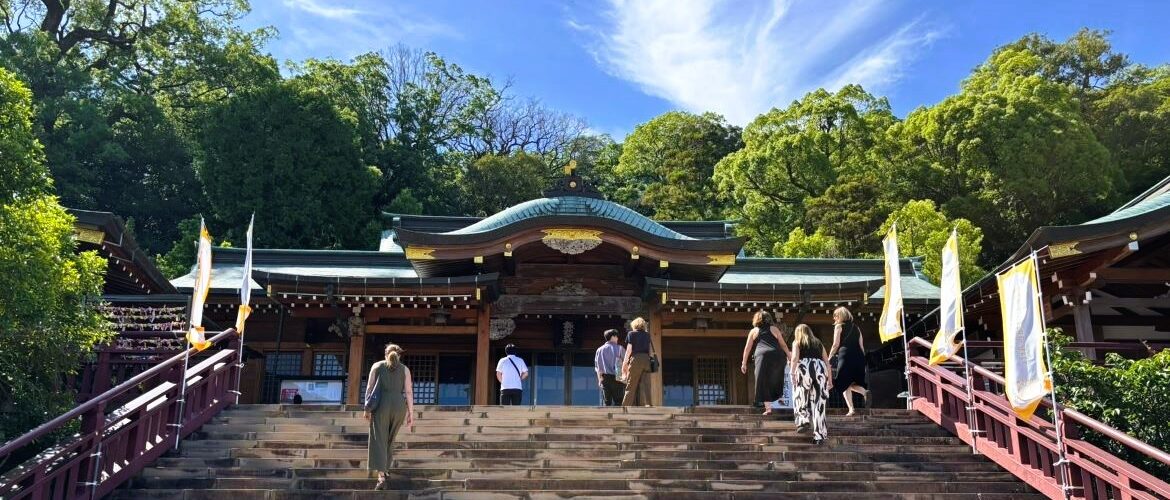
Afterwards, we travel to Yasaka Shrine, one of Kyoto’s most iconic Shinto shrines, with a history of over 1,300 years. Its vibrant vermilion buildings, lantern-lit grounds, and lively atmosphere make it a beloved landmark in every season.
We then continue to the Gion district, strolling through the historic streets and catching a glimpse of the birthplace of Kyoto’s geisha culture.
Free afternoon to explore on your own.
|
Optional Matcha experience Visit Entoku-in, a serene temple celebrated for its graceful gardens and timeless beauty throughout the seasons. Engage in traditional practices such as sutra copying (shakyo), Buddhist image tracing (shabutsu), and quiet contemplation of the dry landscape garden (karesansui). Conclude your visit with a bowl of matcha, prepared by a tea master or whisked by your own hand, and savor the tranquil atmosphere of the garden. This optional experience is available at US$35/CAD$50 per person subject to a minimum of 4 participants. |
Day 5/Wed: Kyoto – Nara – Osaka – Kyoto (B/L)
We depart for Nara at 07:45. The 45 km drive to the magnificent Todai-ji temple takes about an hour. This ancient Buddhist temple is well-known not only for its splendid architecture and the huge bronze statue of the Buddha in the main hall but also for the 1,200 wild deer roaming freely on the grounds of the temple.
Nara is the capital city of Nara Prefecture and a former capital of Japan (710 – 794). With a population of roughly 370,000 and an area of 280 square kilometres, the city occupies the northern part of Nara Prefecture. Eight temples, shrines and ruins together with Kasugayama Primeval Forest collectively form “The Historic Monuments of Ancient Nara” – a UNESCO World Heritage Site.
Afterwards, we continue on to Osaka, where we visit the historic Osaka Castle and Osaka’s legendary shopping and entertainment district known as Dotonbori. Situated at the mouth of the Yodo River on Osaka Bay, Osaka is Japan’s third most populous city (after Tokyo and Yokohama) and plays a significant role in the Japanese economy. Osaka was once known as the “nation’s kitchen” because of its function as Japan’s rice trading centre during the Edo period.
Day 6/Thu: Kyoto – Hiroshima (B)
Today is set aside for you to explore on your own.
Our recommendations include Kiyomizu-dera (Buddhist temple), Kyoto Imperial Palace, Fushimi Inari Shrine (good for hiking), Ginkaku-ji (Silver Pavilion Temple), and Kyoto National Museum.
We transfer to the train station for late afternoon rail journey to Hiroshima (Nozomi 39, 16:25/18:02).
Day 7/Fri: Hiroshima – Miyajima – Hiroshima (B/D)
Hiroshima, literally meaning ‘broad island’, is the capital of Hiroshima Prefecture and the largest city in the Chugoku region with a population of 1.2 million. Hiroshima is best known as the first city in history to be targeted by a nuclear weapon when the United States Army Air Forces dropped an atomic bomb on the city (and later on Nagasaki) at 8:15 a.m. on August 6, 1945, near the end of World War II. The highlight in Hiroshima, understandably but sadly, is the Peace Memorial Park which includes the Peace Memorial Museum, and the Atomic Bomb Dome that once served as the industrial promotion hall of the local prefect.
After a tour of the Peace Memorial Park complex including two hours in the museum onsite, we proceed to Miyajima Island by a combination of taxi, commuter train and ferry.
Officially known as Itsukushima, Miyajima is a small island (30 square kilometres, population 1,760) in Hiroshima Bay known for its forests and ancient temples. The seaside Itsukushima Shinto Shrine on the island is a UNESCO World Heritage Site and the “floating” torii gate in front of the shrine is the main reason for most visitors to come here.
Day 8/Sat: Hiroshima – Fukuoka – Nagasaki (B)
Today, we travel by train to Fukuoka, where we connect to the train bound for Nagasaki.
Located on the northwest coast of the island of Kyushu, Nagasaki is the capital of and the largest city in Nagasaki Prefecture with a population of 424,066 as of 2017. During the Tokugawa era (1603-1868) Nagasaki was the largest of the four Japanese ports allowed for international trade. The exposure to European influence, primarily Portuguese and Dutch, in those days certainly has left its mark on the city as evidenced by Nagasaki’s large number of Japanese Catholics and numerous European-style buildings throughout the city. Nagasaki also had the misfortune of being hit by an atomic bomb near the end of World War II, making it the second and last target of nuclear bombing in history.
Day 9/Sun: Nagasaki (B/L)
Our day tour begins at Dejima, the site of the Dutch trading post. Built on reclaimed land originally intended for the Portuguese, the 2-acre island was later offered to the Dutch, who used it from 1641 to 1854.
We then proceed to the Basilica of the Twenty-Six Holy Martyrs of Japan (also known as Oura Church), and adjacent Glover Garden built in 1863 for Thomas Blake Glover, a Scottish merchant who moved to Nagasaki as a young man, started a family with a Japanese woman and passed away in Tokyo at the age of 73.
Afternoon sightseeing includes Nagasaki Peace Park and Chinatown.
Established in 1955 near the hypocenter of the atomic bombing on August 9, 1945, the Peace Park sits next to the Atomic Bombing Museum and the Peace Memorial Hall.
Nagasaki Shinchi Chinatown is the oldest Chinatown in Japan. The area in downtown Nagasaki was originally the location of the warehouses of Chinese traders. The Chinese merchants came to Nagasaki because it was the only open port in Japan during the Tokugawa period. Today, Nagasaki Shinchi Chinatown is a thriving district filled with a variety of shops and restaurants where visitors can find the best Champon and Sara Udon, two Chinese-influenced noodle dishes.
Day 10/Mon: Nagasaki – Fukuoka – Tokyo (B/L)
This morning, we travel to Fukuoka (2 hours 30 minutes) and board the mid-afternoon flight (1 hour 45 minutes) to Tokyo.
Transfer to the hotel on arrival by low-cost bus in conjunction with a short taxi ride. Detailed instructions will be provided later on but the transfer cost is not included.
Day 11/Tue: Tokyo (B/L)
Tokyo, literally meaning “eastern capital” and officially named Tokyo Metropolis, is one of the most populous mega-cities in the world with a population of 14 million. Formerly known as Edo, the city has been the de facto seat of the Japanese government since 1603 when shogun Tokugawa Ieyasu chose the city for his headquarters. The shogun (general) was a hereditary commander ceremoniously appointed by the emperor but held real power over the country during the shogunate period between 1192 and 1867. Edo was renamed Tokyo after Emperor Meiji moved his seat from Kyoto in 1868 when the last shogun was forced to return power to the imperial court. The city covers an area of 2,187 square kilometres following the merger in 1943 of the city of Tokyo and Tokyo Prefecture.
Our full-day sightseeing begins at the plaza in front of the Imperial Palace. The palace is closed to tourists but a stroll across the plaza accompanied by commentaries on the imperial family and the city of Tokyo gets the tour off to a good start.
We then proceed to Senso-ji, the oldest Buddhist temple in Tokyo dating back to 628.
After lunch, we drive through ritzy Ginza shopping district on the way to Meiji Jingu, a Shinto shrine dedicated to Emperor Meiji (1852 -1912) and his wife.
We end the day with a visit to the observation deck atop the Tokyo Metropolitan Government Building in Shinjuku. On a clear day, the visitor could see the peak of Mount Fuji about 84 km to the west. The building complex completed in 1990 at a cost of US$1 billion consists of three main structures each taking up a city block. The architect of the Tokyo Metropolitan Government Building is Kenzo Tange (1913 – 2005), who in 1987 became the first Japanese to win the Pritzker Prize for Architecture.
Day 12/Wed: Tokyo (B)
Free day to explore on your own.
Our recommendations include Ginza and Akihabara shopping districts, the top-rated Tokyo National Museum and the adjacent National Museum of Western Art located at Ueno Park.
Day 13/Thu: Return Home (B)
The tour ends this morning. Transfer to Narita or Haneda airport on your own. Detailed information on Airport Limousine Bus and airport express train service will be provided in the final update.
Hotel List
| City | Nights | Hotel | Category |
| Kyoto | 4 | Hilton Garden Inn Kyoto | Premium /4 stars |
| Hiroshima | 2 | Hotel Granvia Hiroshima | Premium /4 stars |
| Nagasaki | 2 | ANA Crowne Plaza Nagasaki | Premium /4 stars |
| Tokyo | 3 | Tokyo Dome Hotel | Premium /4 stars |
Dates and Prices
| Depart (Sat) |
Return (Thu) |
Land Only* CA$/US$ |
Single Supplement CA$/US$ |
| 2026 | |||
| 21-Mar | 02-Apr | $6,980/$5,095 | $2,275/$1,660 |
| 4-Apr | 16-Apr | $6,980/$5,095 | $2,275/$1,660 |
| 11-Apr | 23-Apr | $6,980/$5,095 | $2,275/$1,660 |
| 18-Apr | 30-Apr | $6,980/$5,095 | $2,275/$1,660 |
| 16-May | 28-May | $6,900/$4,970 | $2,200/$1,590 |
| 23-May | 04-Jun | $6,800/$4,900 | $2,200/$1,590 |
| 10-Oct | 22-Oct | $6,800/$5,095 | $2,275/$1,660 |
| 17-Oct | 29-Oct | $6,980/$5,095 | $2,275/$1,660 |
| 24-Oct | 05-Nov | $6,980/$5,095 | $2,275/$1,660 |
| 31-Oct | 12-Nov | $6,980/$5,095 | $2,275/$1,660 |
| 07-Nov | 19-Nov | $6,980/$5,095 | $2,275/$1,660 |
| 14-Nov | 26-Nov | $6,980/$5,095 | $2,275/$1,660 |
| 2027 | |||
| 03-Apr | 15-Apr | $7,200/$5,150 | $2,370/$1,695 |
| 10-Apr | 22-Apr | $7,200/$5,150 | $2,370/$1,695 |
| 17-Apr | 29-Apr | $7,200/$5,150 | $2,370/$1,695 |
| 08-May | 20-May | $6,980/$5,095 | $2,275/$1,660 |
| 15-May | 27-May | $6,980/$5,095 | $2,275/$1,660 |
| 22-May | 03-Jun | $6,900/$4,970 | $2,275/$1,660 |
| 29-May | 10-Jun | $6,800/$4,900 | $2,170/$1,550 |
* Land Only price does not include international airfare. Contact us for a fare quote.
|
Tour price includes:
|
Tour price does NOT include:
See Terms & Conditions for more information. |
Passport
Your passport needs to have at least one blank visa page and six months validity at the end of the tour.
Visa
If you are a tourist from Canada, the US, the UK, Australia and New Zealand, you do not need a visa to enter Japan as long as your stay is within 90 days.
Vaccination
No vaccination of any kind is mandatory. Vaccination against hepatitis A is highly recommended. Please check out the website of US CDC or Heath Canada for latest advisory.