
Cambodia, a land of timeless wonders, invites travellers to explore its rich tapestry of history, culture, and natural beauty. Home to the awe-inspiring Angkor Wat and other UNESCO World Heritage sites, the country offers an unparalleled glimpse into the ancient Khmer Empire. Beyond its temples, Cambodia enchants with vibrant cities like Phnom Penh, serene floating villages, and lush landscapes perfect for gentle exploration. Known for its warm, welcoming people and affordable travel, Cambodia is rapidly becoming a top destination, blending heritage, spirituality, and authentic experiences that captivate every visitor seeking a meaningful journey.
Best of Cambodia (11 days)
Phnom Penh – Siem Reap – Battambang – Phnom Penh
This Cambodia itinerary is tailored for seniors with an interest in history and culture, avoiding beaches and strenuous activities. The itinerary prioritizes comfort, accessible sightseeing, and immersive cultural experiences in Cambodia’s most significant destinations.
Important Features
- Small group size
- Expert local guides.
- Cooking class.
- Dinner with traditional music & dance show.
- No forced shopping stops.
- High-quality meals.
- Unlimited supply of bottled water.
Tour Itinerary
Meal Code: B = breakfast / L = lunch / D = dinner
Day 1: Depart for Phnom Penh
Depart from a city of your choice. You’ll lose a day upon crossing the International Date Line.
Day 2: Arrive in Phnom Penh
Meet the guide on arrival and transfer to the hotel. The balance of the day is at leisure. If you get in early and feel energetic, there’s a night market for you to explore.
Day 3: Phnom Penh (B/L/D)
Located at the confluence of three rivers (Tonlé Sap, Mekong and Bassac), Phnom Penh is the capital of Cambodia and also the wealthiest and most populous city in the country. Out of a total population of 17 million, 2.2 million of them live in Phnom Penh.
Phnom Penh first became the capital of Cambodia after Ponhea Yat, king of the Khmer Empire, moved the capital from Angkor Thom after it was captured and destroyed by Siam (Thailand). Phnom Penh remained the royal capital for 73 years — from 1432 to 1505 before it was abandoned for 360 years (1505 – 1865) by subsequent kings due to internal fighting between the royal pretenders. Later kings moved the capital several times and established their royal capitals at various locations in Tuol Basan (Srey Santhor), Pursat, Longvek, Lavear Em and Udong. It was not until 1866, under the reign of King Norodom I (1860–1904), the eldest son of King Ang Duong, who ruled on behalf of Siam, that Phnom Penh became the permanent seat of government and capital of Cambodia again.
Beginning in 1870, the French colonialists built this riverside village into a city with hotels, hospitals, schools, prisons, barracks, banks, public works offices, telegraph offices, law courts and so on. In 1872, the first glimpse of a modern city took shape when the colonial administration employed the services of French contractor Le Faucheur to construct the first 300 concrete houses for sale and rental to the Chinese traders. By the 1920s, Phnom Penh was known as the Pearl of Asia, and over the next four decades the city continued to experience rapid growth with the building of railways to Sihanoukville and Pochentong International Airport (now Phnom Penh International Airport).
During the Vietnam War, Cambodia was used as a base by the Viet Cong’s North Vietnamese Army. Thousands of refugees from across the country flooded the capital to escape the fighting between the various factions, thus increasing the population of Phnom Penh to reportedly 3 million. The Khmer Rouge captured the city on April 17, 1975 and started to forcibly evacuate the entire city soon after. All of its residents, including the wealthy and educated, were forced into the countryside to do manual labour so that they could become “new people” according to the Khmer Rouge. Tuol Sleng High School was turned into a prison camp known as S-21, where people were detained and tortured. Pol Pot sought to transform Cambodia into a self-sufficient agrarian society and therefore killed many people perceived as lazy or political enemies. The Khmer Rouge was driven out of Phnom Penh by the Vietnamese in 1979, and people began to return to the city. Vietnam is historically a state with which Cambodia has had many conflicts; therefore, this liberation was and is viewed with mixed feelings by the Cambodians. A period of reconstruction began, spurred by the continuing stability of government, new foreign investment and international aid.
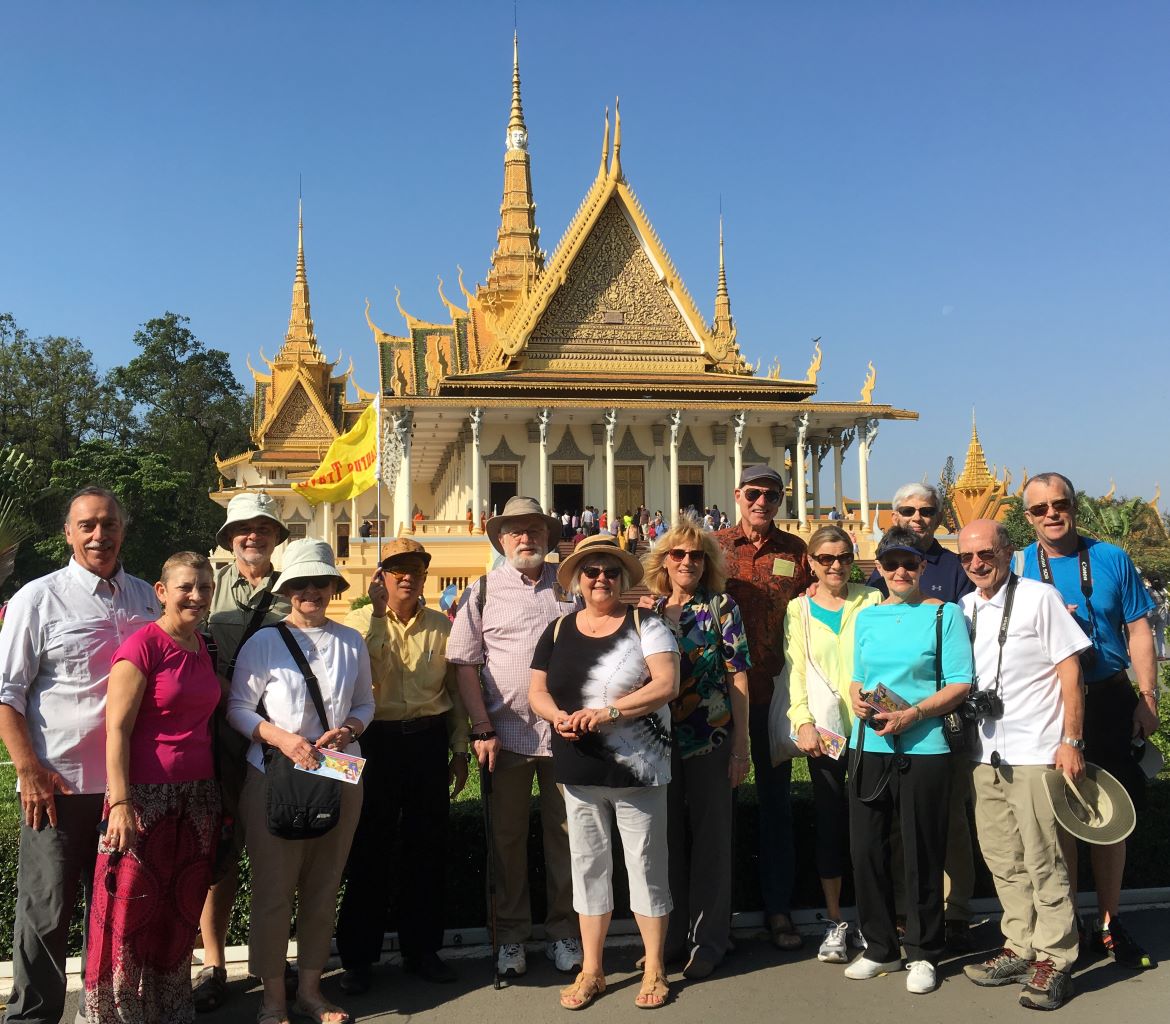
Our sightseeing today includes the Royal Palace Complex and the National Museum.
Day 4: Phnom Penh (B/L)
Today we visit Tuol Sleng Genocide Museum and Choeung Ek Killing Fields. These sites may be too much for the visitor to stomach, but they embody an important period in the country’s history no matter how repugnant that period is in our common memory.
Tuol Sleng Genocide Museum is on the same site of the high school turned prison known as S-21. Inside, Khmer Rouge’s torture devices and photos of their victims are on display. If you have read about Tuol Sleng and feel the gruesome scenes may be too disturbing, you may instead opt for a walk through the neighbourhood outside the former high school.
Choeung Ek (The Killing Fields) is 15 kilometers from the city centre. It was one of the mass grave sites of the victims of the Khmer Rouge regime.
Day 5: Phnom Penh – Siem Reap (B/L/D)
The morning flight to Siem Reap takes 40 minutes.
Siem Reap, the gateway to Cambodia’s awe-inspiring Angkor Wat temple complex, is a vibrant city rich in history, culture, and charm. Blending ancient wonders with modern comforts, it offers travellers an unforgettable journey through Khmer heritage. Beyond the temples, visitors can explore bustling markets, sample delicious street food, and enjoy traditional Apsara dance performances. The city’s laid-back atmosphere and warm hospitality make it an ideal base for both adventure and relaxation. Whether cycling through temple ruins or cruising the floating villages on Tonlé Sap Lake, Siem Reap promises a unique and enriching travel experience for every kind of explorer.
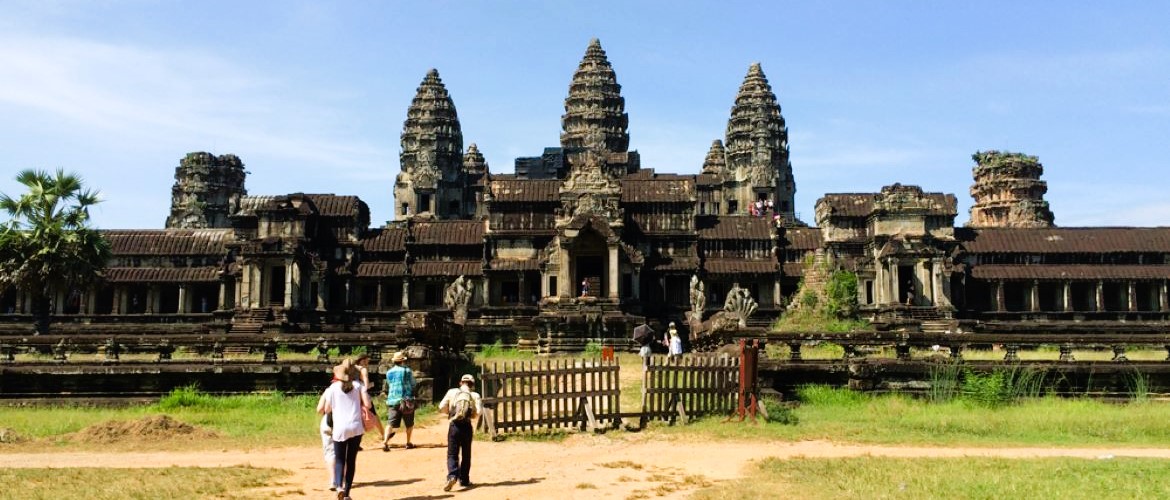
After a light lunch, we visit the Angkor National Museum and Angkor Wat.
The archaeological museum is dedicated to the collection, preservation and presentation of Angkorian artifacts, also to provide information and education about art and culture of Khmer civilization, with collections mainly dated from Khmer Empire’s Angkor period circa 9th to 14th-century. Most of the artifacts are discovered in and around the Angkor archaeological sites nearby. Opened on November 12, 2007, the Angkor National Museum covers the golden era of the Khmer Empire in eight galleries. The museum visit at the beginning of the stay in Siem Reap is designed to better prepare tour participants for what to see next.
Angkor Wat, the modern name for the temple complex, means “Temple City” or “City of Temples” in Khmer. Angkor, meaning “city” or “capital city”, is a vernacular form of the word nokor, which comes from the Sanskrit word nagara. Wat is the Khmer word for “temple grounds”. Angkor Wat was a Hindu temple complex that was later used for Buddhism. It is the largest religious monument in the world. The temple was built by the Khmer King Suryavarman II in the early 12th century in Yaśodharapura (present-day Angkor), the capital of the Khmer Empire, as his state temple and eventual mausoleum. Breaking from the Shaiva tradition of previous kings, Angkor Wat was instead dedicated to Vishnu. As the best-preserved temple at the site, it is the only one to have remained a significant religious centre since its foundation. The temple is at the top of the high classical style of Khmer architecture and has become a symbol of Cambodia, appearing on its national flag and the back of the 20,000-riel banknote.
Angkor Wat combines two basic plans of Khmer temple architecture: the temple-mountain and the later galleried temple, based on early Dravidian architecture, with key features such as the Jagati. It is designed to represent Mount Meru, home of the devas in Hindu mythology: within a moat and an outer wall of 3.6 kilometres long are three rectangular galleries, each raised above the next. At the centre of the temple stands a quincunx of towers. Unlike most Angkorian temples, Angkor Wat is oriented to the west; scholars are divided as to the significance of this. The temple is admired for the grandeur and harmony of the architecture, its extensive bas-reliefs, and for the numerous devatas adorning its walls.
Day 6: Siem Reap (B/L)
Visit Angkor Thom and Ta Prohm in the morning and have the afternoon at leisure after lunch.
Angkor Thom (literally: great city) was established in the late 12th century by King Jayavarman VII as the capital of the Khmer Empire. It covers an area of 9 square kilometres and includes several monuments from earlier eras as well as those established by Jayavarman and his successors. One inscription found in the city refers to Jayavarman as the groom and the city as his bride. Angkor Thom was the last and most enduring capital city of the Khmer empire. At the centre of the city is Jayavarman’s state temple, the Bayon, with the other major sites clustered around the Victory Square immediately to the north.
Ta Prohm, originally called Rajavihara, is the modern name of the temple built in the Bayon style largely in the late 12th and early 13th centuries. Located approximately one kilometre east of Angkor Thom and on the southern edge of the East Baray, it was founded by the Khmer King Jayavarman VII as a Mahayana Buddhist monastery and university. Unlike most Angkorian temples, Ta Prohm has been left in much the same condition in which it was found. The photogenic and atmospheric combination of trees growing out of the ruins and the jungle surroundings has made it one of Angkor’s most popular temples with visitors.
Day 7: Siem Reap (B/L/D)
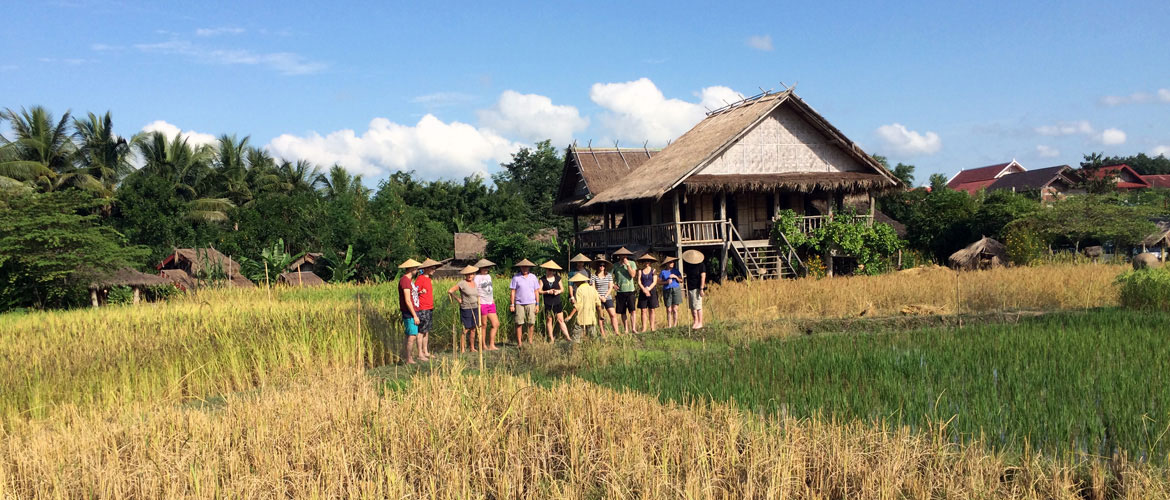
After breakfast, we drive 25 km to Banteay Srei (Citadel of Women), a 10th-century temple dedicated to the Hindu god Shiva. The buildings themselves are miniature in scale but the stone carvings are magnificent. On the way back to the hotel, we stop by a village for a better look at the local rural life.
Tonight we enjoy a traditional Apsara dance performance with Khmer dinner. If the show is not available, only dinner will be arranged.
Day 8: Siem Reap – Battambang (B/L)
The morning drive by air-conditioned private vehicle to Battambang takes three hours.
Battambang, Cambodia’s second-largest city, offers a charming blend of French colonial architecture, artistic spirit, and rural beauty. Known for its laid-back atmosphere, scenic rice fields, and unique bamboo train ride, Battambang is a cultural haven where travellers can explore local art, ancient temples, and authentic Cambodian life away from the crowds.
After lunch, we explore the most prominent colonial buildings along the Sangkae River. These buildings showcase a blend of European aesthetics with Khmer design elements, featuring high ceilings, large windows, and ornate balconies.
Day 9: Battambang (B/L)
We begin today with a visit to a market to shop for ingredients for our cooking class that focuses on Khmer cuisine of this area. This is followed with a tour of Banan Temple atop a hill that offers stunning views of the countryside. We wrap up the day with a visit to the Phare Ponleu Selpak – an art school that helps children from difficult backgrounds improve their lives.
Day 10: Battambang – Phnom Penh (B)
Free morning to relax or explore on your own.
The late afternoon flight back to Phnom Penh is just under one hour.
Depending on air schedule, activities may be arranged in Battambang or Phnom Penh at no cost to you.
Day 11: Phnom Penh – Returning Home (B)
Your memorable journey comes to an end this morning. Your airport transfer is included with pick-up time to be confirmed by the local guide.
| City | Nights | Hotel | Category |
| Phnom Penh | 3 | La Rose Suites | luxury/boutique |
| Siem Reap | 3 | Shinta Mani Angkor | luxury/5 stars |
| Battambang | 2 | Maisons Wat Kor | first class/4 stars |
| Phnom Penh | 1 | La Rose Suites | luxury/boutique |
Dates & Prices
| Depart | Return | Land Only CA$/US$ |
Single Supplement CA$/US$ |
| 2026 | |||
| 16-Jan | 26-Jan | $3830/$2795 | $1300/$950 |
| 23-Jan | 02-Feb | $3830/$2795 | $1300/$950 |
| 30-Jan | 09-Feb | $3830/$2795 | $1300/$950 |
| 06-Feb | 16-Feb | $3830/$2795 | $1300/$950 |
| 13-Feb | 23-Feb | $3830/$2795 | $1300/$950 |
| 20-Feb | 02-Mar | $3830/$2795 | $1300/$950 |
| 27-Feb | 09-Mar | $3830/$2795 | $1300/$950 |
| 06-Mar | 16-Mar | $3830/$2795 | $1300/$950 |
| 13-Mar | 23-Mar | $3830/$2795 | $1300/$950 |
|
What the tour price includes:
|
What the tour price excludes:
See Terms & Conditions for more information. |
Passport
For this tour, you’ll need a passport that has at least 2 blank visa pages and six (6) months validity at the end of the trip.
Visa
We’ll assist with your e-visa application 30 days prior to departure.
Cambodia Tourist e-Visa: US$36
https://www.evisa.gov.kh/
Immunization
None is required to the best of our knowledge. Please check with your national healthy authorities for recommendations if necessary. We recommend all guests to be vaccinated against hepatitis A.
Tips on Staying Healthy
Do not drink from the tap. Ask for bottled or boiled water when eating in restaurants. When buying bottled water from street vendors, especially at tourist sites, make sure the cap is properly sealed because some vendors may be selling tap water in recycled bottles.
Try to avoid uncooked food. Raw food, even clean, may still cause stomach upset or diarrhea.
Always carry a roll of toilet paper and a bottle of hand sanitizer containing more than 60% of alcohol, no matter where you go.
Always have an N95 type of facemask ready. Passengers sitting next to you may be sick and cough loudly but wear nothing to cover their mouth. This was a big problem before the pandemic that may return soon.
Banknotes in general are filthy and carry all kinds of germs. Minimize your contact with local banknotes and coins by keeping them in a plastic bag and sanitize your hands every time you touch them. Use plastic for payment as much as possible.
Cambodia currency: Riel (KHR)
Please keep your inventory of local currencies to the minimum. Your tour fare covers all the expensive items already. You only need some local cash, which can be easily obtained as you go, for souvenirs and meals not included in the tour price.
Consider using a credit card for transactions over $20. Major credit cards such as Visa and MasterCard are widely accepted throughout Southeast Asia. Street vendors in Cambodia prefer U.S. dollars to their own currency but you should exercise caution if you want to play along. Merchants in more prosperous Thailand only accept their own currency if you pay by cash.
Travel Insurance – When to Buy
We will save your deposit as credit if you cancel at any time and for any reason. The transferrable credit has no expiration date. Therefore, it may be unnecessary to pay $30 to $50 on cancellation insurance for your deposit.
However, you should definitely consider purchasing trip cancellation & emergency medical insurance when your balance is due. If you don’t have proper coverage, the loss could be devastating if you were forced to cancel close to your departure date or run into a serious medical emergency during the trip. Please ask us for insurance quotes when your balance is due.