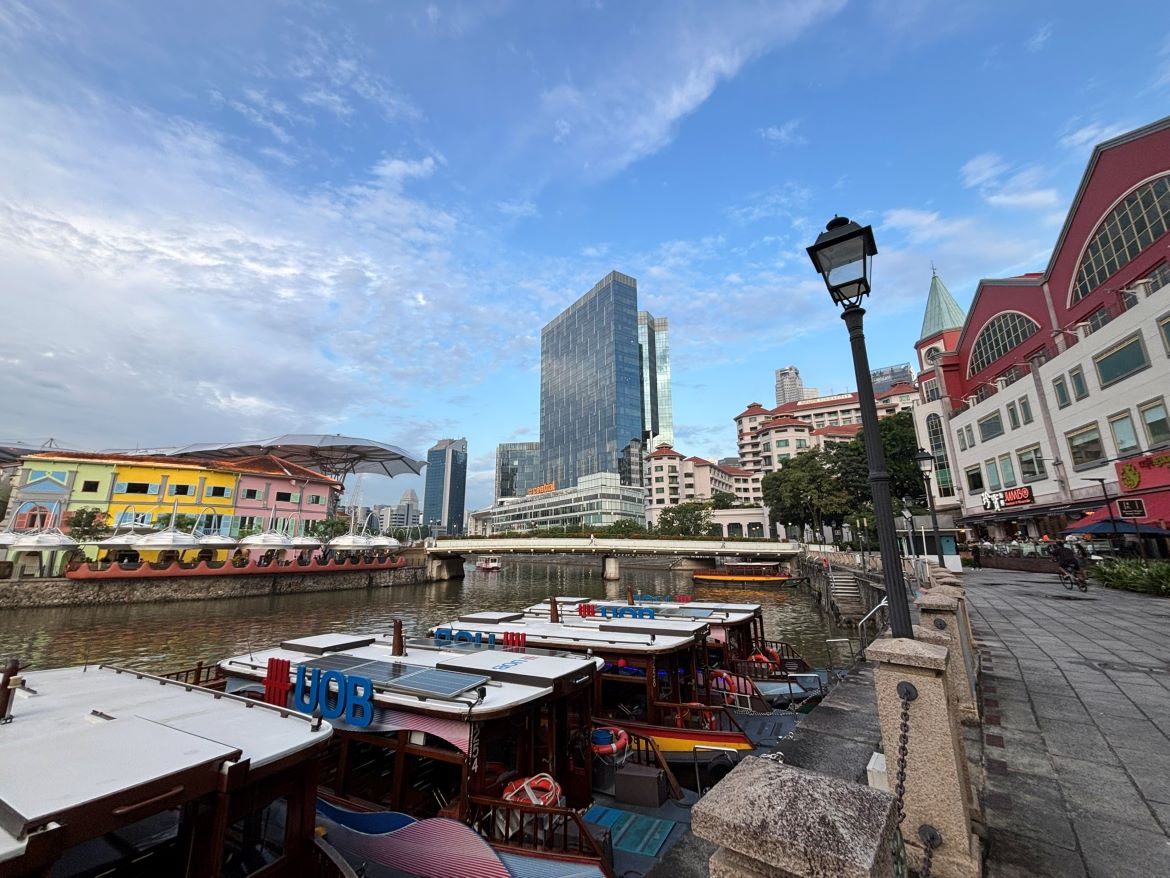

Bangkok – Ayutthaya – Kanchanaburi – Sukhothai – Chiang Mai – Chiang Rai – Golden Triangle – Phuket – Kuala Lumpur – Cameron Highlands – Penang – Malacca – Singapore
Discover the vibrant heart of Southeast Asia on this Best of Thailand, Malaysia & Singapore tour. The immersive journey offers a blend of rich culture, fascinating history, and stunning natural beauty. From the temples of Thailand to the lush landscapes of Malaysia and the modern marvels of Singapore, each destination unveils unique traditions and heritage. Savour mouthwatering local cuisines, from street food to fine dining, and experience exceptional service from our expert guides, who bring each site to life. Whether exploring ancient landmarks or hidden gems, this tour promises an unforgettable adventure.
Important Features
- Small group size – maximum 20
- Experienced professional guides
- No annoying shopping stops
- Quality local and Western meals
- Unlimited supply of bottled water
- Free Wi-Fi in every hotel
- Immersive cultural activities
Meal Code: B = breakfast / L = lunch / D = dinner
Day 1/Thu: Departing for Bangkok
The trip starts with your transpacific flight departing from a city of your choice. You’ll lose a day upon crossing the International Date Line.
Day 2/Fri: Arrival in Bangkok
Meet the driver on arrival for private transfer to the hotel. No activity or meal is arranged for today. The guide will get in touch with you tonight.
Day 3/Sat: Bangkok (B/L/D)
Located in the Chao Phraya River delta, Bangkok is the capital and the most populous city of Thailand. The city’s urban population is estimated to be around 11 million or 15% of the country’s total of 72 million. Bangkok is known in Thai as Krung Thep Maha Nakhon. A major financial and cultural centre in Southeast Asia, Bangkok also functions as an important hub for airlines serving the region.
We begin our sightseeing today at the royal Grand Palace. Established in 1782, the palace was dramatically expanded throughout successive reigns. The king and his royal government were based on the grounds of the palace until 1925.
We then proceed to the National Museum, which is the largest museum in Southeast Asia and features exhibits of Thai art and history.
Afternoon sightseeing takes in Wat Arun, a Buddhist temple on the Chao Phraya River. The temple derives its name from the Hindu god Aruna, often personified as the radiations of the rising sun. Wat Arun is among the best known of Thailand’s landmarks.
Later in the day, we go on a long tail boat for an hour-long cruise on picturesque Chao Phraya River and the Klongs (canals) of Thonburi on the west side of the river. There will be chance to observe and photograph the serene family homes and temples along the waterways.
If time permits, we’ll make a stop at Bangkok’s historical Chinatown.
Day 4/Sun: Bangkok – Ayutthaya – Bangkok (B/L)
Following breakfast we set out for a full-day (7 to 8 hours) excursion to Ayutthaya, a town about 90 km north of Bangkok. Founded around 1350, Ayutthaya served as the capital of the Thai state of Ayutthaya (Siam), precursor of the new kingdom established in modern-day Bangkok, until it was razed by the Burmese army in 1767. The ruins of the old city are preserved in the Ayutthaya Historical Park, now a UNESCO World Heritage Site. The remaining reliquary towers and gigantic monasteries in the park give visitors an idea of Ayutthaya’s past splendour.
Our sightseeing in Ayutthaya includes Wat Phra Sri Sanphet (the holiest temple on the site of the old Royal Palace), Bang Pa-In Summer Palace, the former Royal Summer Palace, and Chedi Phukhao Thong – a Buddhist tower built in 1587 to commemorate Ayutthaya’s liberation from Burma three years earlier.
Day 5/Mon: Bangkok – Kanchanaburi – Bangkok (B/L)
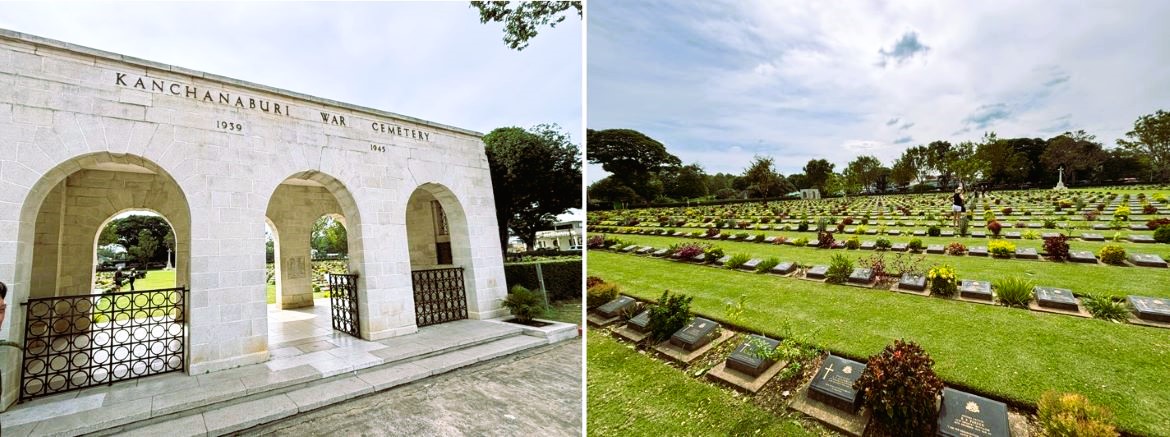
We depart the hotel at 8:00 AM for a full-day excursion to River Kwai Bridge (Bridge over the River Kwai) and the Kanchanaburi War Cemetery nearby.
The drive to the River Kwai Bridge from Bangkok becomes increasingly scenic as we head west, transitioning from city sprawl to lush, green countryside with rice paddies, sugar cane fields, and pineapple plantations, offering a mix of rural Thai life, and beautiful river views.
Our sightseeing begins at the Thailand-Burma Railway Centre (a museum) located right beside the Kanchanaburi War Cemetery. The highly rated small museum and research facility is dedicated to the history of the “Death Railway” built during World War II. The interactive exhibits, short films and descriptions provide the context of the Japanese aggression in Southeast Asia, details of their plan for the railway and the horrors faced by the prisoners of war who worked and perished during the construction of the railway.
After lunch, we proceed to the bridge over the River Kwai. The bridge gained international fame from the Hollywood film version of the French novel Le Pont de la rivière Kwaï by Pierre Boulle. The story is fictional but uses the construction of the Burma Railway (also known as Siam-Burma Railway) between 1942 and 1943 as its historical setting.
Our day trip also features an hour-long rail journey on the historic Death Railway (Thailand-Burma Railway), a poignant trip over the famous bridge and through stunning scenery.
Day 6/Tue: Bangkok – Sukhothai (B/D)
Free morning to explore on your own.
The afternoon flight to Sukhothai takes 1 hour 20 minutes.
Day 7/Wed: Sukhothai – Chiang Mai (B/L/D)
The modern city of Sukhothai is very small, with a population of 37,000 to 50,000 depending on who you ask. It is located about 427 km (265 mi) north of Bangkok on the River Yom, a tributary of the Chao Phraya River. The main attraction here is the ancient site of Sukhothai, a UNESCO World Heritage Site known as Sukhothai Historical Park, which is 13 km from the new town of Sukhothai and covers an area of roughly 70 square km.
The historical site once served as the capital of Sukhothai Kingdom (1238-1438) from 1238 to 1347. The kingdom expanded to its greatest extent during the reign of Ram Khamhaeng the Great (1279-1298), who was believed by some historians to have introduced Theravada Buddhism and the initial Thai script to the kingdom. At its peak, the kingdom’s territory reached what is now Laos in the north, Andaman Sea in the west and the Malay Peninsula in the south.
We spend the morning exploring the ancient ruins inside the historical park.
After lunch, we drive 4 hours (300 km) to Chiang Mai.
Day 8/Thu: Chiang Mai (B/L)
Nestled in high mountains and 750 kilometres north of Bangkok, Chiang Mai is the capital of Chiang Mai Province. The city was founded as the new capital of the Kingdom of Lan Na (1296–1768) by King Mangrai. Known for its artistic and cultural heritage, the city sits astride the Ping River, a major tributary of the Chao Phraya River. The Chiang Mai Metropolitan Area has a population of nearly one million, more than half the total of Chiang Mai Province.
The morning visit to the Elephant Rescue Center is a key highlight of the trip. You’ll have the pleasure of interacting with the gentle giants and watching them bathing in conditions close to their natural habitat.
Afternoon sightseeing includes Warorot Market by Ping River, the old city centre, and Wat Phra That Doi Suthep – a Buddhist temple sitting atop the Doi Suthep Mountain about 15 km west of the city. The temple ground offers a panoramic view of Chiang Mai on a clear day.
Day 9/Fri: Chiang Mai – Chiang Rai (B/D)
Free morning to explore on your own.
After lunch on your own, we drive 200km (3 ½ hours) to Chiang Rai.
Visit Wat Rong Khun en route. Popularly known as the White Temple, Wat Rong Khun is a unique, contemporary Buddhist temple and art installation designed by local artist Chalermchai Kositpipat. The temple is renowned for its all-white exterior, intricate architectural details, and unconventional symbolism that blends traditional Buddhist teachings with modern pop culture references.
Day 10/Sat: Chiang Rai – Golden Triangle – Chiang Rai (B/L/D)
After breakfast, we drive 1 hour north (70 km) to the Golden Triangle where the borders of Thailand, Myanmar and Laos converge. A name reportedly coined by the CIA, the Golden Triangle covers an area of approximately 950,000 square kilometres and is notorious for its narcotics industry. Our visit includes a boat ride and a museum known as the Hall of Opium.
Day 11/Sun: Chiang Rai – Phuket (B/D)
Travel to Phuket by early morning flight.
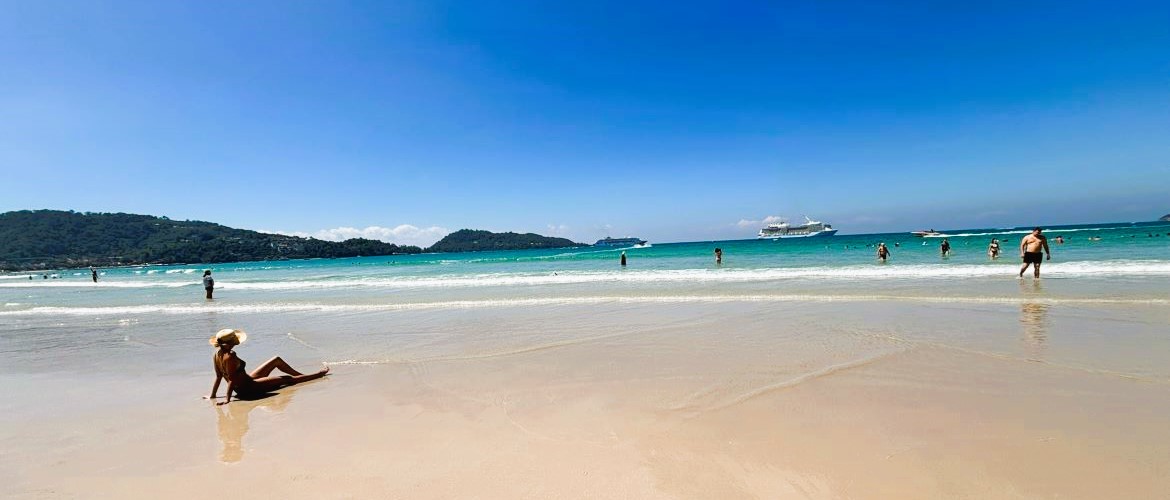
Phuket is Thailand’s largest island and one of the country’s most popular beach destinations. It lies in the Andaman Sea, off the west coast of southern Thailand, and is linked to the mainland by bridge.
Explore the Old Town of Phuket in the afternoon. The Old Town is the historic heart of Phuket City. It grew during the tin‑mining boom from the 19th century, when traders and workers from China, India, Portugal, and elsewhere settled here. This mix created Phuket’s distinctive Sino‑Portuguese architecture and the Baba‑Nyonya (Peranakan) culture that still shapes local buildings, food, and festivals.
Day 12/Mon: Phuket (B)
Free day to relax or explore on your own. The luxurious resort is a short ride from the beach.
Day 13/Tue: Phuket (B)
Free day to relax or explore on your own.
Day 14/Wed: Phuket – Kuala Lumpur (B/D)
Free morning for more relaxation.
We fly to Kuala Lumpur by mid-afternoon flight.
Kuala Lumpur is the national capital, largest city, and the seat of the legislative branch of the federal government of Malaysia. The city dazzles visitors with the soaring Petronas Twin Towers, vibrant street food, and a rich mix of Malay, Chinese, and Indian heritage.
Day 15/Thu: Kuala Lumpur (B/L)
Our sightseeing today takes in Merdeka Square, Sultan Abdul Samad Building, National Museum, Chinatown and Little India.
Day 16/Fri: Kuala Lumpur – Cameron Highlands (B/L/D)
This morning, we drive northbound towards Cameron Highlands.
Cameron Highlands offers a refreshing escape with its cool climate and lush landscapes. It was named after William Cameron, a British surveyor, who came here in 1885 on an expedition. It was later developed as a hill station and agricultural area, particularly for tea plantations, during the British colonial period. The area was initially intended as a refuge from the heat and a sanatorium for homesick Britons. Famous for vast tea plantations and charming colonial heritage sites, Cameron Highlands is an idyllic destination for nature lovers, hikers, and those seeking tranquility amid scenic hills.
Day 17/Sat: Cameron Highlands (B/L)
Our full-day guided sightseeing brings us to local markets, waterfalls, serene gardens, and Mossy Forest.
Day 18/Sun: Cameron Highlands – Penang (B/L/D)
Free morning to relax or explore on your own.
The afternoon drive to Penang takes four hours including one or two washroom stops.
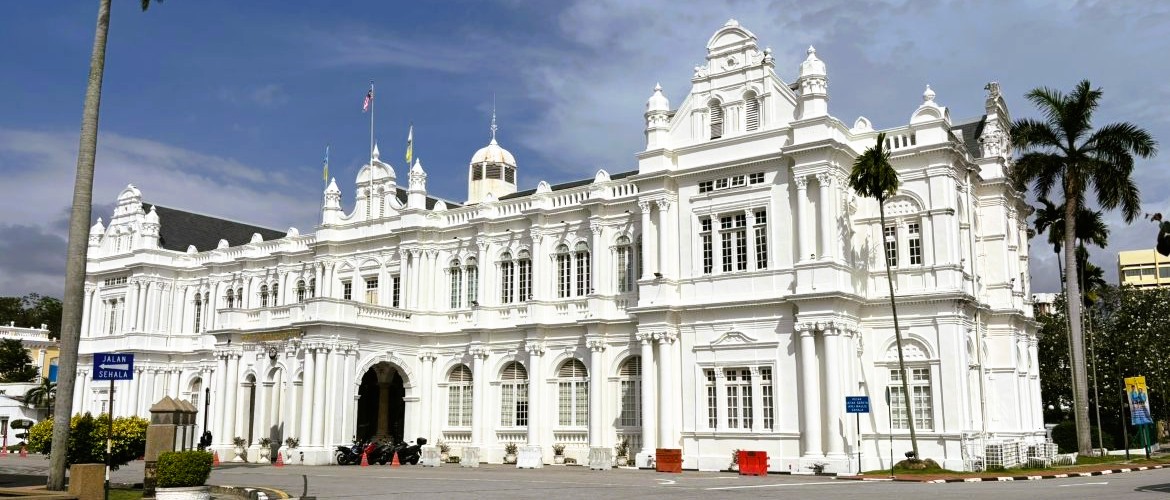
Penang Island forms part of the state of Penang, whose capital is George Town on the island. George Town is known for its British colonial architecture, diverse cultural influences (Malay, Chinese, Indian), and delicious food. Celebrated as a living museum, George Town is a UNESCO World Heritage site, offering a diverse range of attractions.
Day 19/Mon: Penang (B)
Our sightseeing today includes Armenian Street, Blue Mansion, Kek Lok Si Temple, and Penang Hill. Sampling famous street food is another highlight.
Day 20/Tue: Penang – Malacca (B/D)
Free morning to explore on your own.
After lunch on your own, we depart for Malacca by air.
Our dinner features Malacca’s famous Nyonya (Peranakan) dishes including char kway teow.
Day 21/Wed: Malacca (B/L)
Malacca, also spelled Melaka, is a historical city and state in Malaysia. A UNESCO World Heritage site, the city is known for its rich cultural heritage and colonial past, with Portuguese, Chinese, Dutch, and British influences evident in its architecture, neighbourhoods and landmarks.
Our schedule today includes Dutch Square, Jonker Street, St. Paul’s Hill, and Baba & Nyonya Heritage Museum.
Day 22/Thu: Malacca – Singapore (B/L/D)
Our morning flight to Singapore takes an hour and 15 minutes.
The guided sightseeing after lunch begins at Downtown Core. This is where Singapore’s modern history began when Stamford Raffles and representatives of the British East India Company landed here. The iconic Merlion statue and city skyline from here offer great photo opportunities.
We then proceed to Gardens by the Bay, a park spanning 101 hectares of reclaimed land adjacent to the Marina Reservoir. The extraordinary project brings to life the vision of the Government of Singapore to make the island city-state a “City in a Garden”.
Afterwards, we explore the historic Chinatown.
Day 23/Fri: Singapore (B)
Today is set aside for you to explore Singapore at your own pace. Our recommendations include the National Museum of Singapore, and Singapore Botanic Gardens – a UNESCO World Heritage Site.
Day 24/Sat: Singapore – Home city (B)
Your tour concludes this morning. Your transfer to the airport is not included. Depending on the location of the hotel and traffic condition, the cab fare can be anywhere between 20 and 30 Singapore dollars – one Singapore dollar equals approximately 0.80 USD or less.
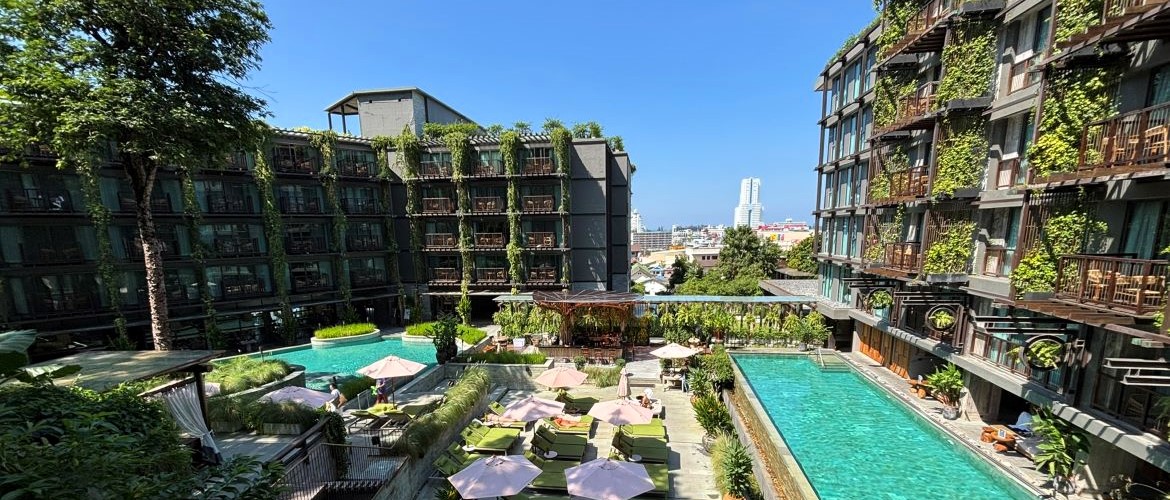
Hotel List
| City/Location | Night | Hotel/Resort | Category |
| Bangkok | 4 | The Landmark Bangkok | Luxury/5 stars |
| Sukhothai | 1 | Sriwilai Sukhothai or similar | Premium/4 stars (best available) |
| Chiang Mai | 2 | Melia Chiang Mai | Luxury/5 stars |
| Chiang Rai | 2 | Le Meridien Chiang Rai Resort | Luxury/5 stars |
| Phuket Island | 3 | Dinso Resort & Villas Phuket | Luxury/5 stars |
| Kuala Lumpur | 2 | Crowne Plaza Kuala Lumpur City Centre | Luxury/5 stars |
| Cameron Highlands | 2 | Cameron Highlands Resort | Luxury/5 stars |
| Penang | 2 | Fifth Avenue Hotel | Luxury/5 stars |
| Malacca | 2 | DoubleTree by Hilton Melaka | Luxury/5 stars |
| Singapore | 2 | Amara Singapore | Luxury/5 stars |
|
Dates & Prices
Prices are per person based on double occupancy.
| Depart (Thu) |
Return (Sat) |
Land Only CA$/US$ |
Single Supplement CA$/US$ |
| 2026 | |||
| 05-Feb | 28-Feb | $14,570/$10,560 | $4,450/$3,300 |
| 12-Feb | 07-Mar | $14,570/$10,560 | $4,620/$3,350 |
| 19-Feb | 14-Mar | $14,570/$10,560 | $4,620/$3,350 |
| 26-Feb | 21-Mar | $14,570/$10,560 | $4,620/$3,350 |
| 05-Mar | 28-Mar | $14,420/$10,450 | $4,450/$3,300 |
| 12-Mar | 04-Apr | $14,210/$10,300 | $4,450/$3,300 |
| 19-Mar | 11-Apr | $14,210/$10,300 | $4,450/$3,300 |
| 12-Nov | 05-Dec | $14,570/$10,560 | $4,620/$3,350 |
|
What the tour price includes:
|
What the tour price excludes:
See Terms & Conditions for more information. |
Passport
You’ll need a passport that has at least two blank visa pages and a validity of six (6) months beyond the tour’s return date.
Visa
You do not a need visa for any of the countries. Exceptions may apply; if necessary, please contact us for clarification.
However, you may want to submit your Digital Arrival Card in advance to save time on arrival per links below. These are the only official portals for registration. You should not use third-party sites that charge fees for the service.
Thailand Digital Arrival Card (TDAC)
Malaysia Digital Arrival Card (MDAC)
Immunization
None is required to the best of our knowledge. Please check with your national healthy authorities for recommendations if necessary. We recommend all guests to be vaccinated against hepatitis A.
Best Time to Visit Thailand, (Peninsular) Malaysia & Singapore
The best overall time to visit Thailand, Peninsular Malaysia, and Singapore is from November to early March. April to October brings higher humidity and heavier rains, especially during the southwest monsoon, though travel is still possible with fewer crowds and lower prices.
Thailand
November to February is the cool, dry season, ideal for sightseeing, beaches, and cultural touring. Temperatures are more comfortable and rainfall is low.
Peninsular Malaysia
While rain can occur year-round, the west coast (including Kuala Lumpur and Penang) is generally drier and more pleasant from December to March.
Singapore
Singapore is warm year-round, but February–April tends to be slightly drier.