
China tours from New York used to be very affordable prior to the COVID-19 pandemic. Since then, direct flights between New York and China (Shanghai, Beijing, etc.) mostly disappeared. As of December 2024, the number of direct flights between New York and China (Beijing, Shanghai, Guangzhou) is very limited and very expensive. Air China, China Eastern and China Southern are the only air carriers offering such flights. If you add Hong Kong to the mix, Cathay Pacific is also an option. Non of the US airlines, such as United, American and Delta, provide direct flights to China from New York.
However, if you plan to visit China from New York, you can count on Laurus Travel, a reputable China tour operator since 1998, for affordable airfare solutions despite the lack of direct flights from New York to China. We are particularly proud of our record in tracking down the best business class air deals for our China tour guests from New York and elsewhere in the United States.
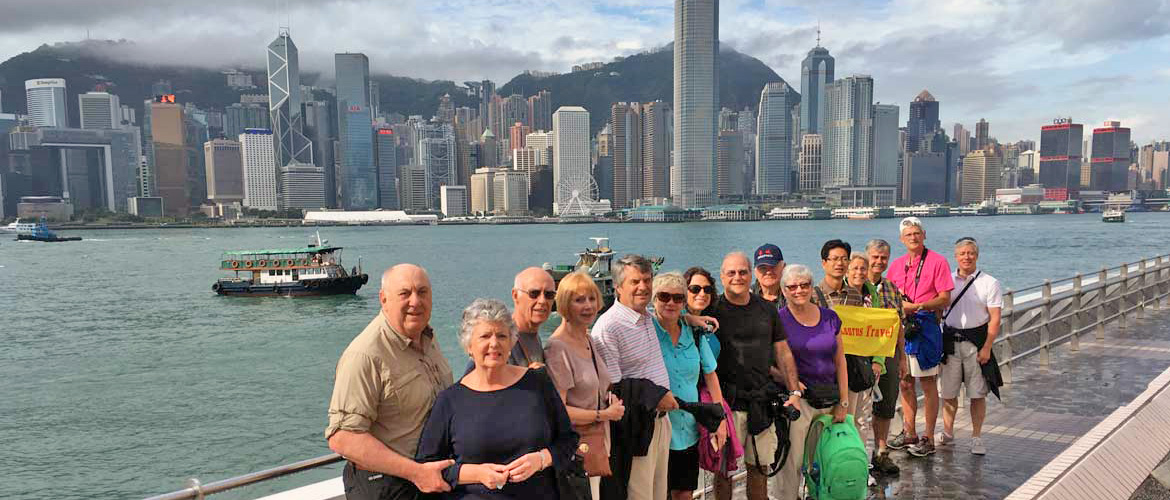
Founded in 1998, Laurus Travel is a China tour operator with a stellar reputation. Our luxury small-group tours of China have been extremely popular among quality-minded consumers who are keen on history, culture, fine food and meaningful interactions with locals. The quality of our guides is simply second to none as evidenced by the large number of customer testimonials and consumer reviews all over the Internet.
Consistently rated A+ by the Better Business Bureau, Laurus Travel has been recommended in every edition of Frommer’s China, an endorsement that money can’t buy.
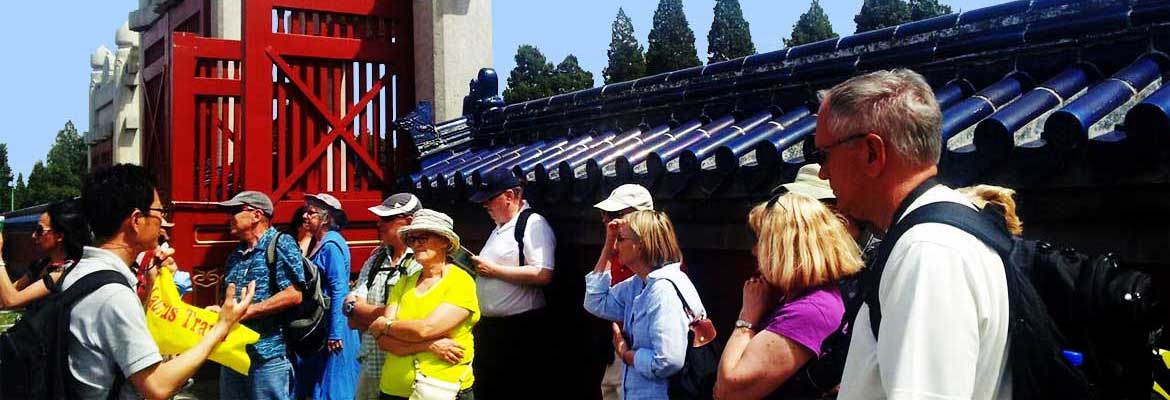
Our China tours feature expert local guides, small group size, high-speed train for inter-city travel, luxury accommodations and fine food. We have a strict “no shopping stops” policy and the ability to enforce it, a feat we are particularly proud of. Our China tours are offered as land packages without international airfare. However, upon request, international flights from New York or anywhere can be easily added to the China tour packages.
Check out our current China tours
Recommended China Tours from New York
We have many tours to China available. The 25-day Classic China by Bullet Train below is highly recommended.
Shanghai – Suzhou – Tongli – Qufu – Beijing – Xi’an – Chengdu – Chongqing – Yangtze Cruise – Yichang – Wuhan – Guilin – Hong Kong
Embark on this luxury China tour by train through the heart of China, where ancient traditions harmonize with cutting-edge modernity, and each city tells a tale woven into the fabric of a nation steeped in history. This leisurely placed grand tour of China is a captivating journey that transcends time, offering an immersive experience that showcases the best of China’s cultural heritage, breathtaking landscapes, and dynamic urban centers.
On this fully guided small-group adventure, you’ll travel between the cities exclusively by high-speed train, thus eliminating air travel-related hassles. Travelling by train also allows you to see the countryside and mingle with locals.
Important Features
- Small group size – average 15, maximum 20
- Expert guides handpicked by company owners
- Inter-city travel exclusively by high-speed train
- No annoying forced shopping stops
- Quality meals at non-tourist restaurants
- Unlimited supply of bottled water during group activities
- Outside cabin on or above bridge deck for Yangtze cruise
- Complimentary Wi-Fi on cruise ship and in all hotels
- Visit to chambers in Forbidden City that most tour operators leave out
- Great Wall visit at Mutianyu including cable car rides
- Day hike at Longji terraced rice fields
Options Available
- Peking Opera show with dinner in Beijing
- Tang Dynasty cultural show with dinner in Xi’an
- Traditional face mask changing performance with dinner in Chengdu
- Half-day immersive tea farm visit in Guilin
Meal Code: B = breakfast / L = lunch / D = dinner
Day 1/Thu: Departing for Shanghai
Depart from a city of your choice and lose a day upon crossing the International Date Line.
Day 2/Fri: Arrival in Shanghai
Meet the driver on arrival for transfer to the hotel. You’ll have the balance of the day at leisure. The guide will get in touch with you tonight.
Day 3/Sat: Shanghai (B/L/D)
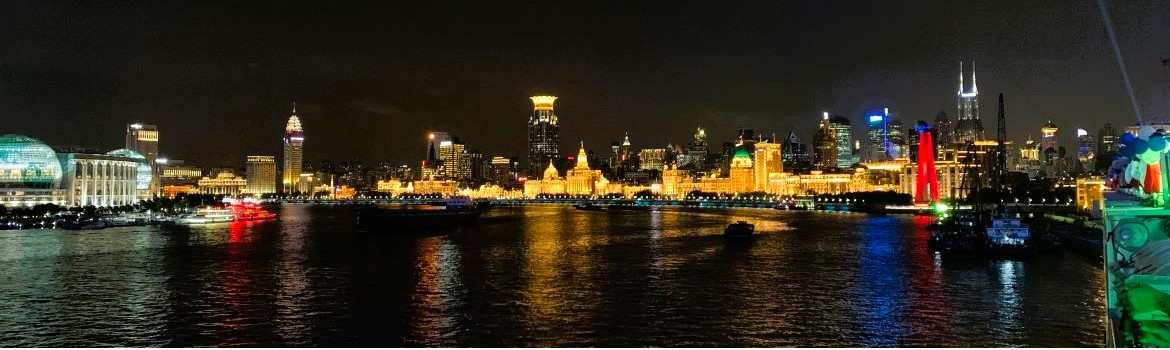
With a population of 24.9 million (2021), Shanghai is China’s biggest city, which delights the visitor with its futuristic skyline and historical landmarks.
Following the tour orientation we visit Jade Buddha Temple located in an old neighbourhood, the famous waterfront promenade known as the Bund, and the Yu Garden in the old town centre. We wrap up the day with a drive through the glitzy financial district of Lujiazui on the opposite side of the Bund across Huangpu River.
Day 4/Sun: Shanghai (B)
Free day to explore on your own. We recommend Shanghai Museum and the Urban Planning Exhibition Center nearby. Shanghai Museum is frequently cited by visitors as one of the best of its kind in China, it is also a great place to explore on your own.
Day 5/Mon: Shanghai – Suzhou (B/L)
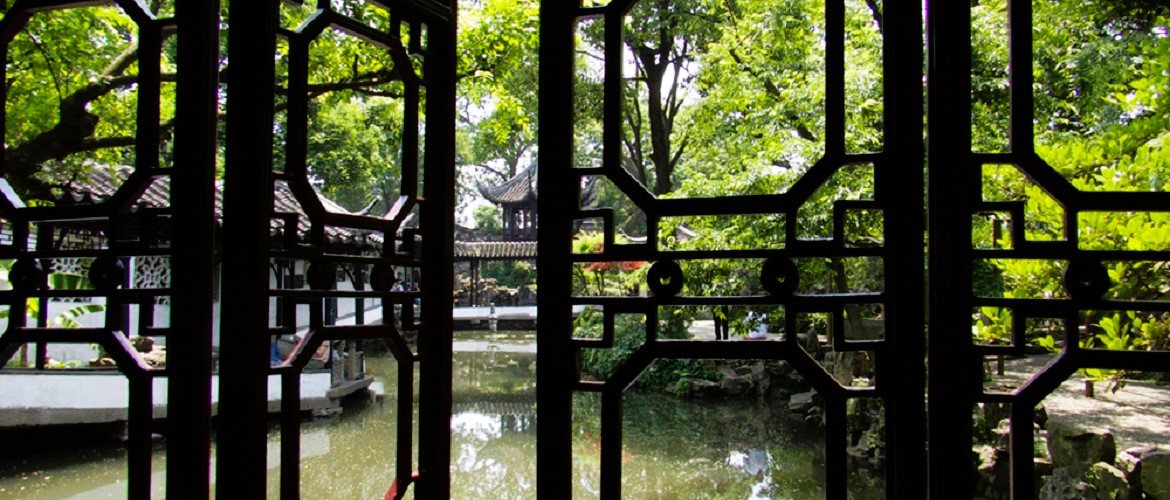
After a leisurely breakfast we drive 85 km to Suzhou. Ancient Suzhou is most famous for its gardens, canals and silk industry. In the late 13th century a Venetian named Marco Polo visited Suzhou and was very impressed by what he saw. He vividly described the prosperous silk industry and dubbed Suzhou “Venice of the East” due to the small waterways crisscrossing the city.
Our full-day schedule takes in historic Tiger Hill, Humble Administrator’s Garden, Suzhou Museum (designed by I. M. Pei), North Pagoda and a short canal cruise. Those interested in shopping can ask to be dropped off at the Silk Embroidery Research Institute or a filature (silk reeling mill) on the way back to the hotel.
Day 6/Tue: Suzhou – Tongli – Suzhou (B/L)
We set off for Tongli following breakfast. Located 25 km south of Suzhou, ancient Tongli is renowned for its canal system intersecting the town. After lunch we return to Suzhou and have the remainder of the day at leisure.
Day 7/Wed: Suzhou – Qufu (B/L/D)
This morning we board the bullet train for Qufu (3 ½ hours). Qufu is the hometown of Confucius (551-479 BCE), who lived around the same time as Siddhartha Gautama (the Buddha) and Cyrus the Great of Persia. His teachings collectively known as Confucianism have played and continue to play a vital role in the evolution of Chinese civilization.
In the afternoon we tour the massive Confucius Temple which features a series of impressive gateways, clusters of twisted pines and cypresses, inscribed steles and tortoise tablets recording ancient events.
Day 8/Thu: Qufu (B/L)
We begin our sightseeing this morning at the mansion once inhabited by the descendants of Confucius. We then proceed to Confucius Forest – the last resting place of Confucius and a cemetery for his descendants. The cemetery, the residence and the temple together form the UNESCO designated World Heritage Site in Qufu. If time allows, we will visit a village nearby.
Day 9/Fri: Qufu – Beijing (B/L)
We spend the morning exploring the small town on our own. After lunch we ride the bullet train to Beijing (80 minutes) and transfer to the hotel on arrival.
The capital of China, Beijing is a world-class cultural and educational centre with a population of 21.9 million (2020), ranking it China’s second biggest city behind Shanghai. Beijing is renowned for its opulent palaces, temples, and huge stone walls and gates – treasures that make it the most popular tourist city in China by the number of visitors it receives every year.
Beijing was already a strategically important city in northern China for centuries when Kublai Khan (1215-1294) decided to move his capital here from Karakorum in Mongolia. With the collapse of the vast Mongol empire in 1368, Beijing, known as Da Du or Grand Capital at the time, lost its status as the country’s capital but regained it in 1420 when the imperial court of the successive Ming Dynasty moved here from Nanjing. Beijing continued to serve as China’s capital after Manchu tribes dethroned the last emperor of the Ming Dynasty in 1644 and established the Great Qing Empire (Qing Dynasty), which lasted until 1912.
Afternoon sightseeing in Beijing takes in Lama Temple and Guozijian (imperial academy). Lama Temple, commonly known as Yonghe Temple among locals, was built in 1694 as residence of Prince Yong (Yinzhen), one of the sons of Emperor Kangxi. After Prince Yong ascended the throne as Emperor Yongzheng in 1722, half of his former residence was turned into a lamasery – a monastery for monks of Tibetan Buddhism. Guozijian was the highest institute of learning in China’s traditional educational system during the Yuan, Ming and Qing dynasties. One of its main functions was assisting the imperial court in administering national examinations.
Day 10/Sat: Beijing (B/L/D)
We begin our sightseeing today at the Forbidden City. Officially known as the Palace Museum, the Forbidden City was the place where the emperors of the Ming (1368-1644) and Qing (1644-1912) dynasties lived and carried out their administration. Construction of the Forbidden City took 14 years (1406-1420) to complete. The complex consists of 980 buildings and covers 72 hectares or 180 acres. It exemplifies traditional Chinese palatial architecture and has influenced cultural and architectural developments in East Asia and elsewhere.
Tian’anmen Square comes next. Located in the heart of Beijing, the square measures 880 metres from north to south and 500 meters from east to west. Said to be the largest public plaza in the world, Tian’anmen Square has the capacity to hold one million people. The imposing Tian’anmen Tower sits at the north end of the square while the Monument to the People’s Heroes dominates the centre. The square is flanked by The Great Hall of the People (west) and the National Museum (east). Chairman Mao’s Mausoleum and Qianmen (Front Gate) are located in the south of the square.
Afternoon sightseeing takes place at the Temple of Heaven. Situated in southeastern Beijing, the Temple of Heaven is China’s largest extant sacrificial temple where, during the Ming and Qing Dynasties, the emperors conducted the elaborate and most exalted sacrifices addressed to “the Supreme Ruler of the Universe.” Construction of the temple started in 1406, during the reign of the Ming Emperor Yongle, and took 14 years to complete. The temple was expanded under the Qing emperors Qianlong (1736-1796) and Jiaqing (1796-1820). Occupying 2.73 square kilometres (roughly 1,700 by 1,600 metres), the area of the Temple of Heaven is more than twice that of the Forbidden City.
The famous Hongqiao Pearl Market, the largest pearl market in the world, is right across the street from the Temple of Heaven. Recommended by numerous guidebooks for freshwater pearls, Hongqiao teems with domestic and international shoppers. If you are interested, please ask the guide to drop you off there. However, you’ll need to get back to the hotel by taxi, which costs less than 10 US dollars.
Today we enjoy a delicious dinner at a popular Peking Roast Duck restaurant. Peking Roast Duck is a famous Beijing dish prized for the thin and crispy skin with authentic versions serving mostly the skin and little meat, sliced in front of the diners. The meat is wrapped in a thin layer of pancake (Chinese tortilla) together with shredded scallion, cucumber, and a sweet and salty sauce made of wheat flour. Condiments may also include pickled garlic and white sugar.
Day 11/Sun: Beijing (B/L)
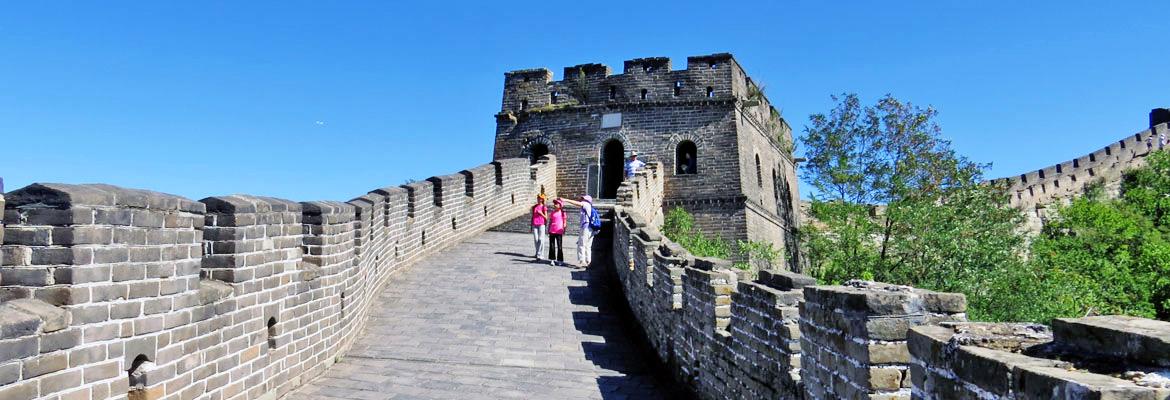
After an early breakfast we embark on a full-day excursion to the legendary Great Wall at Mutianyu, 75 km northeast of the city.
Zigzagging over 6,000 kilometres from east to west along undulating mountains, the Great Wall was built to hold off tribal invaders from the north. As history shows, the Wall failed the Chinese rulers miserably, especially in the case of Kublai Khan whose cavalrymen swept across China from the Mongolian steppe, thus the beginning of the Yuan Dynasty (1279-1368).
Construction of the earliest sections of the Wall started in the 7th century BCE. A major renovation started with the founding of the Ming Dynasty in 1368 and took 200 years to complete. The wall we see today in Beijing is almost exactly the result of this effort.
[ read more ]
China Tours from New York – Our Customers Say It Best
|
I was absolutely delighted with this trip. We have traveled extensively in North America and Europe, but never in Asia until now. I’m a history teacher and I taught world history for years, and to be able to see so much of China and its history in just a few days was remarkable. Many, many thanks for organizing an outstanding trip – and that’s especially true because it was so reasonably priced! Charles Coon I’m writing to report in on my experience in traveling alone to China. Intimidated primarily by the language/ communications issues, I felt I needed a land package to see me through China (specifically, Beijing, Xian and Shanghai). I’ve just returned from an 11 day package with Laurus Travel (out of Vancouver) – I found them on the internet – and through reviews here. I am writing because I wanted to share the particulars of what made my Laurus experience the best “group” travel I have ever had. First of all, I’m not an “on the bus/off the bus” kind of girl…so group touring can be off-putting. This was a totally different experience. There were 7 of us – enough to allow for a shared experience (something I very much wanted), but never so many that I ever felt that we were being “herded”. And that smallness and the knowledge and flexibility of their guides made us able to adapt our visits to our interests. Laurus’s model is that with groups over 10 an overall country guide is assigned…but if less than 10, no country guide…just local City guides. This left me a little concerned in advance of the trip – but my concern was replaced by nothing but praise. We were met at the airport in each city by a local guide and a driver extremely knowledgeable in their area – they were flexible, interesting and diverse. That changing of guides was a true positive aspect of the trip. They took us to their neighborhood favorite restaurants, ordered to our expressed tastes (the food was freakily good in each city!!!!) and NEVER subjected us to “tourist shopping trap hell”. They went above and beyond in so many small ways. I know that they are in the hospitality biz…and so this should not be surprising – but even with that said, they went beyond the call of duty. In Shanghai, the rest of my group went elsewhere and I had a Laurus provided guide and driver to myself…the agenda was changed to meet my interests – I wanted to see the Synagogue and Jewish section of town in lieu of the Planning Museum…and we did. VERY COOL – very special. The hotels were excellent (seriously excellent) and well located. One of the guides informed me that in China, Laurus is considered a very upscale touring company – and it showed in terms of the quality of our guides. We liked the mix of “on your own” time and touring time…we liked the physicality of the trip. Bottom line, this was a marvelous experience – exceeding my expectations in every way. Amie Gartenberg, |