How China’s Railways Have Transformed Travel
In the late 1980s, the acclaimed travel writer Paul Theroux spent months travelling around China by train. His experiences became the basis of Riding the Iron Rooster, a fascinating account of a country whose railways were slow, crowded and often uncomfortable. In the book, Theroux expressed serious doubts about the feasibility of building a railway to Tibet, citing formidable geographical and climatic obstacles.
The Qinghai–Tibet Railway reached Lhasa in 2006, less than two decades after Theroux’s journey. It was an extraordinary engineering achievement, but only one chapter in China’s railway transformation.
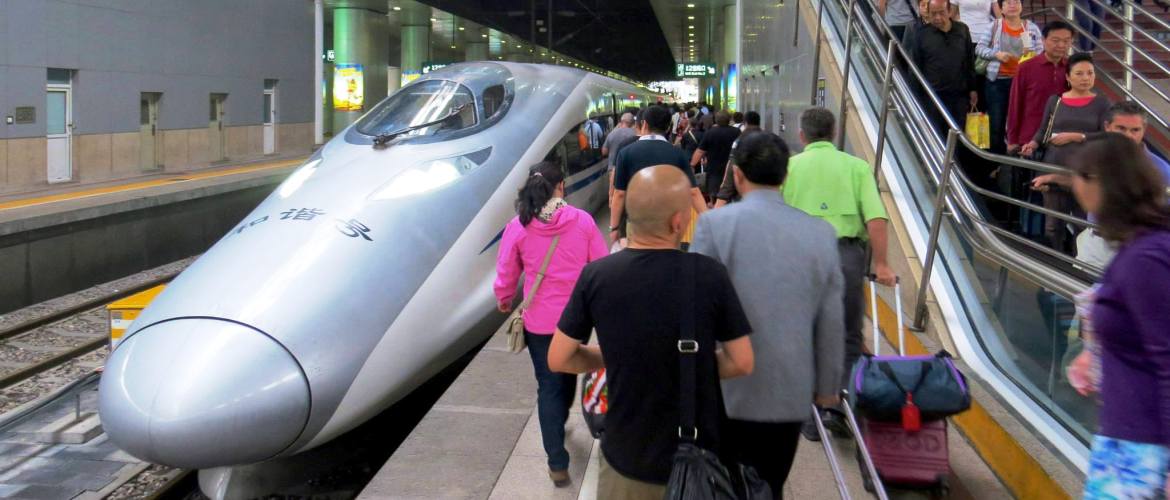
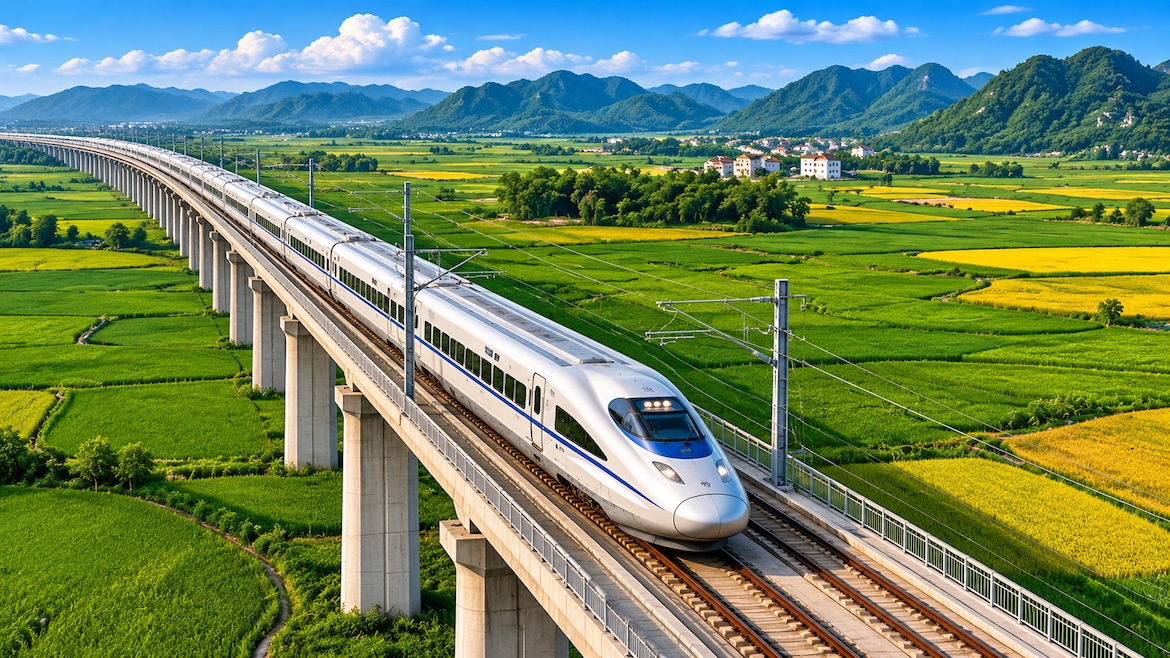
Over the past two decades, China has built the world’s largest high-speed rail network. By early 2025, the network had reached approximately 48,000 kilometres, exceeding the combined high-speed rail networks of the rest of the world. Trains operating at speeds of up to 350 km/h now connect many of the country’s major cities.
For travellers, the implications are enormous. Journeys that once required overnight train rides or domestic flights can often be completed comfortably in just a few hours.
Why Travel Around China by High-Speed Train?
High-speed rail has changed the way Laurus Travel designs its China itineraries. In the past, visiting several major cities on one tour often meant taking multiple domestic flights. Today, many of those flights have been replaced by train journeys.
For distances of approximately 1,000 kilometres or less, travelling by train is often more convenient than flying. Railway stations are generally closer to city centres than airports, security procedures are relatively straightforward, and passengers can avoid the long airport transfers and waiting times associated with air travel.
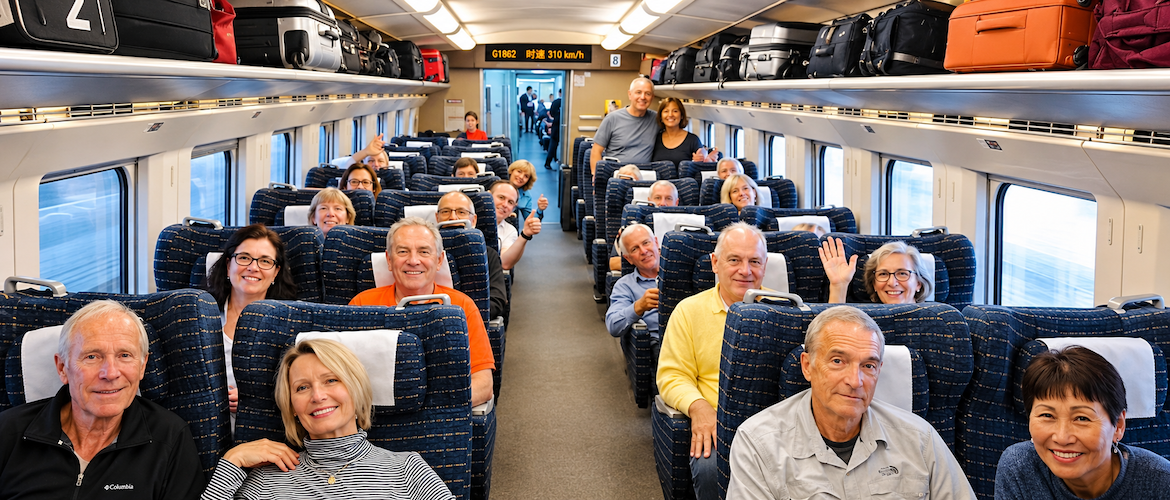
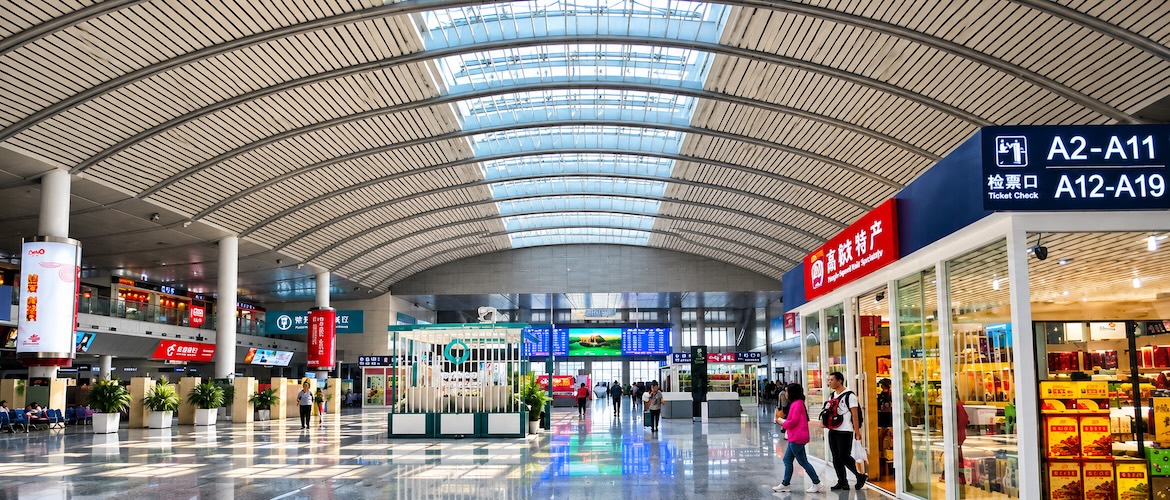
China’s modern high-speed trains offer comfortable seating, air conditioning, clean washrooms and space for luggage. Most major stations have escalators, lifts, restaurants and other passenger facilities, although travellers should still expect some walking and occasional queues.
Another advantage is the opportunity to see the countryside. Travelling by train provides glimpses of China’s agricultural landscapes, towns, industrial centres and rapidly expanding cities that would otherwise be missed.
Rail travel also generally produces substantially lower carbon emissions per passenger than flying.
Understanding China’s High-Speed Trains
China’s high-speed services are generally identified by train numbers beginning with G or D.
G-series trains are the fastest, with some services operating at speeds of up to 350 km/h. D-series trains generally operate at lower speeds, although actual speeds depend on the route and service.
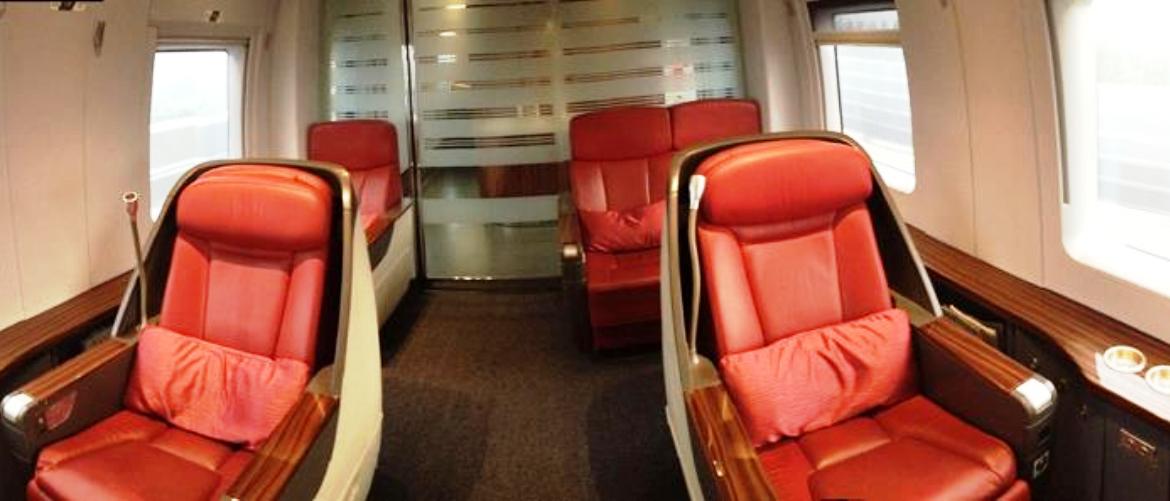
Most G-series trains offer second-class and first-class seating, while selected services also provide business-class accommodation.
Second class is comfortable and suitable for most travellers. First class offers wider seats and additional legroom. Business class, available on certain trains, provides considerably more space and a higher level of service.
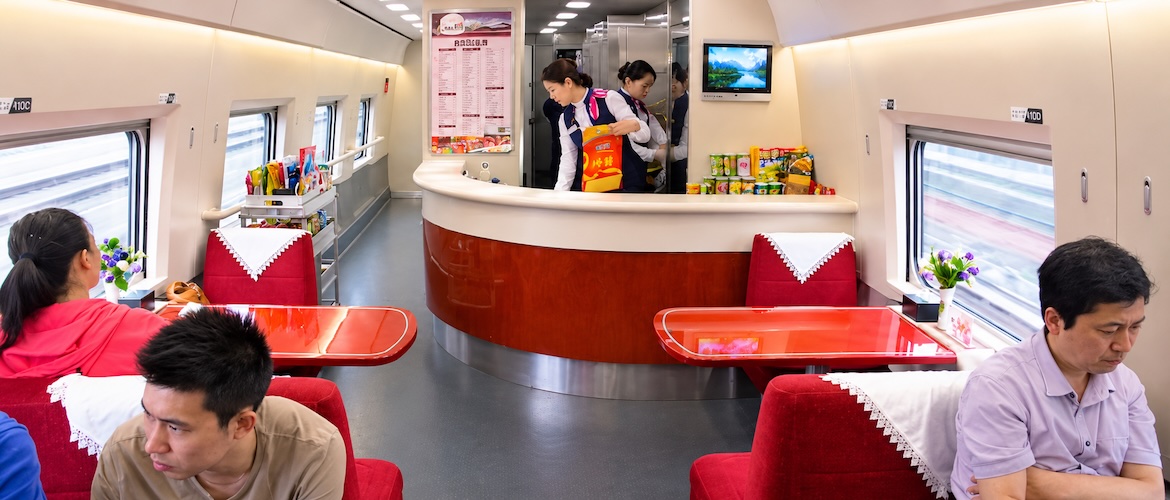
Food and beverages are available for purchase on many trains, although the selection varies. Passengers may also bring their own refreshments.
What Travellers Should Know
High-speed rail tickets are issued for specific trains and seats. Foreign visitors normally need their passports when booking and travelling, as identity checks are part of the boarding process.
Passengers should arrive at the station well before departure to allow time for security screening and finding the correct boarding gate. Large stations can be busy, and boarding usually closes several minutes before departure.
Luggage is generally carried aboard by passengers rather than checked in separately. Although high-speed trains provide overhead racks and storage areas for larger suitcases, travellers should pack with portability in mind.
For visitors unfamiliar with the railway system, arranging tickets, navigating stations and managing luggage can be challenging. On Laurus Travel’s escorted tours, our guides handle the travel arrangements and assist passengers throughout the journey.
Explore China by Train with Laurus Travel
Laurus Travel has incorporated high-speed rail into its China tours for many years. Our itineraries take advantage of the expanding network to connect destinations such as Beijing, Xi’an, Chengdu, Shanghai, Guilin and Zhangjiajie.
Our 25-day Classic China by Train is a particularly comprehensive example. The itinerary combines China’s great historical and cultural centres with lesser-visited destinations, a Yangtze River cruise and the limestone landscapes of Guilin, concluding in Hong Kong.
For travellers who want to see more of China without the inconvenience of repeated domestic flights, high-speed rail offers an excellent way to explore this vast and diverse country.