by Julius Yan
I travel to Japan so often that the country feels almost like a second home to me. Every time I return to Japan, I’m reminded that one of the country’s greatest strengths isn’t just the food, efficiency, or beautiful cities — it’s the collective awareness people have of each other.
Japan works because millions of people quietly cooperate.
Trains arrive and depart on time because people queue properly. Streets stay clean because people carry their garbage home. Public spaces remain peaceful because people try not to disturb strangers around them.
That’s why certain tourist behaviors stand out immediately.
On recent trips, I’ve increasingly noticed groups of foreign visitors speaking loudly on trains, blocking train doors with large luggage, playing videos without headphones, or treating public transit like a private social space. In many countries, these things barely register. In Japan, they feel incredibly disruptive.
The difference comes down to cultural expectations.
The Quiet Rules of Japan That Some Tourists Miss
In Japan, trains are often treated as quiet zones. People nap during commutes, answer emails, read books, or simply decompress after long workdays. Even crowded rush-hour trains are usually surprisingly silent. Conversations happen, but they’re generally soft and brief.
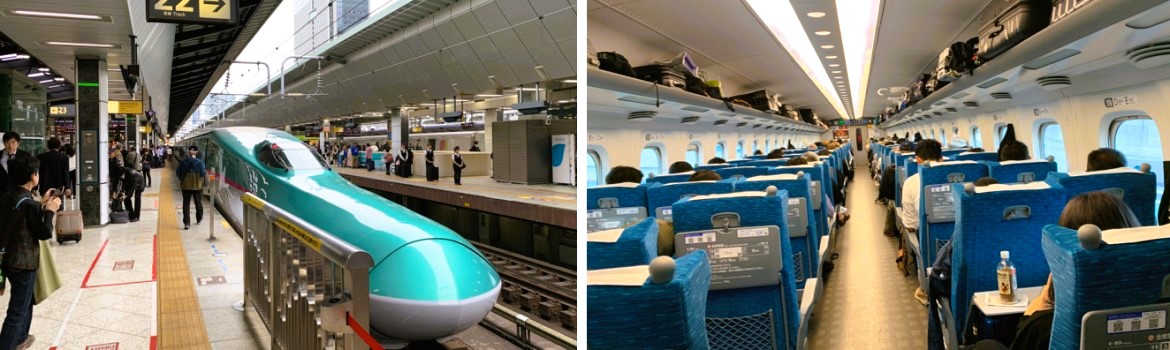
On the Shinkansen, the atmosphere is even calmer. Many passengers are traveling long distances and value the quiet. Phone calls are avoided in seating areas, and people who need to talk usually move near the doors between cars.
So when someone loudly shouts across rows to their friends or blocks the aisle with oversized suitcases, it instantly changes the atmosphere for everyone nearby.
One thing I’ve learned from travelling regularly in Japan is that Japanese etiquette is less about strict rules and more about minimizing friction for others.
You see this everywhere. People stand neatly to one side on escalators. Passengers wait for others to exit trains first. Backpacks are carried low or worn on the front during crowded commutes. Even in busy stations like Shinjuku Station, movement feels organized rather than chaotic.
There’s an unspoken awareness of shared space.
Unfortunately, some tourists mistake Japan’s politeness for tolerance. Japanese people are often unlikely to confront strangers directly, especially visitors, even when behaviour is disruptive. But the absence of confrontation does not mean the behaviour is acceptable.
I think most inappropriate tourist behaviour in Japan comes from unfamiliarity rather than malice. Many visitors simply don’t realize how noticeable loud public behaviour becomes in a culture where quietness is considered respectful.
The easiest way to travel well in Japan is simple: observe first.
Watch how locals behave on trains. Notice the volume level in restaurants. Pay attention to queues, personal space, and how people move through stations. Japan is actually very easy to navigate once you understand that consideration for others is the underlying social rule behind almost everything.
And honestly, that atmosphere is part of what makes travelling in Japan so enjoyable in the first place.